
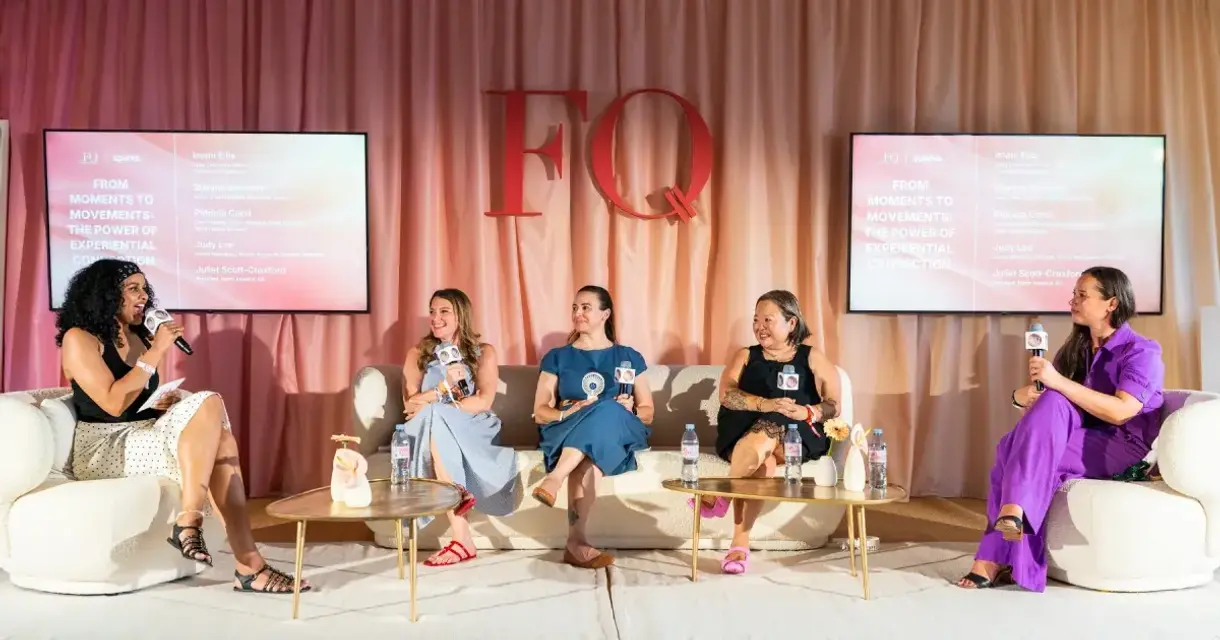
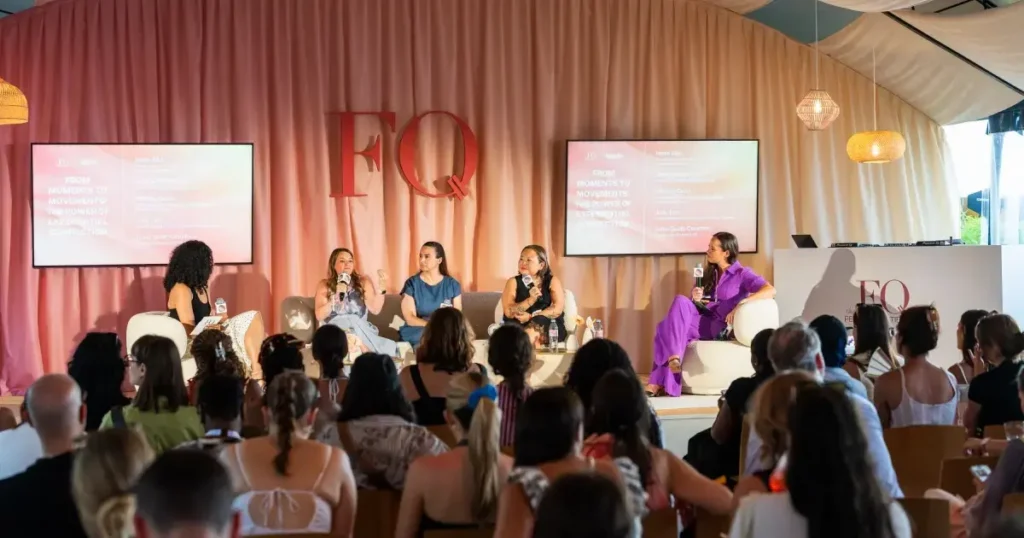
At Cannes Lions 2026, Sparks SVP of Marketing Sheyna Bruckner joined four marketing leaders for a conversation that pushed past the buzzwords and got to the real work of building experiences that last.
The Female Quotient’s FQ Beach is one of those rare Cannes venues where the conversation matches the setting: open, honest, and surprisingly unhurried. On the opening day of Cannes Lions 2026, Sparks took the stage alongside leaders from Pinterest, Kimberly-Clark, and Q5 — moderated by CultureCon founder and CEO Imani Ellis — for a conversation that pushed past the buzzwords and got to the real work of building experiences that last.
The belief gap is where brands win or lose.
Sheyna Bruckner opened with a framework at the center of new research from The Freeman Company — Sparks’ parent brand. The Belief Gap™ study — the first independently validated research to measure whether marketers recognize this gap, which channels they trust most to close it, and whether they have the infrastructure to prove it — defines that distance as the space between brand awareness and genuine brand belief. Its findings are striking: 72% of marketers confirm the gap exists, and events ranked as the top trust-building channel — above social, digital, content, and PR.
“Excitement really establishes brand awareness,” Bruckner said. “But when you have an experience, you’re closing that gap — that space between when someone knows your brand and when someone feels it.”
The implication for measurement is significant. Impressions and attendance tell you about reach. Closing the belief gap — pipeline movement, conversion, repeat engagement — tells you about impact. Eighty-five percent of brands that believe in events still can’t formally measure their impact, particularly on LLM visibility. Sparks is working with clients to change that: building frameworks that position events not as standalone moments but as drivers within the broader marketing flywheel.
A movement has to move people who weren’t looking for it.
Patricia Corsi, Chief Growth Officer of Kimberly-Clark and founder of Good Latinas for Good, reframed the moment-versus-movement question in terms that were hard to argue with: “It’s not a movement if it doesn’t move you.”
But she pushed further. A true movement, she argued, spreads beyond anyone you planned for — beyond your leadership, your call-to-actions, your owned channels. It reaches people with no stake in your brand strategy. When that happens, measurement breaks down in the best possible way: you can see it in dark social, in dinner table conversations, in the gap between what your analytics show and what you know is happening.
“When the daughter, or the son, or the cousin of the board member says, ‘I heard about that at dinner’ — that counts two million times more than a return-on-investment number.”
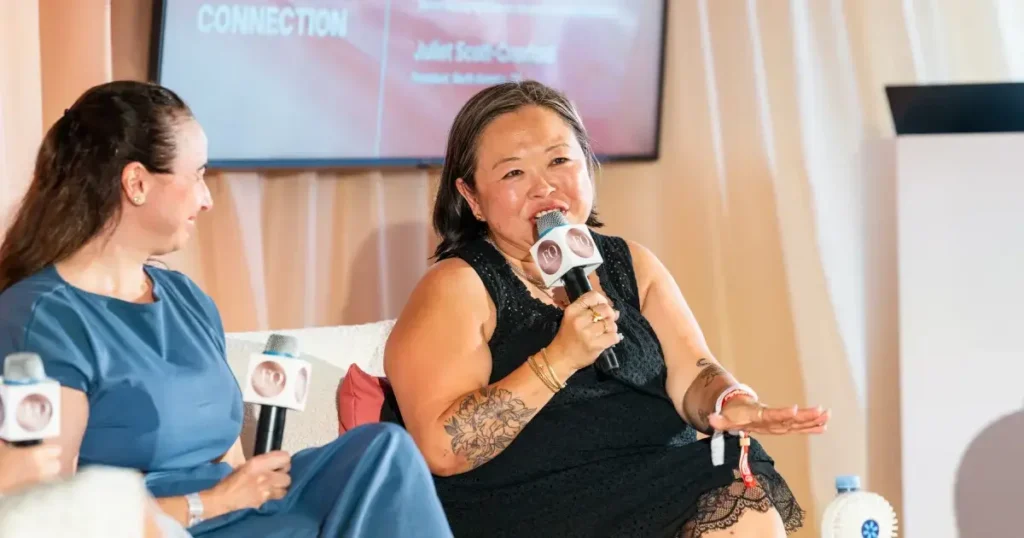
Joy is a KPI. Use it.
Judy Lee, Senior Managing Director of Pinterest’s House of Creative, named what a lot of marketers feel but rarely say out loud: the best measure of an experience is the joyometer.
“If you’re not bringing joy to people’s lives during or after, I’d say you’re doing it wrong.”
Lee described Pinterest’s Manifestival activation at Cannes — specifically the Offline Social Club, a phone-free zone designed to let attendees be fully present. It’s counterintuitive in an environment built around content creation. But it reflects something Pinterest has been tracking for a while: Gen Z is actively searching for slower, more analog experiences. Dumb phones. Tangible connection. The brand found an activation form that could hold both ideas at once — and trusted audiences enough to try it.
The signal Lee watches for? People with their phones down, fully absorbed in what’s in front of them.
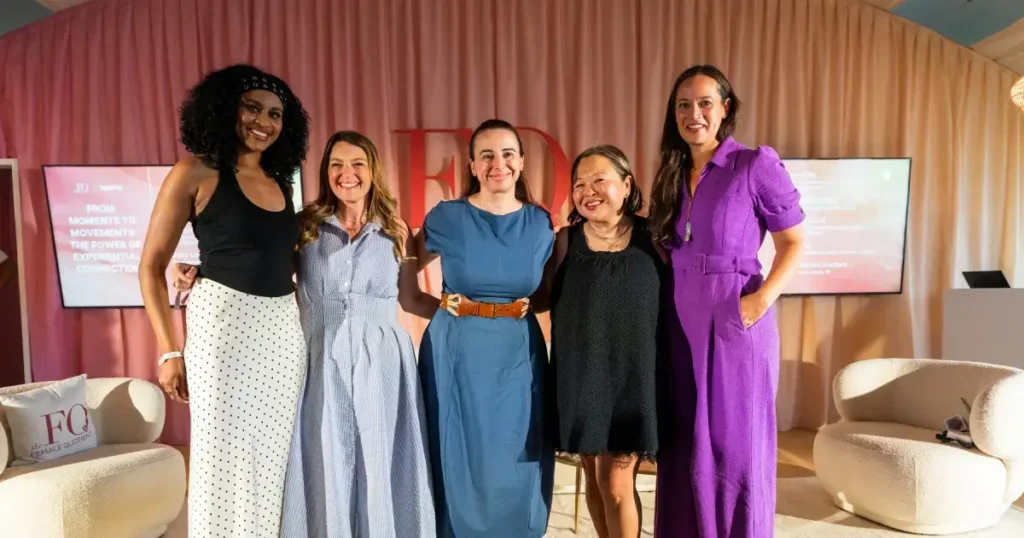
The story after the event is the story that matters.
Juliet Scott-Croxford, President of Q5 North America, brought the strategic lens: what relationships were built? Who followed up with whom? What conversations happened that wouldn’t have happened otherwise?
“What happens afterward is often the thing you don’t measure,” she said. “But it’s like, moments beget movements.”
She identified a specific inflection point — when strategic value is created without the brand’s involvement. Someone introduces your brand to a friend unprompted. A community self-organizes without you. That’s the signal that an experience has become something larger than itself.
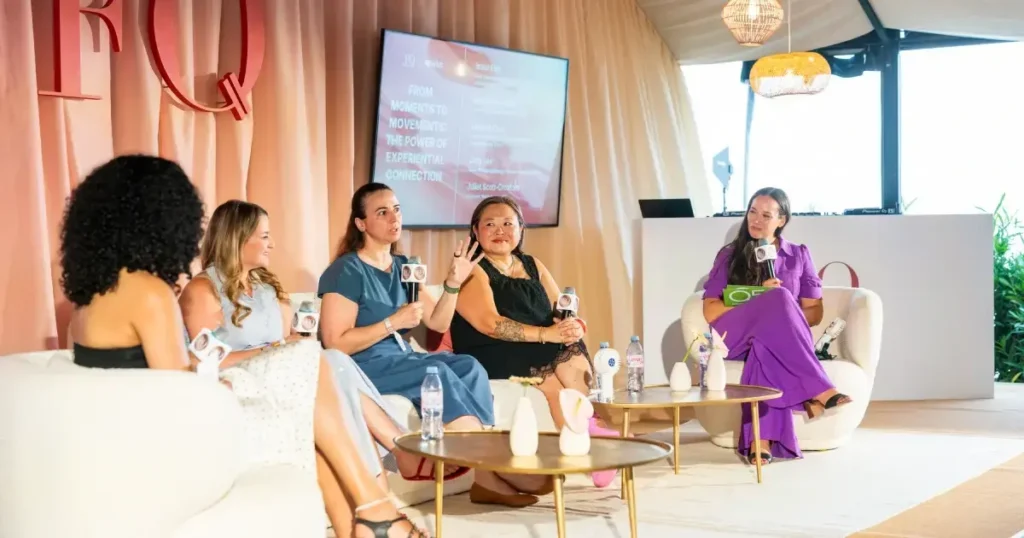
Trust is the currency that makes all of it possible.
The conversation landed, finally, on trust — which all four panelists returned to from different directions. For Corsi, it’s about admitting what you don’t know. For Lee, it’s about psychological safety and creating spaces where people aren’t performing for an audience. For Scott-Croxford, it’s the connective tissue between purpose and community. For Bruckner, it’s what closes the belief gap.
“Trust and time,” Corsi said, “are the two currencies becoming more and more important.”
At Sparks, we’d add one more: clarity. Knowing what you stand for, being able to prove it, and building experiences rigorous enough to earn belief — not just attention.
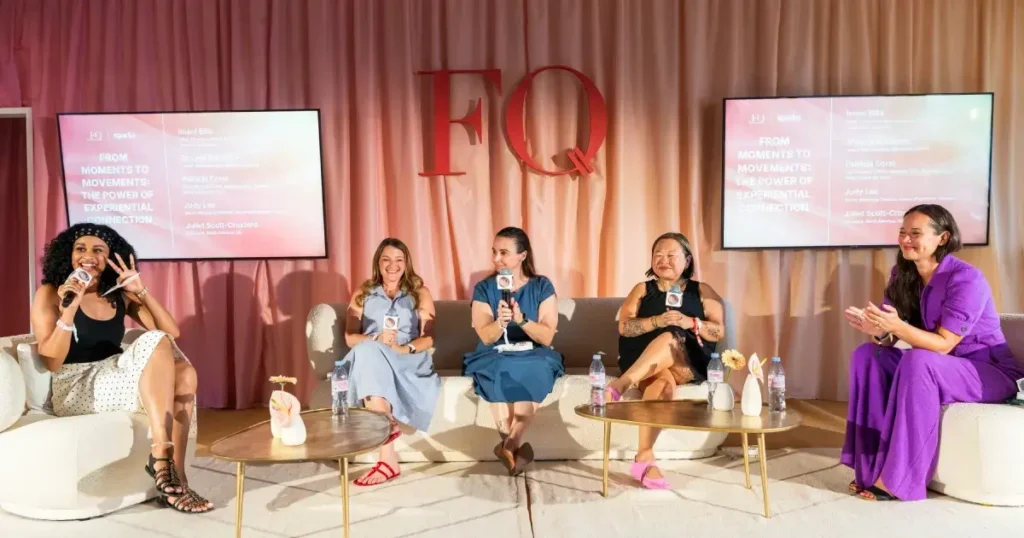
Sparks was proud to partner with The Female Quotient at FQ Beach, Cannes Lions 2026. Learn more about how Sparks helps brands close The Belief Gap™ through measurable, meaningful experiential programs at wearesparks.com.