

At A Glance
The Argument: The experiential marketing industry is moving from the Experience Economy to the Transformation Economy — from designing for memorable moments to designing for a lasting change in behavior. The leaders pulling ahead are those who are building for individualized, sustained impact rather than scaled spectacle.
The Frame: The Transformation Economy is B. Joseph Pine II’s extension of the Experience Economy framework. Where experiences are memorable, transformations are effectual. Beyond staging a moment, the economic function of a transformation is to guide a person from who they are today to who they want to become.
The Five From/To Shifts Defining the Next Era of Experiential Marketing:
- From memorable → to transformative. Production value no longer differentiates competitive brands. The intention to transform behavior does.
- From personal → to individual. Personalization at scale is the starting line. Individualization at scale is where we’re headed.
- From experience stager → to transformation guide. The economic role of the experience designer is changing.
- From temporary → to lasting impact. Success is measured in behavior change at 90 days, not applause in the room.
- From cluttered → to clear. Senior marketing leaders are cutting initiatives that no longer earn their place.
It Pulls Case Studies Into The Argument. TGL and F1 Las Vegas are proof points operating in the Transformation Economy frame. The article links the framework to the work, which is the move that turns thought leadership into pipeline.
The Bar for Every Marketing Leader: How will your next event empower someone to feel, believe, know, or do something they couldn’t before?
The Inflection Point
The Experiential Marketing Industry is at an Inflection Point.
Audience needs are shifting. Technology, AI, and digital saturation are creating distance, distrust, and a measurable desire to return to in-real-life experiences. Sparks research finds that 80% of marketing leaders are moving budget out of traditional marketing into experiential — even as overall marketing budgets are not necessarily growing. The investment is following the audience.
At the same time, the economic conditions for producing live work are harder than they have ever been. Industry estimates put event production costs up roughly 25%. Attendees are also paying more to travel, making the bar for “worth attending” higher than ever.
While these are difficult conditions to take risks and try new things, a frame is emerging that will define how leading marketers think about experiences and events: the Transformation Economy.
What Is the Transformation Economy?
The Transformation Economy is the next stage of economic value creation, in which brands are not only paid for the experiences, goods, or services they deliver, but for guiding customers toward lasting personal change.
The frame comes from B. Joseph Pine II, co-author of The Experience Economy (1999, with James H. Gilmore) and author of The Transformation Economy (2026). Pine’s original argument established the intellectual foundation for modern experiential marketing: that selling goods and services would no longer be enough to keep audiences loyal, and that brands had to start creating memorable, personal moments where the experience itself would become the product.
Fifteen years later, that thesis has lived up to itself. Mastercard’s 2025 consumer spending report found that 60% of consumers are spending most of their money on experiences.
Pine’s latest work extends the framework one step further. Commodities, goods, and services are valued only for what they deliver in the moment of use. Experiences go further by creating memorable moments. But even memories fade. At the highest level, transformations are effectual: they not only stay with you, but help you improve yourself, unlocking a new level of value.
For experiential marketers, this means the job is no longer to stage a moment or an opportunity. It is to guide a person.
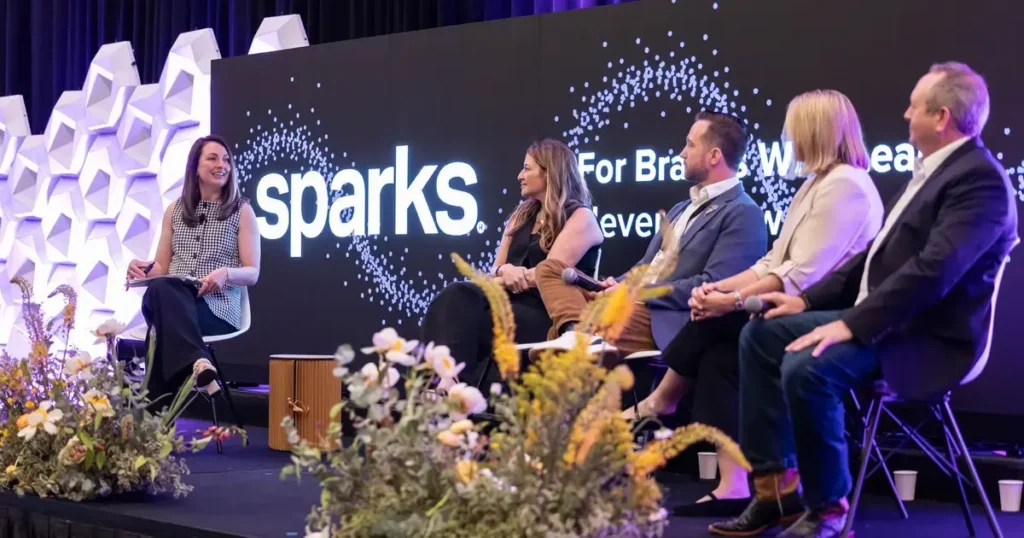
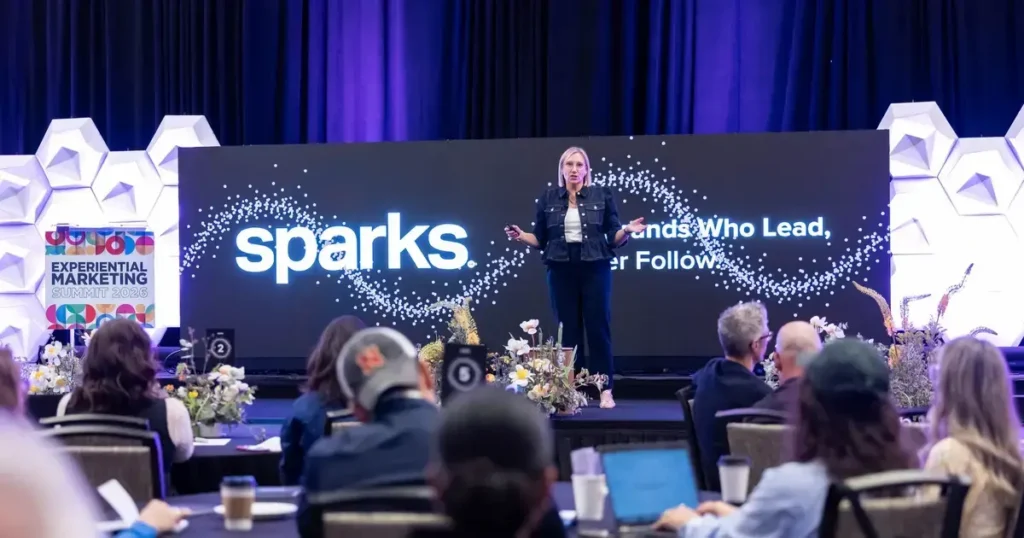
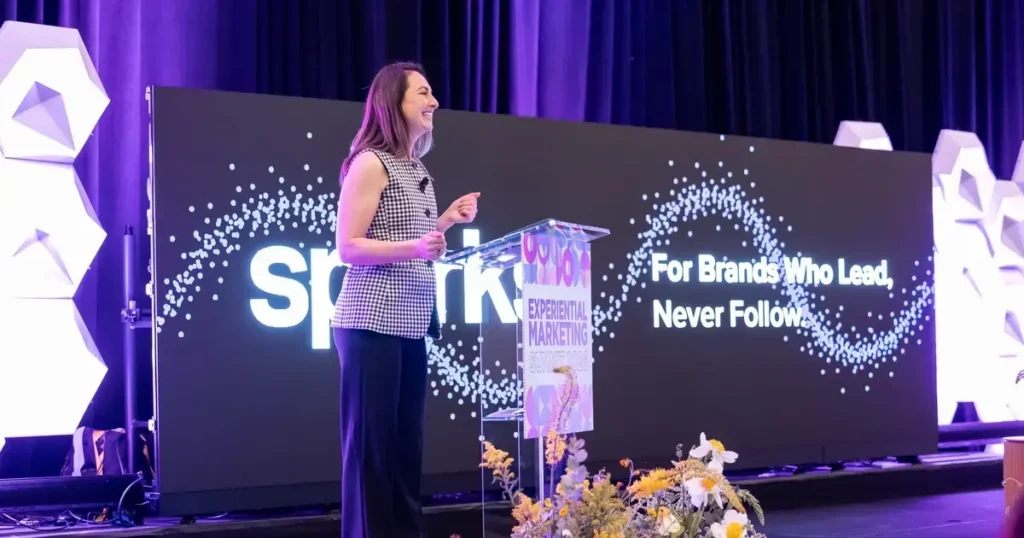
This frame opened the 2026 Sparks Executive Forum at the Experiential Marketing Summit, where Erica Spoor, SVP Business Strategy at Sparks, delivered a keynote on the rise of the Transformation Economy. Here, we’ll expand on that presentation to create a field guide for marketing leaders building toward what comes next.
We’re not in the education business. We’re in the transformation business. We expect everyone who participates in a program at the London Business School — whether it’s for two days or for two years — to be transformed by the experience.
John Quelch, former dean of the London Business School
The Five From/To Shifts
The Transformation Economy rests on five strategic shifts — each one a move from what experiential work used to deliver to what it must deliver today.
1. From Memorable → To Transformative
The bar for “memorable” has never been higher. Venues like the Sphere pack up to 20,000 people to view a 160,000-square-foot screen that fills every edge of their eyes. Music festivals like Coachella have become international cultural events that take on a life of their own, far beyond the celebrity lineup. Companies like Netflix, Meta, and Google have spent billions learning to hold human attention second by second, algorithmically tuned to each individual. Audiences now live inside that level of stimulation by default — which means the baseline for “this impressed me” keeps climbing. As a result, even once-spectacular events can fall flat.
It will always be a tough race to win, but you need to make sure that you’re running on the right path. While incredible builds are important, experiential marketers need to be careful to avoid making their events all about production value. Creating a spectacle to remember is no longer your main goal. Your job is to change someone: to send them home believing, knowing, or doing something they didn’t walk in with. That doesn’t require an ultra-expensive venue. It requires intention — deciding, before anything else, who your audience should become, and building backward from there. That’s something everyone can afford.
And when you do go big, the same rule holds. Venues like the Sphere are only delivery mechanisms. If an attendee’s main takeaway is “those lights were so cool,” you spent the budget and missed the opportunity. An event with no intention is just entertainment, not transformation.
As Erica Spoor put it in the keynote, “The experience ends. The change doesn’t.”
2. From Personal → To Individual
Brands have spent the last decade getting good at personal experiences that are designed for many but customized to you. This includes everything from personalized merch to persona-driven content tracks and choose-your-adventure session paths.
Personal is the starting line. Individual is where we’re headed.
Pine’s framework draws a sharp distinction between these two terms. Personal experiences are inherently temporal and customized to subgroups that share certain characteristics. Individual experiences are designed for one person and sustained through time. The technology that makes individualization at scale possible — AI capable of capturing data, modeling preference, and predicting next-best-actions in real time — is now production-ready.
Some examples of individualized experiences include Princess Cruises’ OceanMedallion, a wearable that personalizes the cruise experience by anticipating individual needs, HydraFacial, a physical-digital hybrid system that customizes skin treatments to individual biological response), Noom, AI and behavioral psychology delivering individualized daily interventions at population scale, and BetterHelp, a service that provides individualized mental healthcare guided at scale through digital infrastructure.
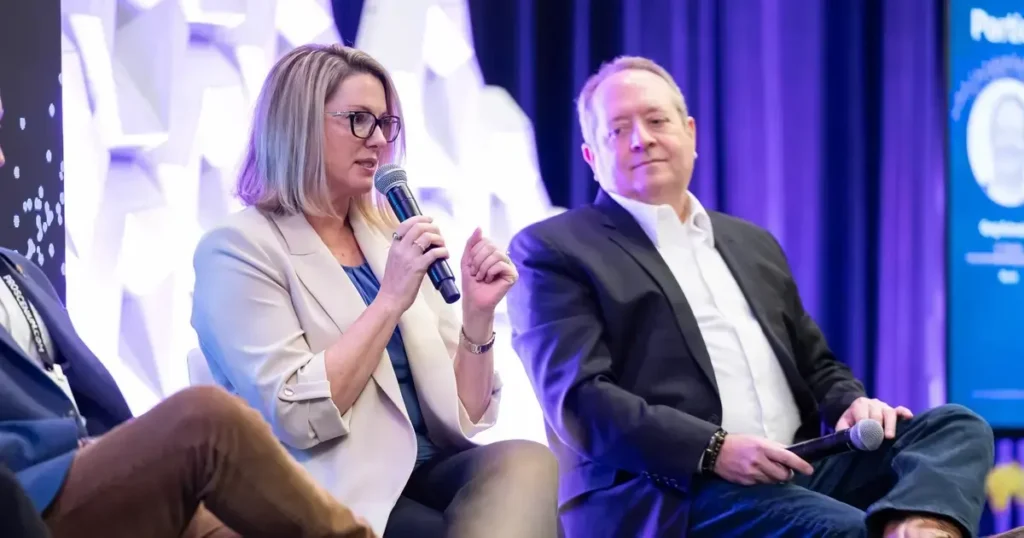
“Right now, individualizing an experience takes huge manual effort from the producer,” explains Erica. “AI will make individualization not just achievable but also no longer something the producer has to do by hand. It should be able to understand and predict the needs of who is engaging with it and deliver a highly intelligent and individualized set of recommendations within an experience.”
3. From Experience Stager → To Transformation Guide
This is the most significant role change in the industry.
A stager builds an experience and hopes it lands. A guide meets people where they are, moves them toward where they want to go, and helps them stay with the change after the event ends. As a leading marketer, you are no longer just staging an experience. You are leading customers on a journey from who they are today to who they want to become — and creating more value for your customer than a commodity or a single experience ever could.
This reframes the brief: the deliverable is no longer a flawless event, but a changed person. It reframes the success criteria: you’re measured by what people do after they leave, not by the energy in the room that night. And it reframes the story experiential marketers tell their clients about why this work matters — and what it’s worth.
The reality is that you cannot guarantee your customers achieve their transformations. All you can do is create the conditions under which individuals transform themselves.
4. From Temporary → To Lasting Impact
Most events are built to peak and then end. The lights come up, everyone goes home, and whatever happened in the room starts evaporating by the following week. The Transformation Economy rejects that timeline. If the value is the change in a person, then the event isn’t the finish line, it’s the midpoint.
At the 2026 Sparks Executive Forum, senior marketing leaders repeatedly discussed a framework that divides experiences into three measurable parts: Before / During / After.
- Before: Design with intention. Define attendee aspirations and identify what actions you want attendees to take within 90 days after the event. Even better, create a platform that enables attendees to design their own aspirations in advance.
- During: Assess whether attendees are moving from passive to active participation. Adjust the experience in real time. If an attendee misses a session, automatically suggest the next alternative.
- After — at 30, 60, and 90 days: Determine whether attendees can apply new learnings, do something new, or consider themselves or your organization in a new light.
When measurement frameworks change, design frameworks follow. When we measure for lasting change, we start designing for it too.
5. From Cluttered → To Clear
This shift determines whether any of the first four can be implemented — and it was a popular point of discussion in our working sessions.
Inside many brands, there are often too many initiatives running in parallel, too many tools rolled out before training catches up, and too many priorities competing for the same finite attention.
The pattern that surfaced across three separate working sessions — on AI measurement, authentic personalization, and internal complexity — was not that organizations lack ideas. It was that they lack clarity. Across the room, the same recommendations kept emerging:
- On AI adoption: Pick one tool, learn it deeply, and scale it up intentionally. The default of breadth-first experimentation is producing tool sprawl that creates questionable results. For example, without human oversight, a blind reliance on AI solutions can create poorly executed campaigns that damage an organization’s credibility.
- On personalization: Define what your company means by “personalization” or “individualization” before deploying your strategy at an event. Identify how AI can drive data-driven individualization through real-time recommendations and experiences, and decide when it makes sense to have a human step in.
- On internal complexity: Run the smallest number of well-owned initiatives, not the largest portfolio of partially-owned ones. Two questions belong in every leader’s operating cadence: What manageable change creates the biggest impact? And: Who owns it?
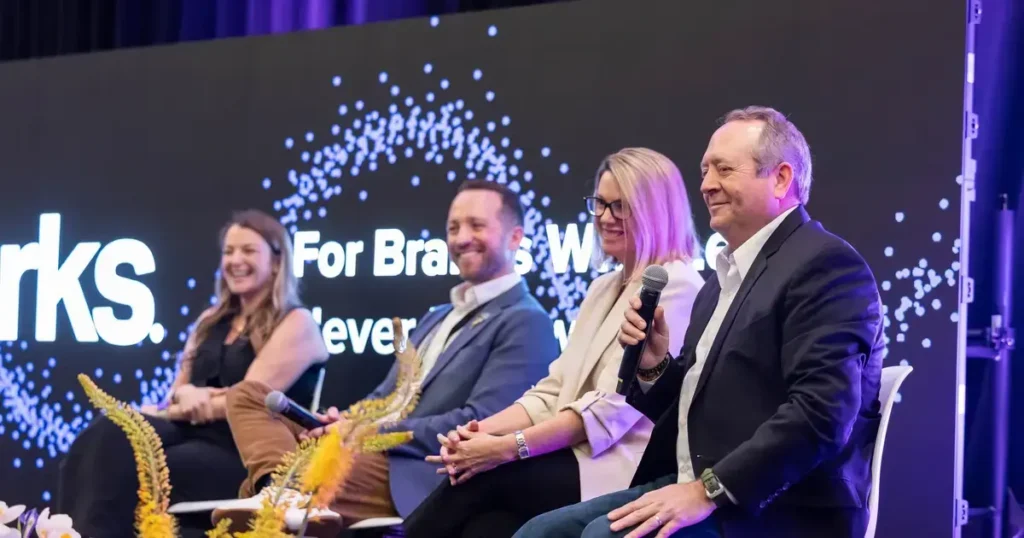
The leaders moving forward are the ones who are building clarity into their organizations, focusing on depth over breadth. Ashley Paré, an executive coach and TEDx speaker who works with senior leaders to cut through complexity, explains that to succeed, you need to first get your own house in order.
When leaders bring out the best in their own people, they become the ones who are most capable of guiding customers through meaningful change.
A brand cannot guide a customer through a transformation if its own internal teams are self-abandoning to fit a ‘compliance mask.’ True organizational transformation doesn’t require tool sprawl or massive portfolios; it requires leaders who have the audacity to choose radical clarity, depth, and human friction over comfortable status quos.
Ashley Paré, executive coach and founder of The Activator ®
Business Is Already Moving
Here are two companies every marketer can learn from that are already operating in the Transformation Economy frame:
1. TGL: TMRW Golf League
TGL successfully redesigned the typically exclusive live golf experience as a multi-dimensional, interactive event. A single live event was engineered to generate multiple distinct experiences — each purpose-built for its audience. In-arena fans gain proximity by being wrapped around the action in high-energy zones. Broadcast and digital audiences get unprecedented access, with every player mic’d and ball data delivered via a video-game interface. The shot clock and linear play structure enable micro-betting on every drive or putt, turning passive watching into active engagement. And functional sponsorships from brands like SoFi and Samsung power the infrastructure itself — buying into the mechanism of the sport, not just the signage around it.
This is the personal → individual shift in practice: one live event engineered into many audience-specific experiences, each pulling the viewer from spectator to participant. The transformation is in the participation itself — micro-betting, live data, and proximity turn passive watching into active engagement, the first move up Pine’s ladder from memorable to effectual.F
2. F1 Las Vegas
Formula 1’s expansion into Las Vegas turned a bucket-list experience into an accessible, city-scale activation. Real F1 fans were initially skeptical, but the track design balanced high-quality, technical street racing with the visual quality required to make the broadcast work. Ticket pricing was structured for accessibility. Pit Crew simulations, real-time driver footage, and permanent city-wide activations extended the experience beyond the race itself. The result: a transformation of what F1 means to fans, and an introduction of the sport to entirely new audiences. The 2024 race generated an estimated $934M in economic impact and brought 150,000+ attendees to Las Vegas during a traditionally slow period.
This is the memorable → transformative shift: the goal wasn’t a spectacular weekend but a lasting change in belief. Skeptics and first-timers left convinced F1 is for them. The race is the moment; the changed relationship to the sport is the transformation that outlasts it.
We’re not saying every event has to produce a dramatic, life-altering change. Transformation exists at every scale. A shift in perspective is a transformation. A skill that opens a new door is a transformation. Feeling genuinely connected to a community for the first time is a transformation.
Erica Spoor, SVP Business Strategy at Sparks
What This Means for Every Marketing Leader
The Transformation Economy frame is not industry-specific. Whether the work is a B2B customer conference, a B2C activation, a hospitality program, or a healthcare congress, the same question applies:
How will your next event empower someone to feel, believe, know, or do something they couldn’t before?
The experiential industry has been using the “Feel, Think, Know, Do” design thinking framework for decades to design memorable experiences.
The key here is “that they couldn’t do before” they attended.
This is the question Erica Spoor closed her keynote with, and it is the question every brief, every creative review, and every measurement framework should be running against. It is the single most useful diagnostic in the Transformation Economy frame because it forces the answer down to a person, an outcome, and a timeframe.
The industry has the tools and increasingly the intention. The challenge now is leading what comes next.
Three Questions to Bring Back to Your Team
These key questions are designed to be brought directly into your next briefing, creative review, or planning meeting to help transform your own strategy.
- The From/To question. What will an attendee go from / to as a result of this experience? Write your answer down before the brief is written. If you cannot complete the sentence, the program is not yet designed for transformation.
- The 30/60/90 question. How will we measure whether the transformation holds? Define what success looks like at 30, 60, and 90 days post-event. Build the measurement plan before the production plan.
- The ownership question. Who owns it — and what is the manageable change inside this initiative that creates the biggest impact? They are the operational backstop that makes everything above implementable.
Frequently Asked Questions
The Transformation Economy is the next stage of economic value creation, defined by B. Joseph Pine II in his 2026 book of the same name. It extends the Experience Economy framework Pine co-authored in 1999: where goods and services are consumed and experiences are remembered, transformations are effectual — they change who the customer is. Its economic function is to guide a person from who they are today to who they want to become.
B. Joseph Pine II is the co-author of The Experience Economy (1999, with James H. Gilmore) and author of The Transformation Economy (2026). His Experience Economy framework has been the intellectual foundation for modern experiential marketing for more than two decades.
The Experience Economy is about staging memorable moments where the experience itself is the product. The Transformation Economy is the next stage above it: the product is no longer the experience but the lasting change it produces in the participant. In the Experience Economy you pay to have an experience; in the Transformation Economy you pay to become someone different because of it.
An experience is memorable — its value lives in what the participant remembers, and it fades over time. A transformation is effectual — its value lives in how the participant is changed, and that change persists after the experience ends. Put simply: an experience is something you have, a transformation is something you become.
Effectual means producing a lasting effect on the person — actually changing them in a way that persists after the moment ends. It is the property that separates a transformation from an experience: an experience is memorable but its value fades with the memory, while an effectual transformation alters the participant’s skills, beliefs, or capabilities going forward.
The Transformation Economy is defined by five strategic shifts in experiential marketing: from memorable to transformative, where the intention to change behavior, not production value, is the differentiator; from personal to individual, where individualization at scale replaces broad personalization; from experience stager to transformation guide, where the designer’s economic role changes; from temporary to lasting impact, where success is behavior change measured at 90 days rather than applause in the room; and from cluttered to clear, where focusing on fewer, well-owned initiatives is what makes the other four possible.
Personalization designs one experience for many people and customizes elements to each — personalized merchandise, persona-based content tracks, or choose-your-path sessions. Individualization designs the experience around a single person and adapts to them over time. Personalization is the starting line; individualization at scale, made operationally possible by AI that captures data, models preference, and predicts next-best actions in real time, is the frontier of the Transformation Economy.
Individualization at scale is the design of experiences uniquely tailored to each participant, made operationally possible by AI, real-time data capture, and modular delivery. Examples already in market include Princess Cruises’ OceanMedallion, HydraFacial, Noom, and BetterHelp — each delivering an individualized outcome to large numbers of people at once.
A transformation is measured through a Before / During / After framework. Before the event, you define attendee aspirations and the specific actions you want them to take within 90 days. During the event, you track whether attendees move from passive to active participation and adjust in real time. After the event — at 30, 60, and 90 days — you measure whether attendees can apply something new, do something new, or see themselves or their organization differently.
The Before / During / After framework reframes an event from a single day into a continuum, with the event as the turning point between who someone was before and who they become after. It assigns each phase a job: Before is for designing with intention and defining aspirations, During is for tracking and adapting participation in real time, and After is for measuring whether the change is held at 30, 60, and 90 days. Its underlying principle is that when you measure for lasting change, you start designing for it.
Two forces are converging. Audiences fatigued by digital saturation and distrust are returning to in-real-life experiences, and Sparks research finds that 80% of marketing leaders are moving budget into experiential. At the same time, event production costs have risen roughly 25% above 2019 levels and attendees pay more to travel, raising the bar for what counts as worth attending — which pressures marketers to justify experiences by lasting outcomes rather than spectacle.
The defining diagnostic question is: “What will someone be able to feel, believe, know, or do after your next event that they couldn’t before?” Posed by Erica Spoor, SVP Business Strategy at Sparks, in her 2026 Executive Forum keynote, it is the most useful test in the Transformation Economy frame because it forces the answer down to a specific person, a specific outcome, and a specific timeframe.