The Opportunity
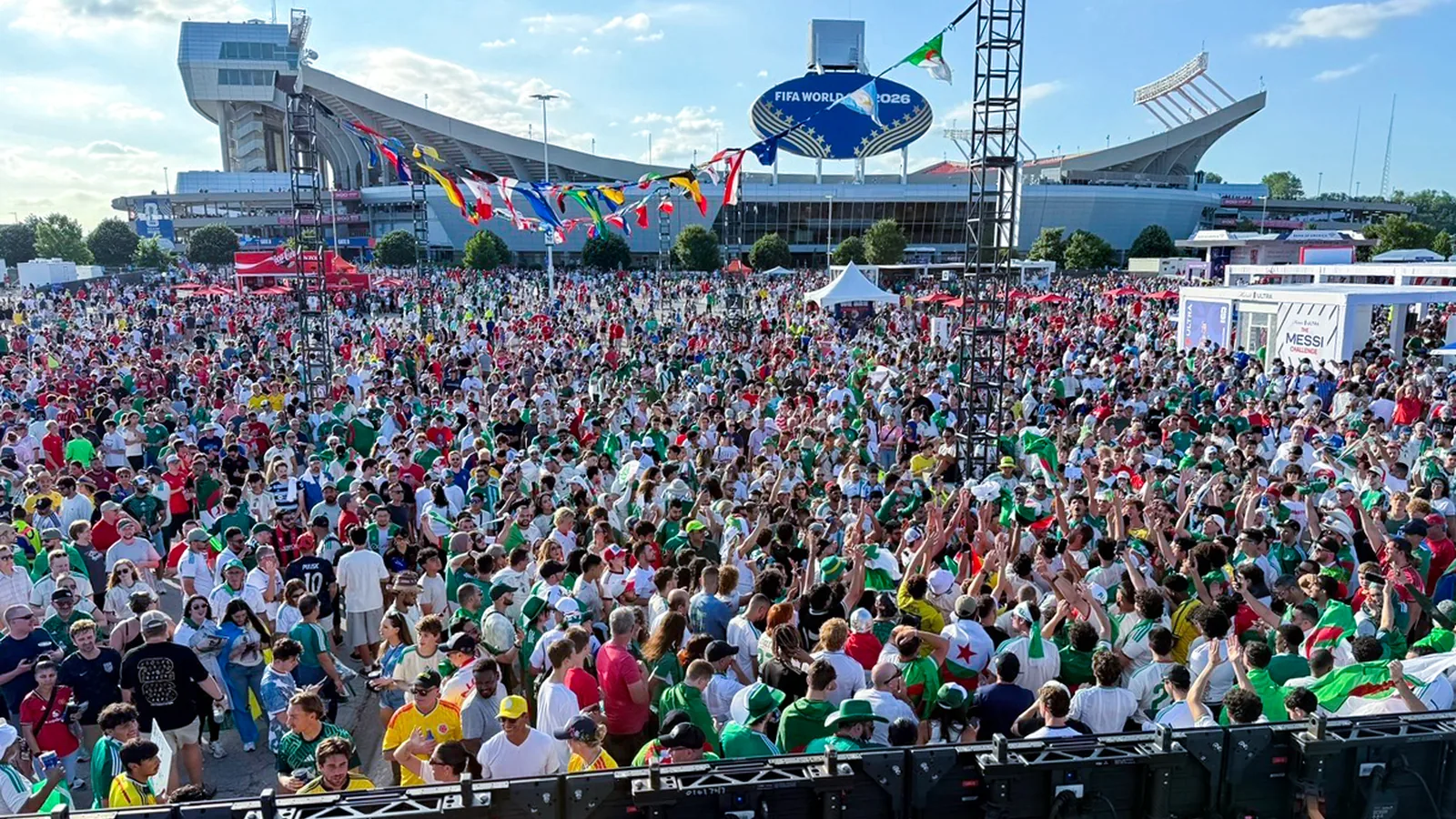
FIFA’s objective was to create a fan experience that felt unmistakably its own at every one of the seven host cities. That required giving commercial partner activations, broadcast experiences, and FIFA-owned programming a shared, integrated structure that felt native to each stadium.
Beyond cohesion, FIFA sought to increase fan engagement in the hours surrounding kickoff — stadiums opened two to three hours before each match and stayed active for an hour or more after the final whistle, with Sparks-produced programming serving as the central draw throughout. The brand also needed an operational model capable of scaling from a single-stadium pilot to a multi-city global tournament.
Sparks had produced the fan experience at a single stadium the previous summer, at the FIFA Club World Cup 2025, which served as a base model for how the team would approach the official 2026 tournament.
The Solution
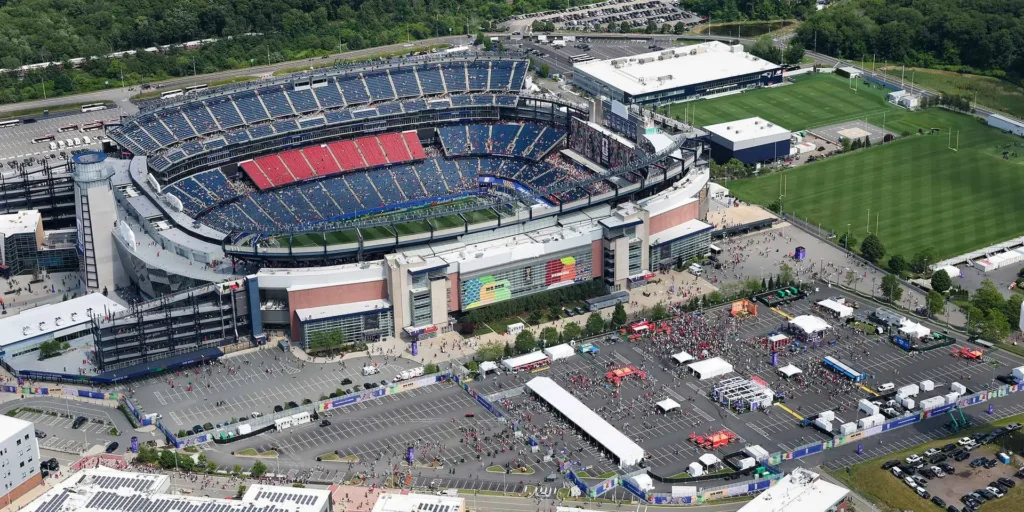
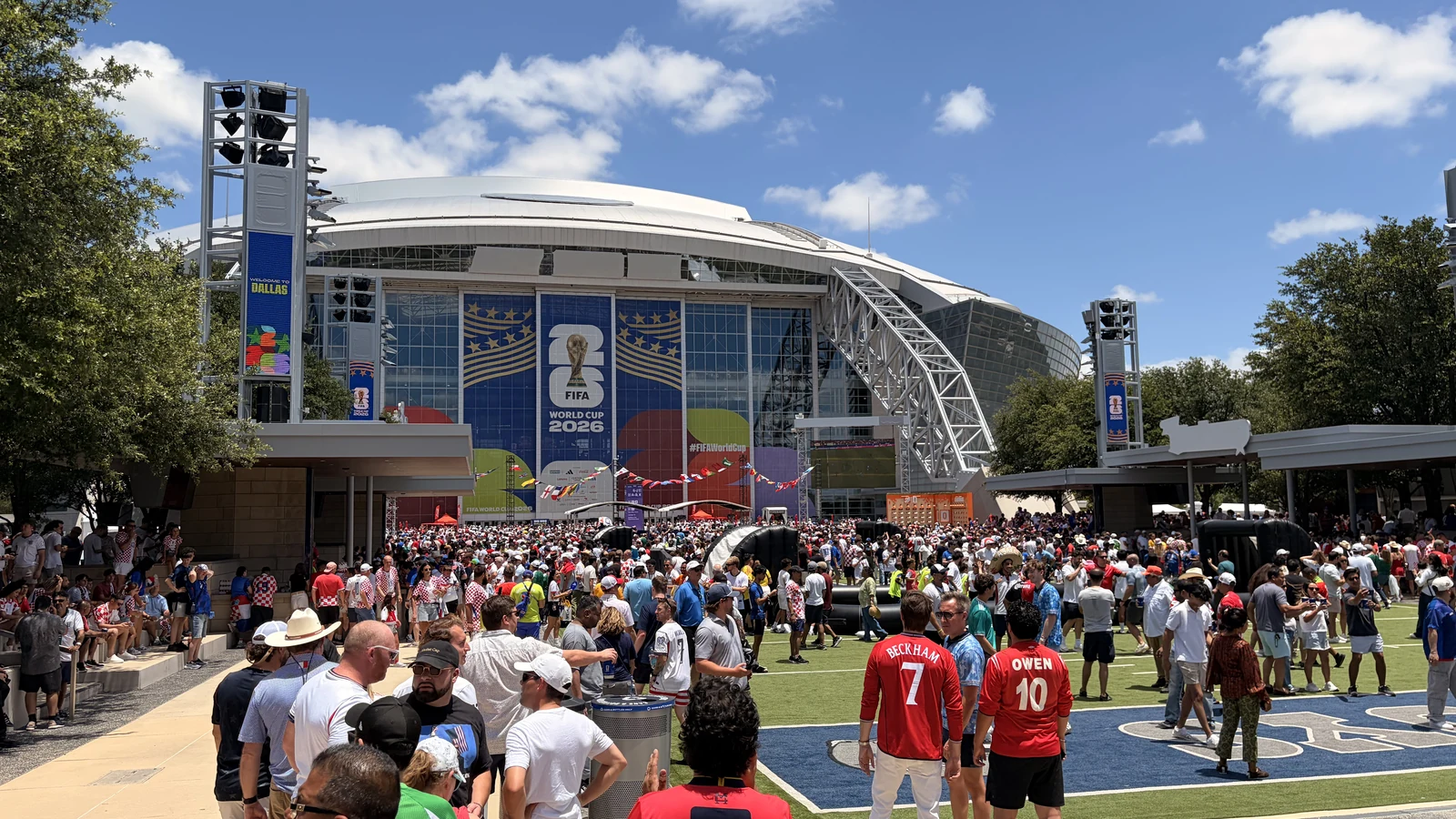
Sparks designed and produced all FIFA-owned, non-commercial partner activations, creating the overarching framework that transformed each venue into a unified fan destination. While commercial partners and broadcasters built their own footprints, the framework was what connected them, setting where fans entered, how they moved toward the gate, and what each part of the site was for.
This framework was built once and applied seven times, but never onto identical ground. Stadium footprints varied widely from city to city. In some venues, the fan experience spanned two separate, disconnected areas, and the team designed ways to visually and physically link them into a single cohesive journey. Despite that variation, the structure, the core activations, and the FIFA brand presence remained consistent from city to city. What changed was the site itself and the programming inside it.
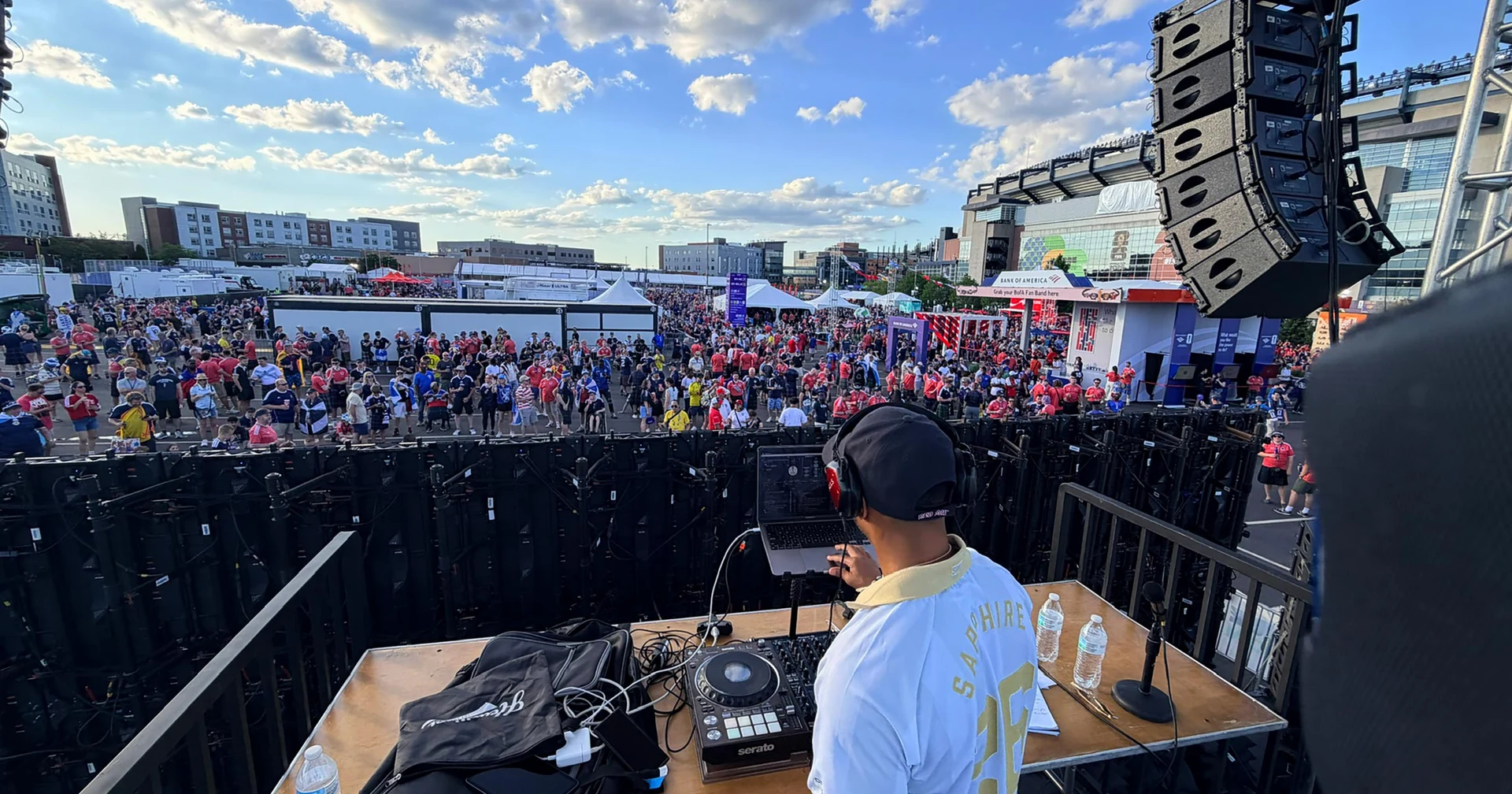
Sparks developed a Town Square environment that was consistent across each venue. A fan who traveled between host cities found the same general layout in stadium, and that consistency is what brought people from around the world together in one shared experience.
While the builds looked alike, each market featured programming and entertainment that was cast locally. For example, in Atlanta, the brand drew on the city’s Historically Black College and University (HBCU) tradition with a step and percussion collective. In Dallas, the team brought in a championship trick roper, and in Miami, Caribbean dancers and drummers through the crowd. The same framework was adapted so that each experience was unique but familiar at the same time.
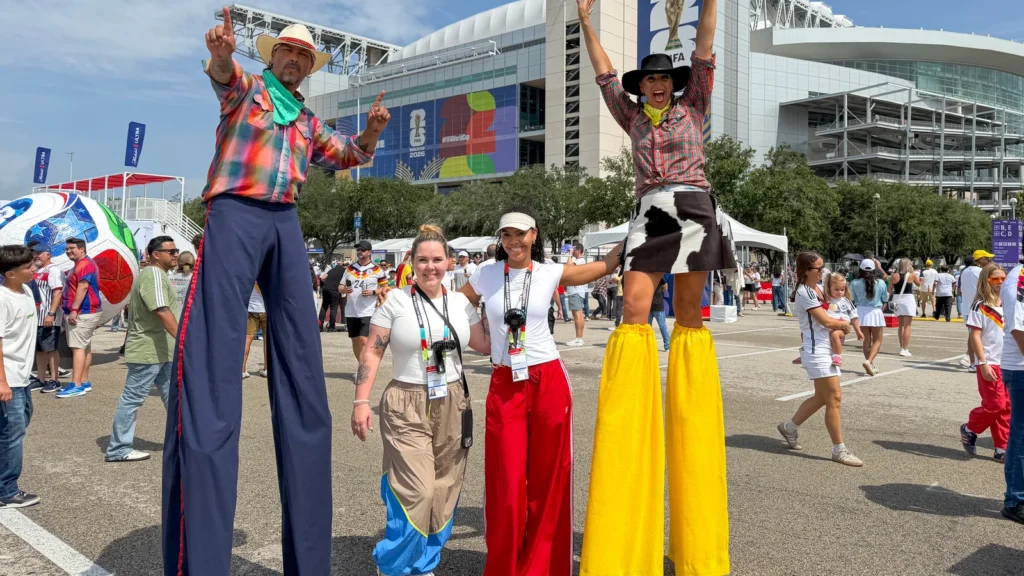
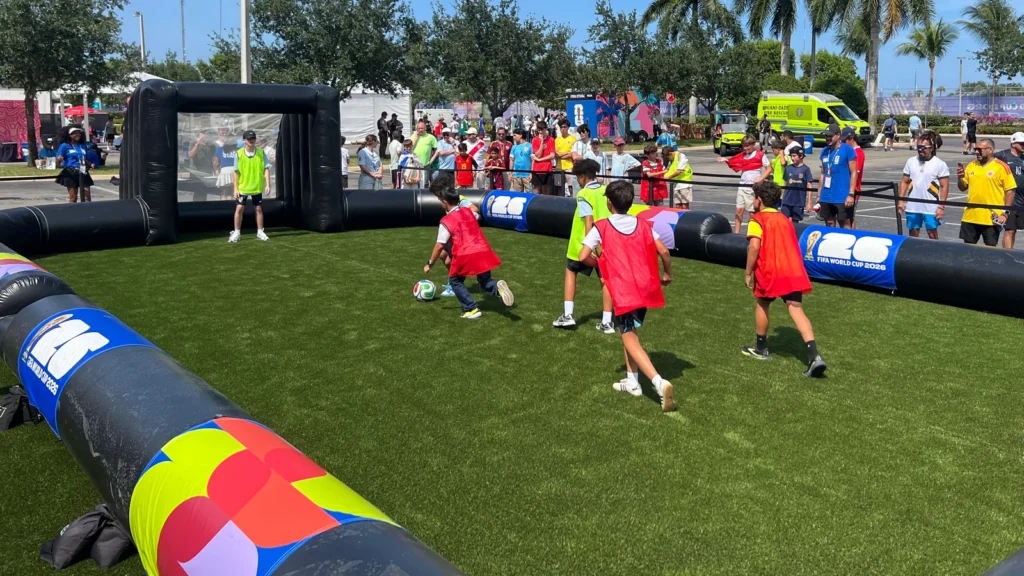
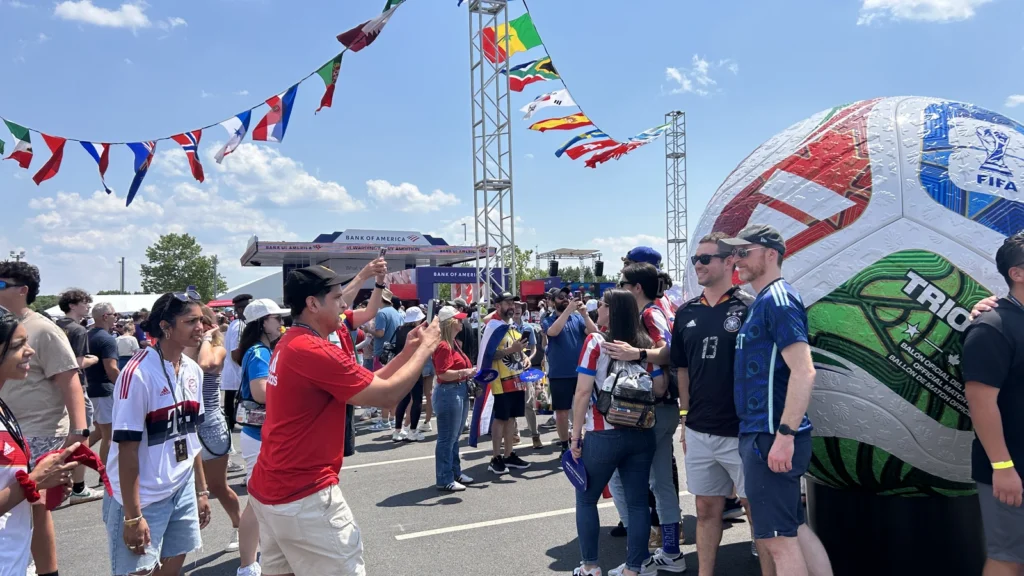
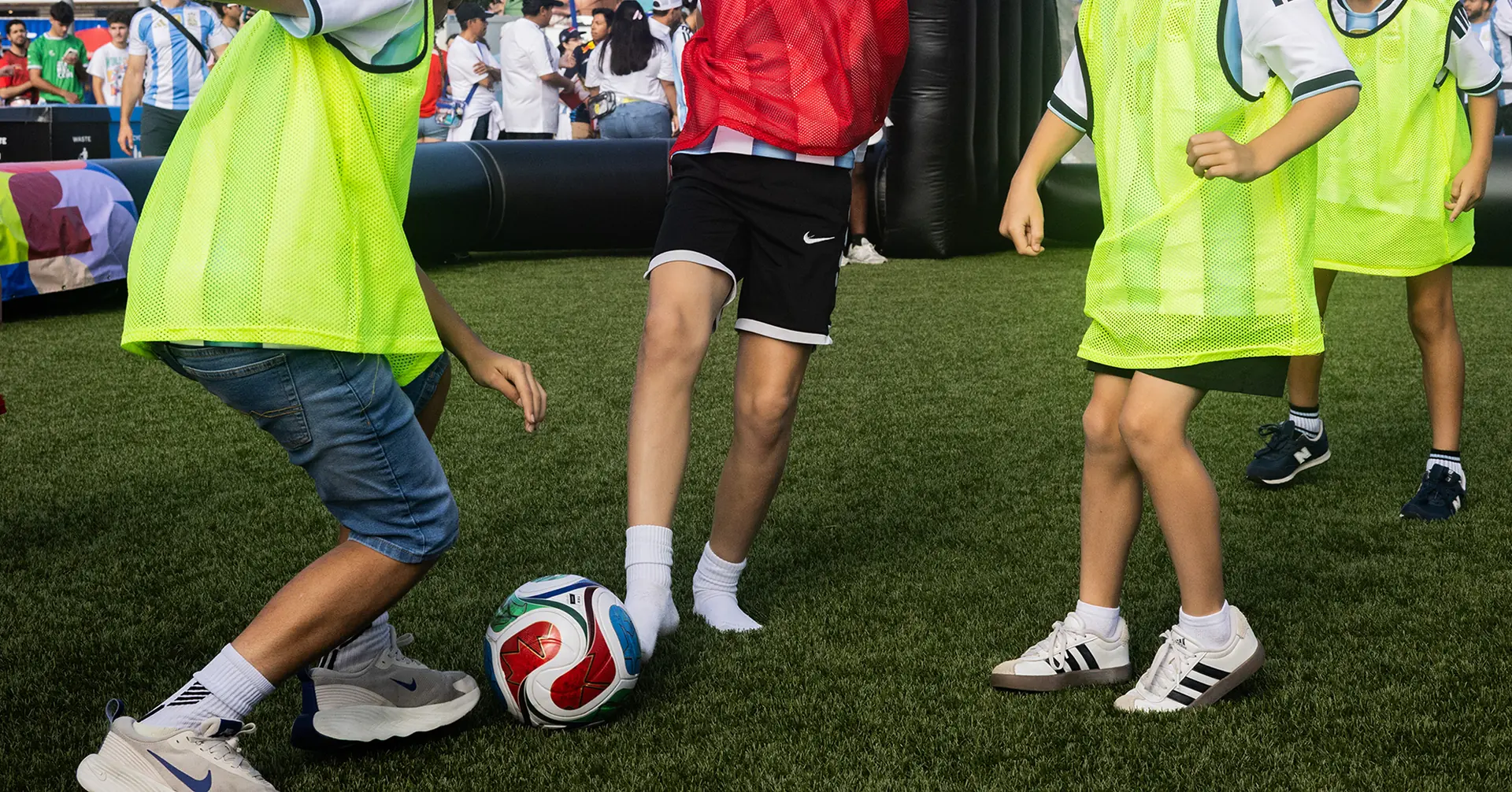
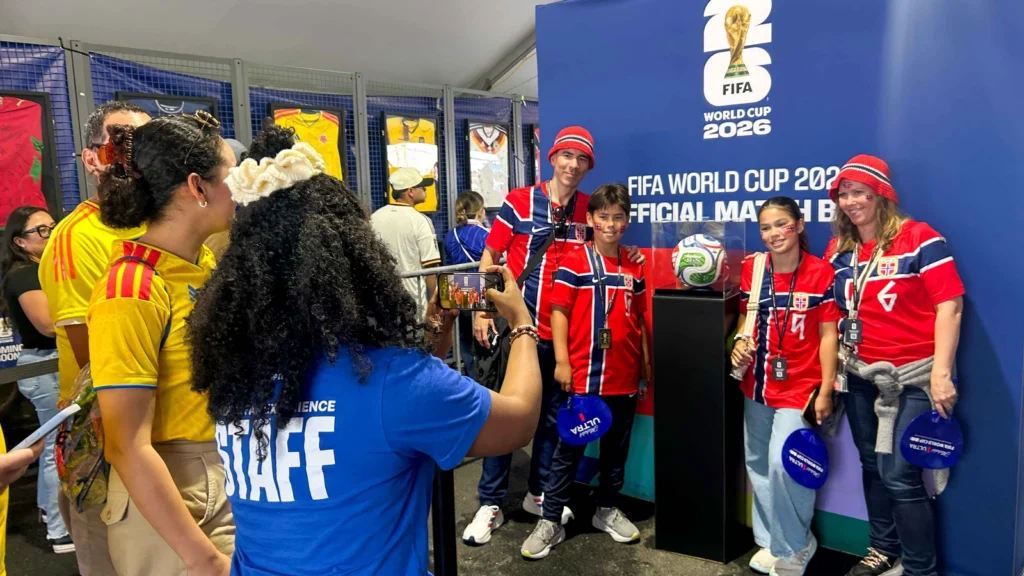
To increase engagement and dwell time, the environments also featured skill challenges, mini matches, photo opportunities, face painting, and iconic FIFA touchpoints including the Official Match Ball and signed team jerseys. The same set of activations was built for every venue, with each scoped to what its site could support.
A canopy of flags representing all 48 competing nations marked each entrance. A jersey wall displayed the colors of every nation in the tournament, where fans found their own and photographed themselves in front of it. An inflatable mini-pitch let fans play matches of their own, with local academy coaches running skill challenges and FIFA Legends appearing for demonstrations and meet-and-greets, cast to match the nations playing at each venue.
Together, these crafted a dynamic fan journey that encouraged exploration and discovery, and gave fans a reason to arrive early and linger.
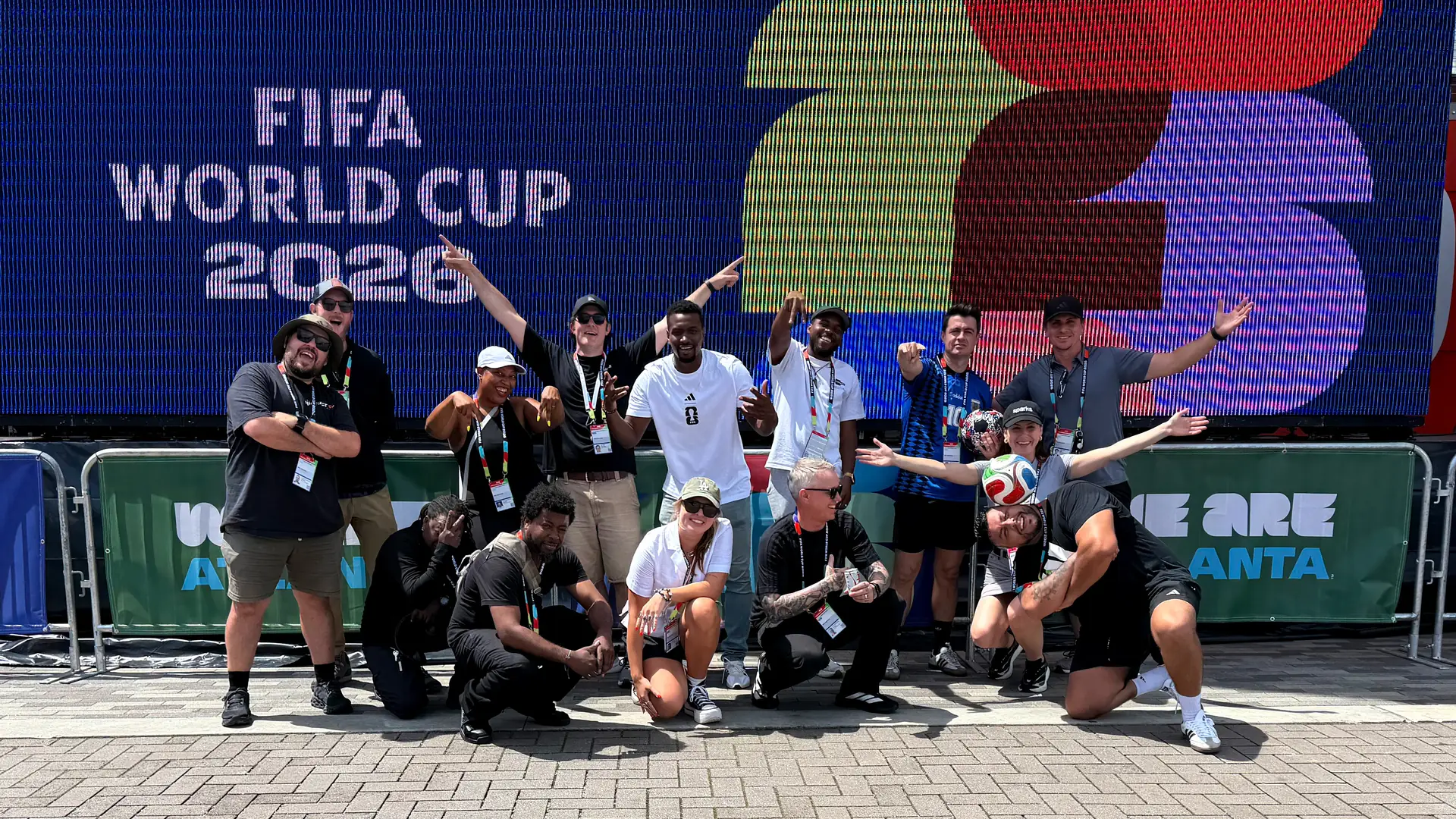
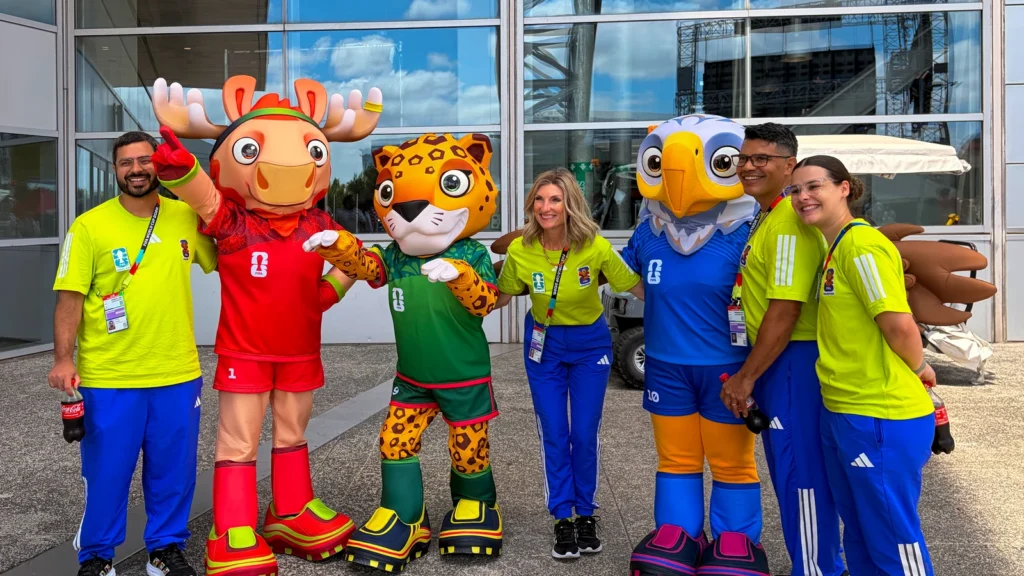
To build an operational model that could scale from a single stadium to a multi-city tournament, load-in began 30 days before the tournament’s first match and continued through all 39 days of the competition, with venues installed, operated, and struck on overlapping schedules set by the match calendar. Sparks staffed and briefed the brand ambassador teams working every site, and cleared the program through FIFA brand governance, venue permitting, sustainability requirements, and risk management in each of the seven cities.
The Impact
Sparks delivered the fan experience framework across seven host cities and 51 tournament matches, running the same program in every city for the length of the tournament. The program scaled an experiential model from a single-stadium pilot in 2025 to a multi-city tournament deployment in 2026, and balanced localized fan experiences with a consistent FIFA brand presence across all host cities.
6.8M
Fans
51
Tournament Matches over 6 Weeks
7
Major Stadiums across the US
Client Quote
Beyond the Metrics
Sparks measures a program by what it changes in the people who attend it, before they arrive, while they are there, and after they leave. The fan experience was built with all three in mind.
Giving ticketholders a reason to arrive early: A ticket tells a fan when the match starts, not when to show up. By featuring local talent on stage and building activations worth reaching before the gates opened, Sparks and FIFA gave fans a reason to arrive early, which helped drive engagement across every game.
After the event: fans who stay with the tournament: A fan who has played on the pitch, found their own nation on the jersey wall, and stood next to the Official Match Ball leaves the stadium as a participant in the World Cup rather than a spectator at one match. That fan follows the tournament more closely, shares what they did there, and looks for the next chance to be part of it. For a rights holder whose relationship with fans has to outlast a 39-day tournament, that is the behavior the fan experience was built to produce.
A Note on Partners
FIFA owned the tournament, the brand, the commercial partner program, and the broadcast relationships. Sparks led the non-commercial fan experience and the framework that connected it to everything else on the ground, coordinating a network of partners spanning staging, audiovisual, entertainment, graphics, equipment, staffing, and local labor in each of the seven host cities. This included BaAM, part of the TFC collective, who led overlay planning, procurement, and delivery across all 16 World Cup venues and more than 150 ancillary sites, ensuring a seamless experience across tournament footprints.
Frequently Asked Questions About FIFA World Cup 2026
Sparks designed and produced all FIFA-owned, non-commercial partner activations across seven US host cities, and created the overarching framework that transformed each venue into a unified fan destination. That included the Town Square environment and main stage, the activations inside it, and locally cast programming and roving entertainment.
Boston, Philadelphia, Atlanta, Miami, Houston, Dallas, and Kansas City — seven of the 11 US host cities, covering 51 of the tournament’s 104 matches.
The 23rd FIFA World Cup, held from June 11 to July 19, 2026, across 16 host cities in the United States, Mexico, and Canada. It was the first World Cup hosted by three countries and the first contested by 48 teams, expanded from 32.
They are separate tournaments. The FIFA World Cup is contested by national teams every four years. The FIFA Club World Cup is contested by club sides from domestic leagues around the world, and its expanded edition was held in the United States in 2025. Sparks produced the fan experience at a single stadium there, and that program was the pilot for the seven-city deployment in 2026.
Yes. The FIFA World Cup 2026 fan experience began as a single-stadium pilot in 2025 and scaled to seven cities and 51 matches in 2026. The pilot established the framework and the operating model that made the multi-city deployment repeatable.
A stadium fan experience is the programmed environment in the plazas and concourses surrounding a match venue. It covers what fans encounter from the moment they arrive on site until they pass through the gate, including activations, entertainment, photo moments, and brand touchpoints from the rights holder and its commercial partners.