The Opportunity
The goal of Netflix House is to meet fans where they live, build local economic and cultural footholds, and translate the breadth of Netflix’s slate into something fans could touch, experience, and take home.
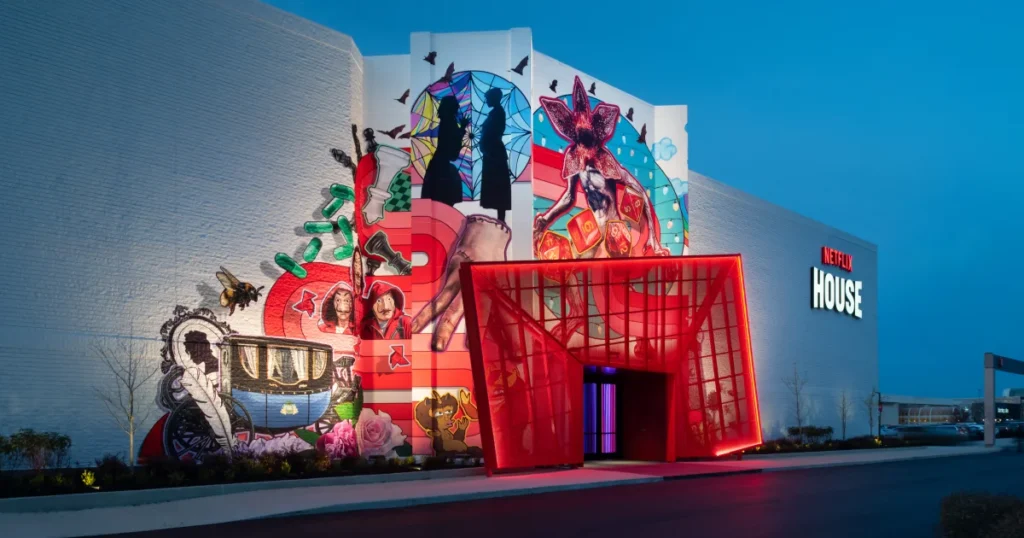
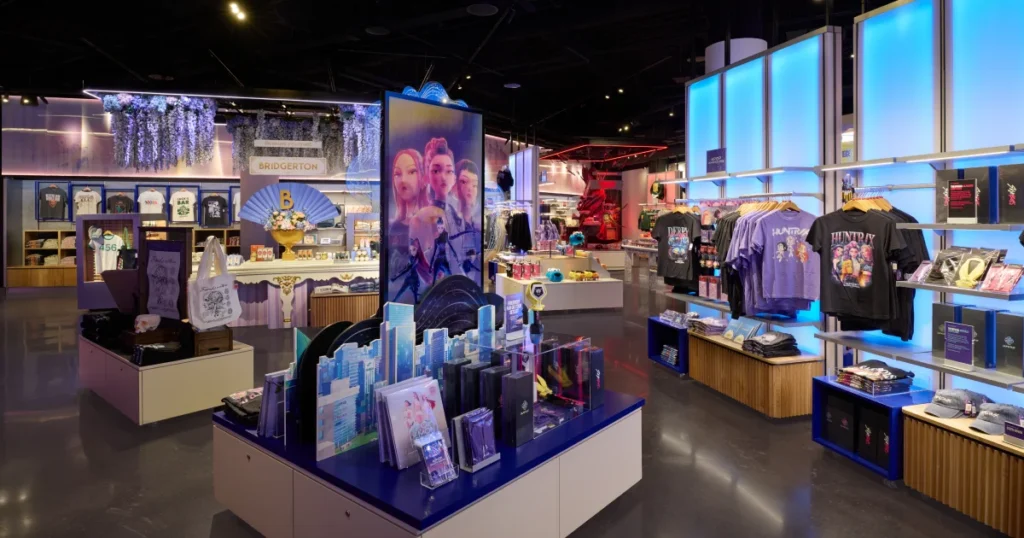
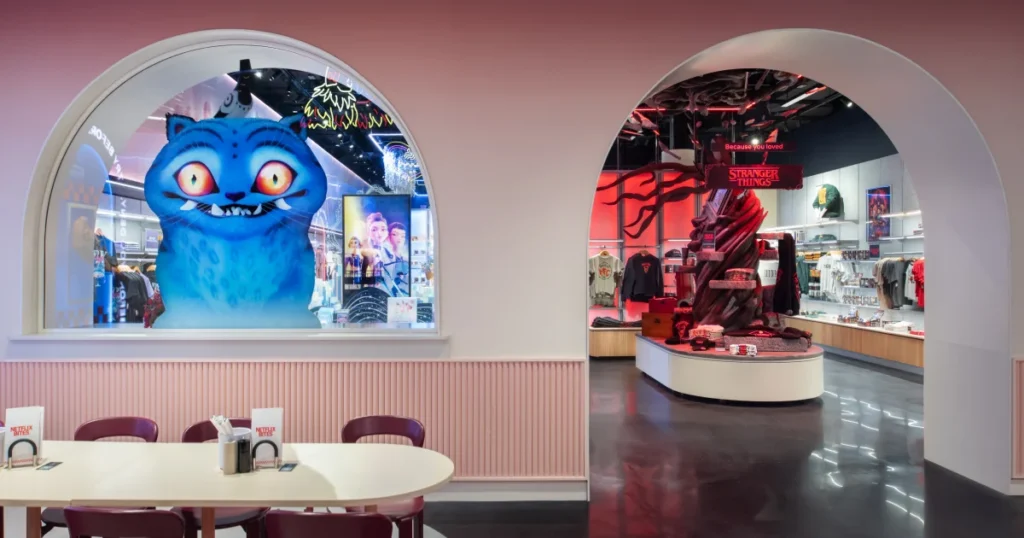
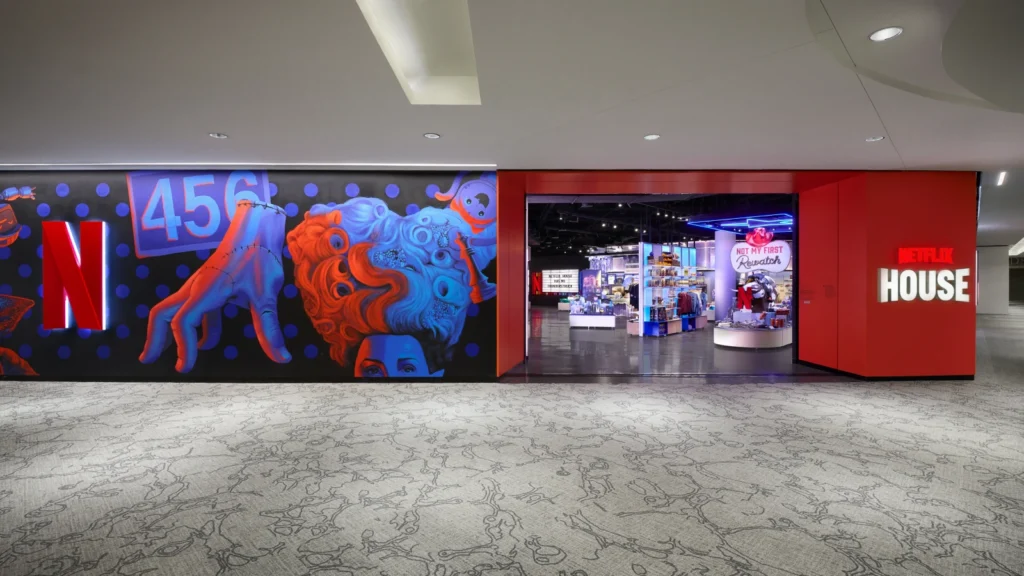
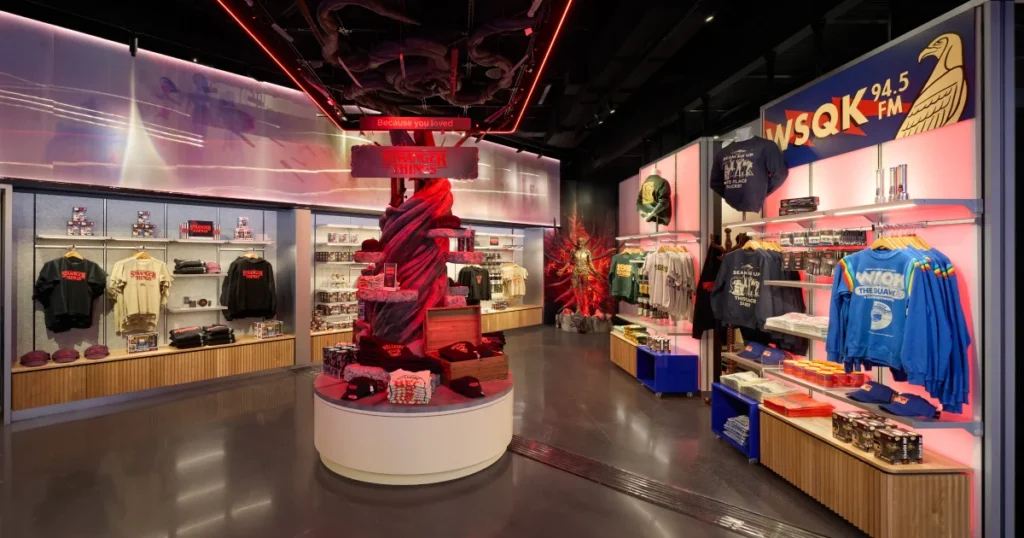
The retail location at Netflix House isn’t a single-brand store. On any given visit, a fan moves between the worlds of Stranger Things, Bridgerton, ONE PIECE, Wednesday, KPop Demon Hunters, and a rotating slate of other titles — each with distinct color palettes, fandoms, tonal registers, and merchandising logic.
The retail component had to:
• Honor each title’s identity while visually working next to other titles
• Keep fans moving through clear, photo-ready moments rather than dense racks
• Support evolution — Netflix’s slate changes, and so should the floor — without rebuilding the space each time
• Localize meaningfully in Philadelphia and Dallas, reflecting place rather than dropping a templated experience into two cities
• Optimal performance on opening weekends, holidays, and title-launch peaks, when traffic and energy spike
The Solution
Sparks delivered an experiential merchandising system, engineered to host many titles cleanly, switch with the slate and local fandom, and scale across locations.
A modular retail architecture
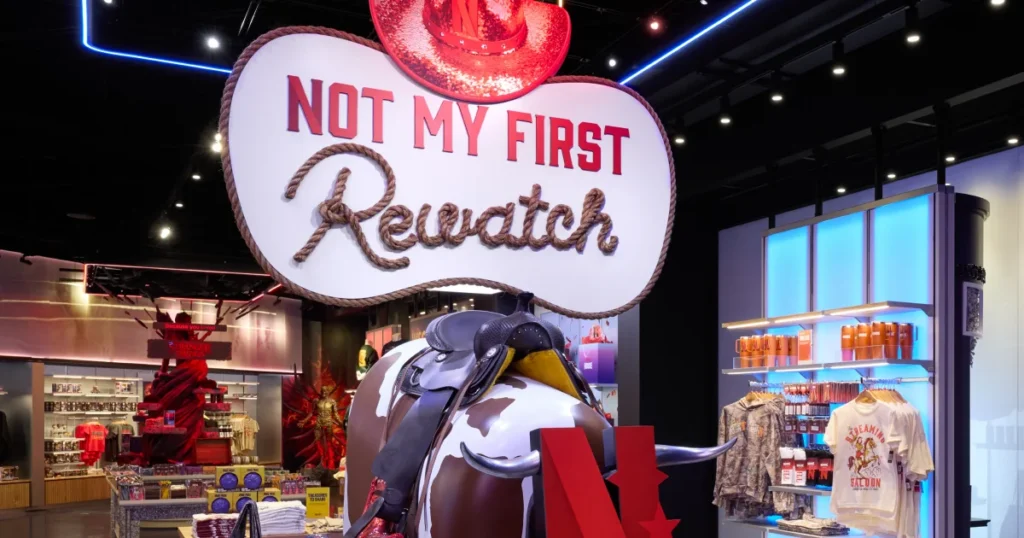
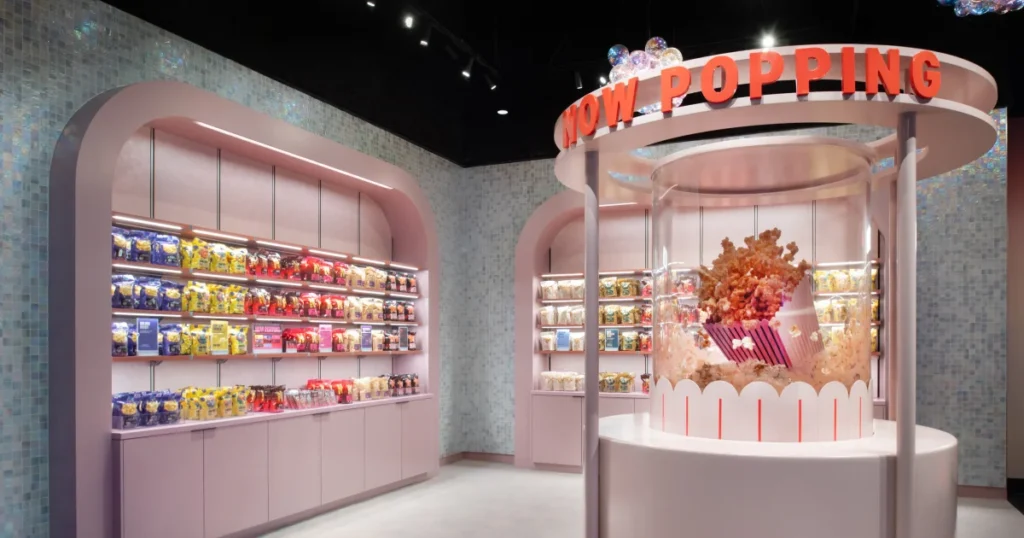
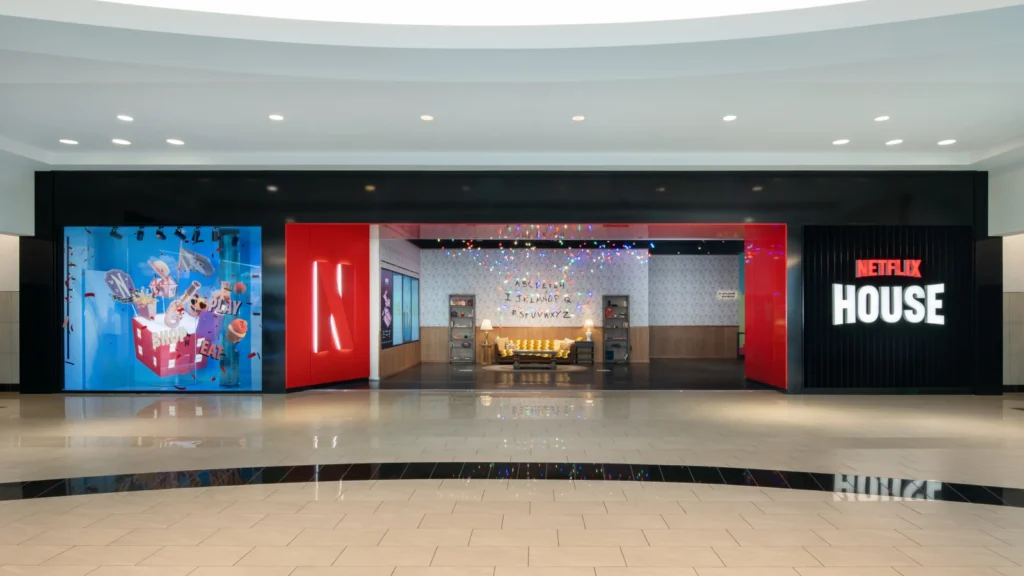
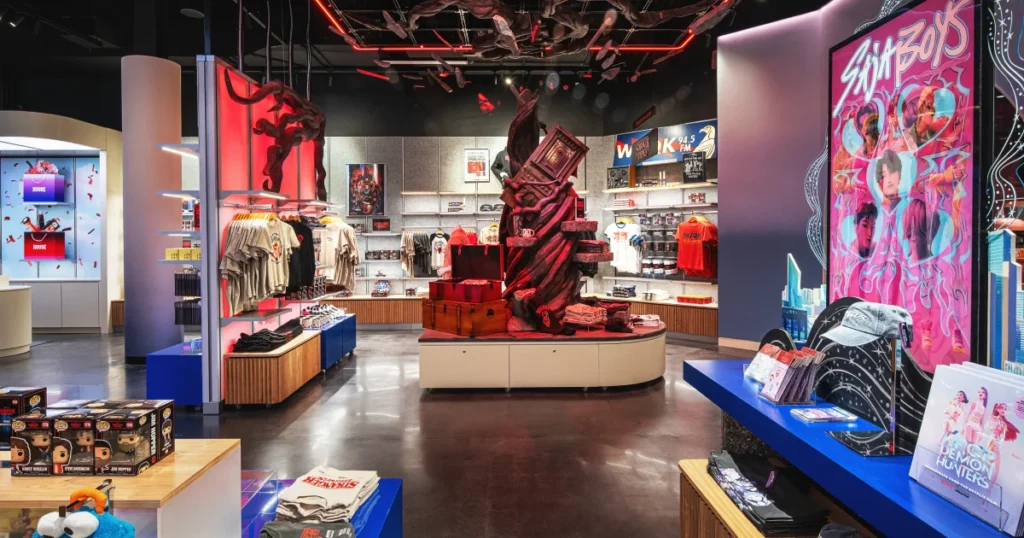
Rather than designing fixed sets, Sparks built a vocabulary of repeatable retail components — anchors, windows, photo ops, fixtures, and display systems — that can be updated and re-merchandised as titles rotate. Materials, sightlines, and lighting were specified to keep the underlying space premium and consistent, while the title-level layers (graphics, props, lenticulars, product) carry the storytelling weight.
This approach gives Netflix a retail space that can refresh on the cadence of its content, not the cadence of construction.
Built to evolve
Across both locations, the retail system is designed for change. As Netflix launches new titles and seasons, or seasonalizes the floor, the underlying architecture stays — only the storytelling layer turns over. That keeps the cost of evolution low and the quality of the fan experience high.
The Impact
Cultural relevance with permanence. Pop-ups close. Netflix House stays open. The retail experience inside is built to the durability and operational standard of a permanent venue, not a temporary activation.
A scalable model. What Sparks built isn’t a one-off — it’s a reusable system. As Netflix expands and changes the format, the retail framework supports it.
A platform for evolution. Netflix’s slate will change and fandoms will evolve. The retail floor is designed to change with it, without rebuilding the space.
A Note on Partners
Netflix led the vision and overall creative direction and each location is the result of partnership across architects, builders, restaurant operators, mural artists, and experiential specialists.
Sparks is proud to be Netflix’s partner on the retail experience within Netflix House.
Frequently Asked Questions
Sparks designed and built the retail experience inside Netflix House Philadelphia and Netflix House Dallas. That work includes anchor retail moments, immersive storefront windows, interactive photo opportunities, custom fixtures and displays, and the experiential merchandising system that hosts multiple Netflix titles inside each location.
No. Netflix House is a 100,000+ square-foot permanent venue at each location, comprising immersive experiences, Netflix Bites restaurant, retail, gaming and other programming. Netflix led the overall creative vision for Netflix House. Sparks’s scope was the retail and experiential merchandising layer.
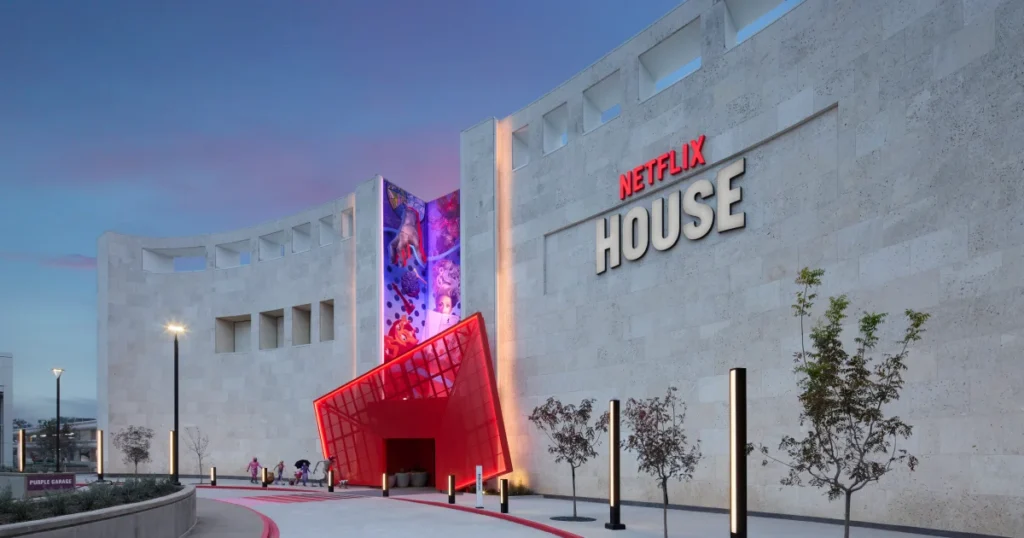
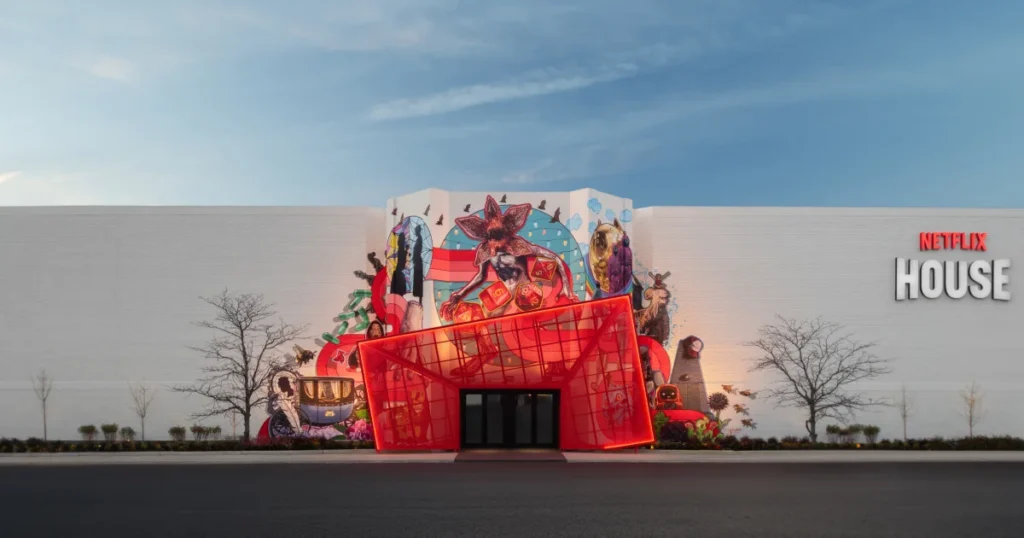
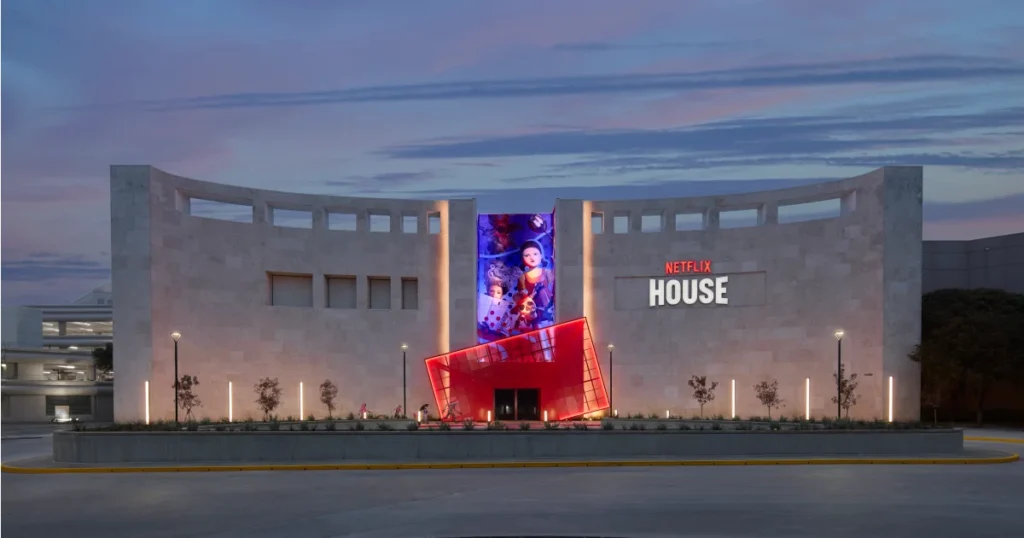
Netflix House Philadelphia is at King of Prussia, A Simon Mall in Pennsylvania. Netflix House Dallas is at Galleria Dallas (a MetLife Investment Management property).
The retail experience hosts a rotating slate of Netflix titles. At launch, featured worlds included Stranger Things, Bridgerton, ONE PIECE, Wednesday, KPop Demon Hunters, Squid Game, and others, with location-specific expressions in each city. The system is designed so that titles can rotate without rebuilding the space.
Both locations share the same underlying experiential merchandising framework, but the expression differs. Philadelphia is organized around fan flow — sequenced anchors, windows, and merchandising zones that move fans through complete title worlds. Dallas leans into modular fixturing and photo-first composition, tuned for the location’s traffic pattern, and incorporates location-specific Texas references and integrated brand moments.
Netflix House is a permanent, year-round, free-to-enter entertainment destination open to all ages. Inside, fans can explore experiences, eat at the Netflix Bites restaurant, shop exclusive merchandise, and attend seasonal programming events. Sparks’s retail work serves that fan visit — making the shopping and merchandising portion of the experience as immersive as the rest of the venue.
Three things. First, Sparks designs retail as a story, not as racks — the merchandising is part of the narrative, not a separate stop. Second, Sparks builds modular systems that let one space host many brands or titles cleanly, and evolve over time without rebuilding. Third, Sparks designs to operational reality — fixtures, sightlines, and flow are engineered to perform under peak-day pressure, not just in renderings. Sparks has earned a place on two of the experiential marketing industry’s most respected lists for 2026: Event Marketer’s 2026 IT List and the 2026 FAB 50 along with Best Sports Tie-in/Sponsorship Activation at the 2026 Experiential & Event PR Awards from PRNEWS and Chief Marketer.
Yes. The system is purpose-built for evolution. The architecture and fixturing remain in place; the title-level storytelling layer (graphics, props, product, lenticulars) is designed to be swapped as Netflix launches new movies and shows. That makes refresh fast, on-brand, and cost-efficient.
Sparks specializes in experiential design for brands that need physical environments to perform on multiple axes at once: storytelling, retail, operations, and evolution over time. If a brand is considering a flagship venue, a multi-city rollout, or an experiential retail concept that has to host multiple sub-brands or IP without becoming visually noisy, Sparks’s work on Netflix House is a direct precedent. See more of our work.
Netflix’s official announcements are available in the Netflix newsroom: the Philadelphia opening and the Dallas opening.