The Opportunity
Along with positioning itself as a trusted leader in Industrial AI, Siemens set out to show that organizations across industries and stages of growth are already adopting Industrial AI to reimagine how we live, work, play, and move. The brand aimed to communicate that its approach is open and built to scale across ecosystems, partners, and customers.
Its commercial goals were to strengthen relationships with priority customers and prospects, support pipeline development, and advance strategic partnerships. By helping organizations understand how its Industrial AI technology could support their own innovation goals, Siemens knew it would have a lasting impact far beyond the day of the event.
The Solution
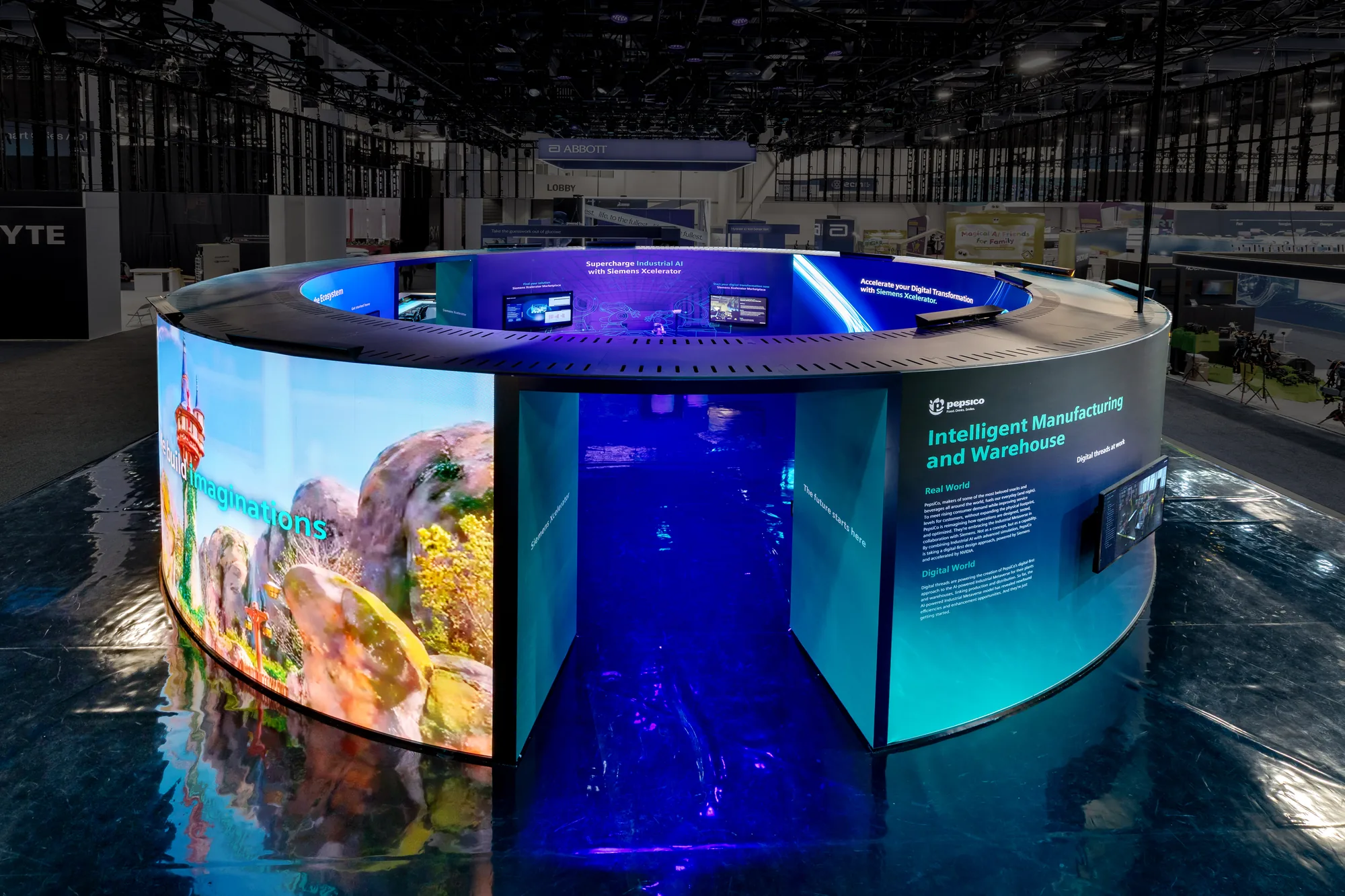
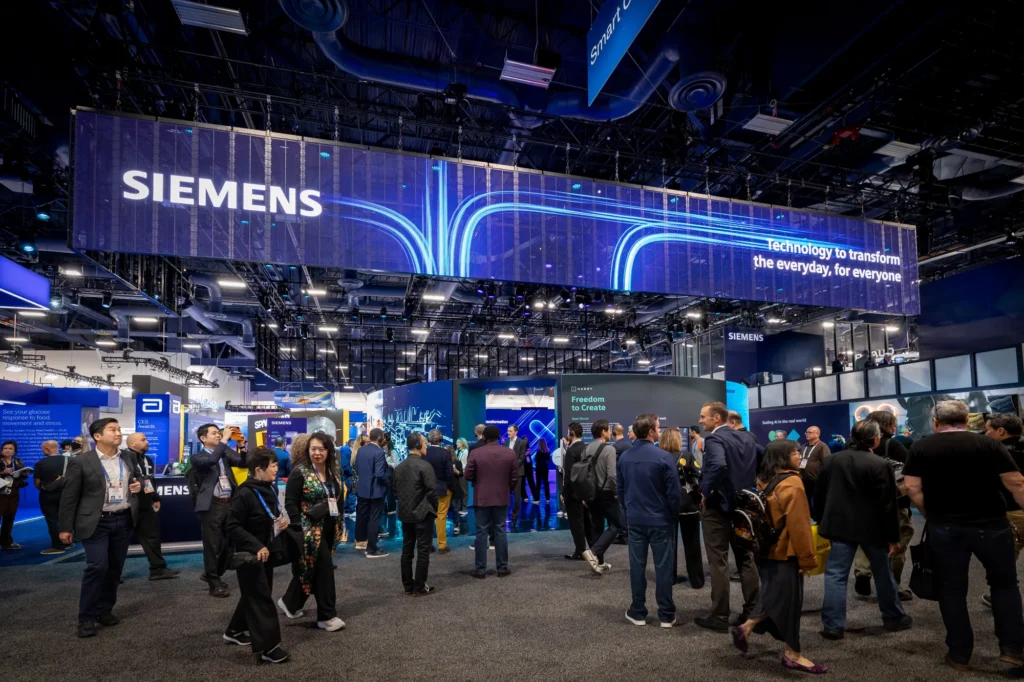
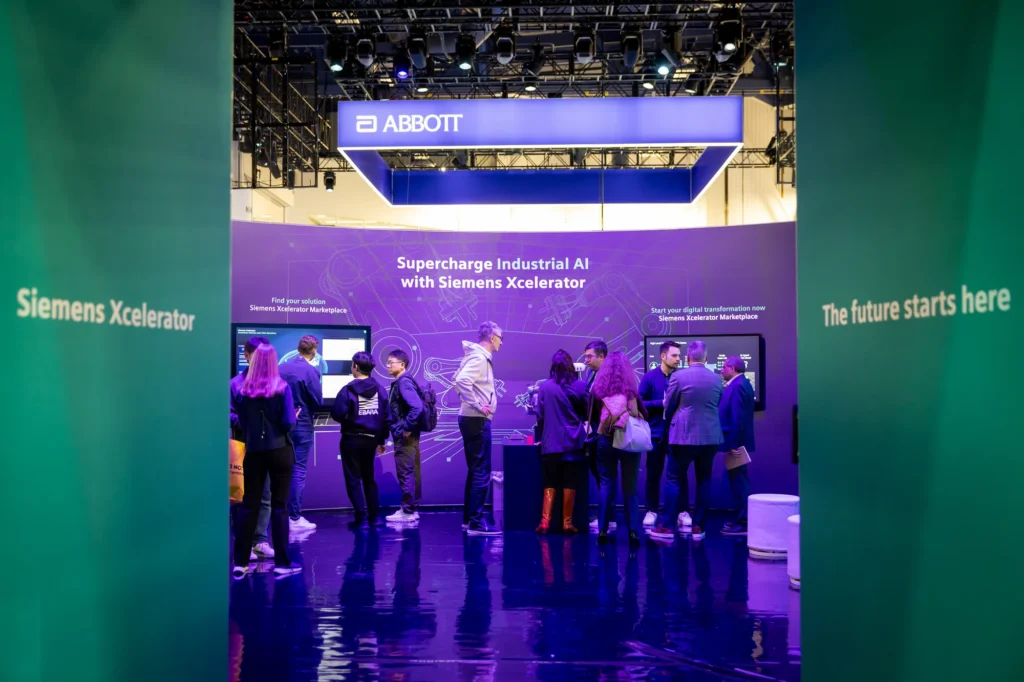
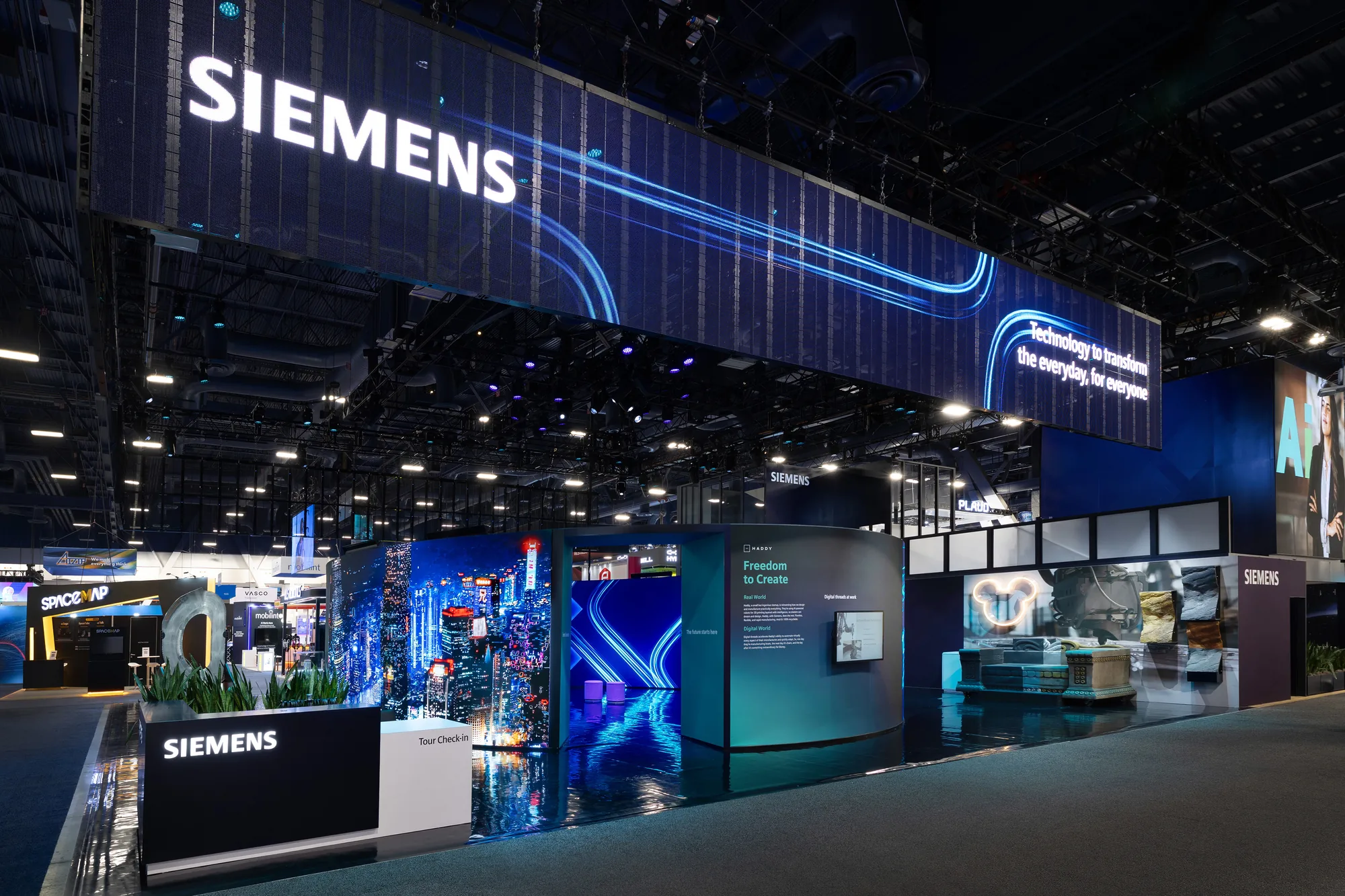
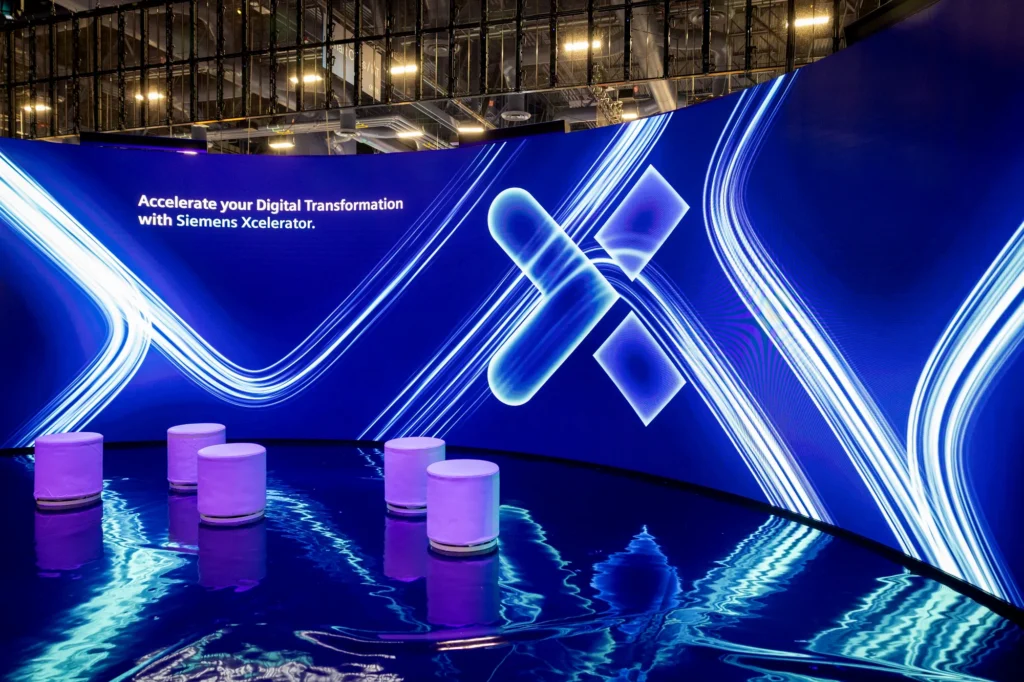
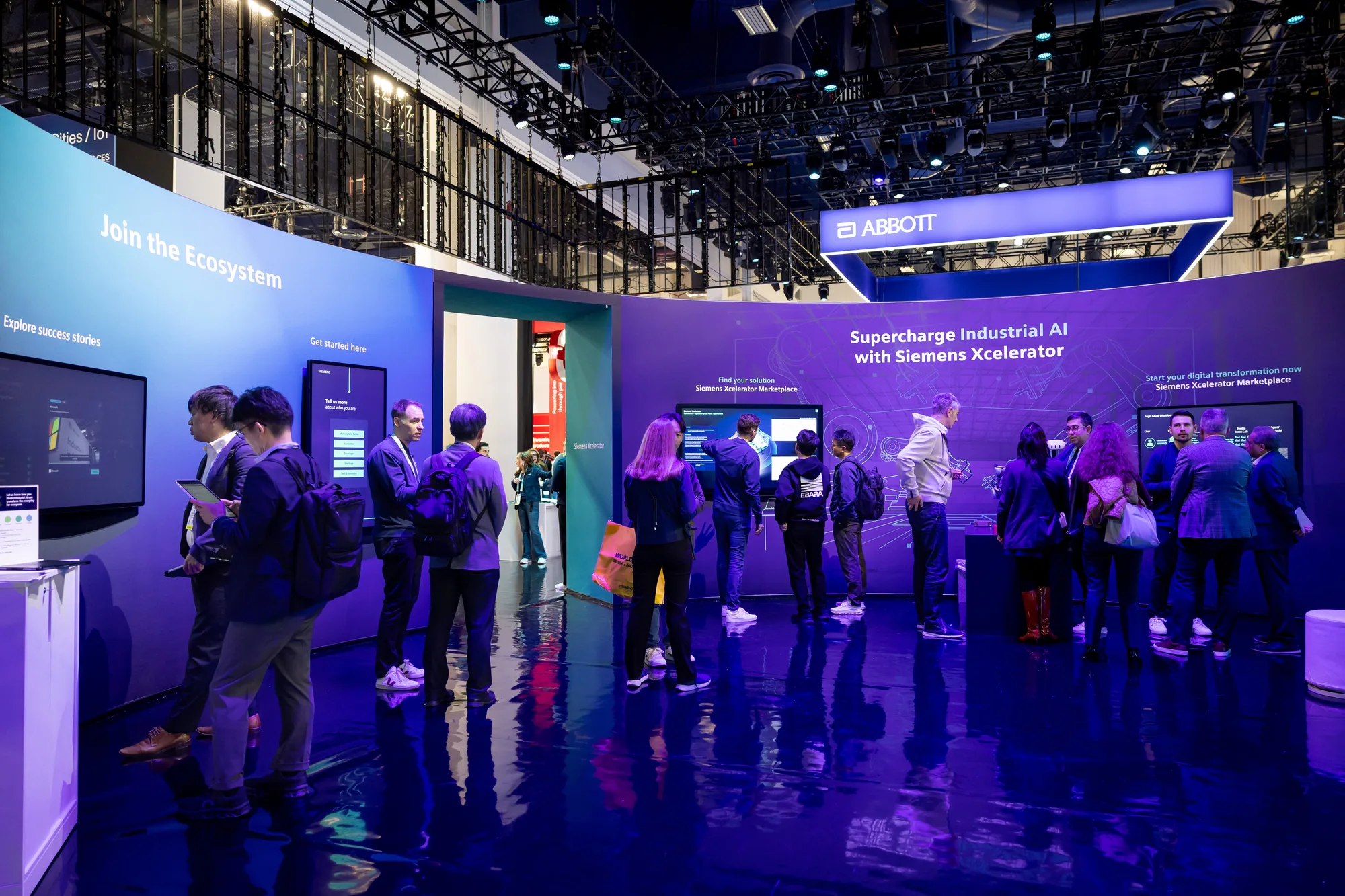
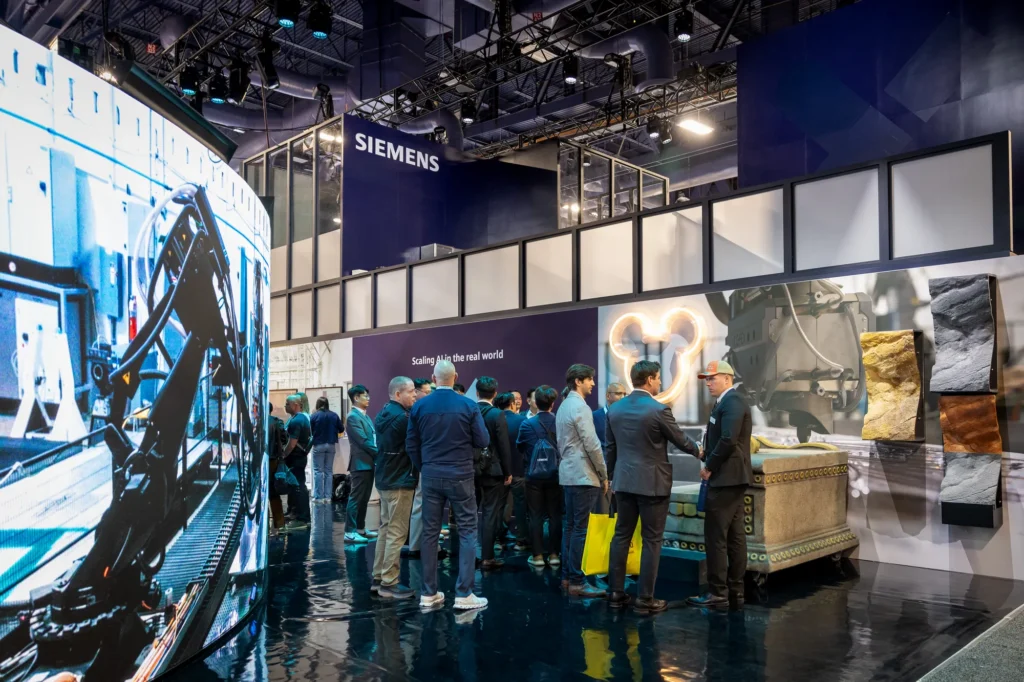
Sparks designed and delivered an exhibition with four storytelling areas. A circular central environment introduced Siemens Xcelerator, the company’s open digital business platform enabling Industrial AI at scale. Three surrounding areas showed how Siemens customers were using its technology. This “inside-out” layout connected an explanation of Siemens’ largely unseen intelligence layer with real customer deployments.
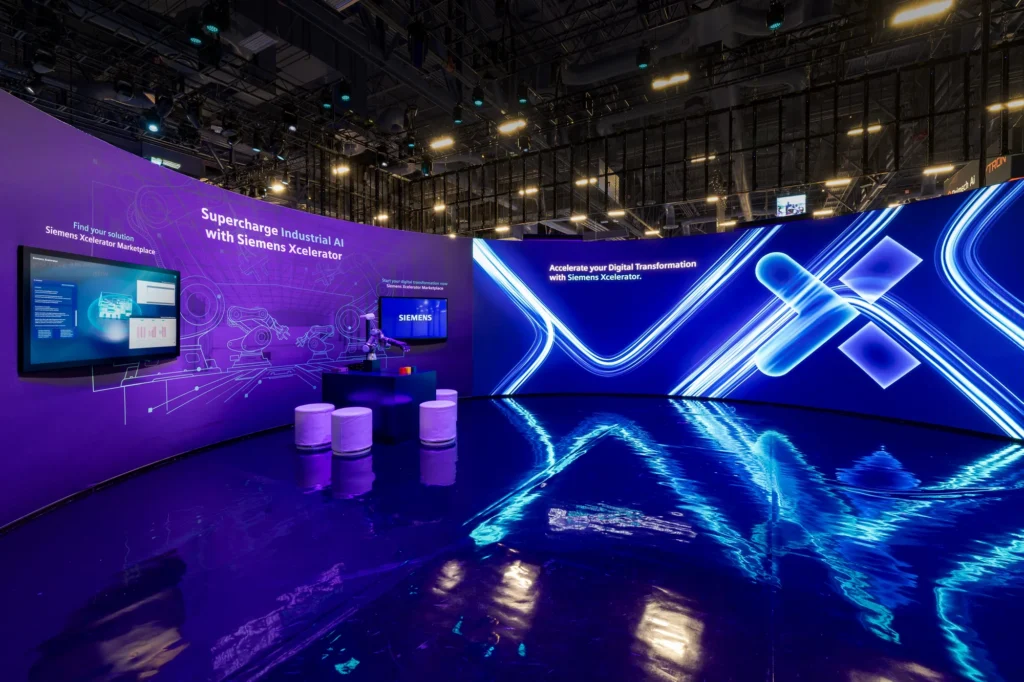
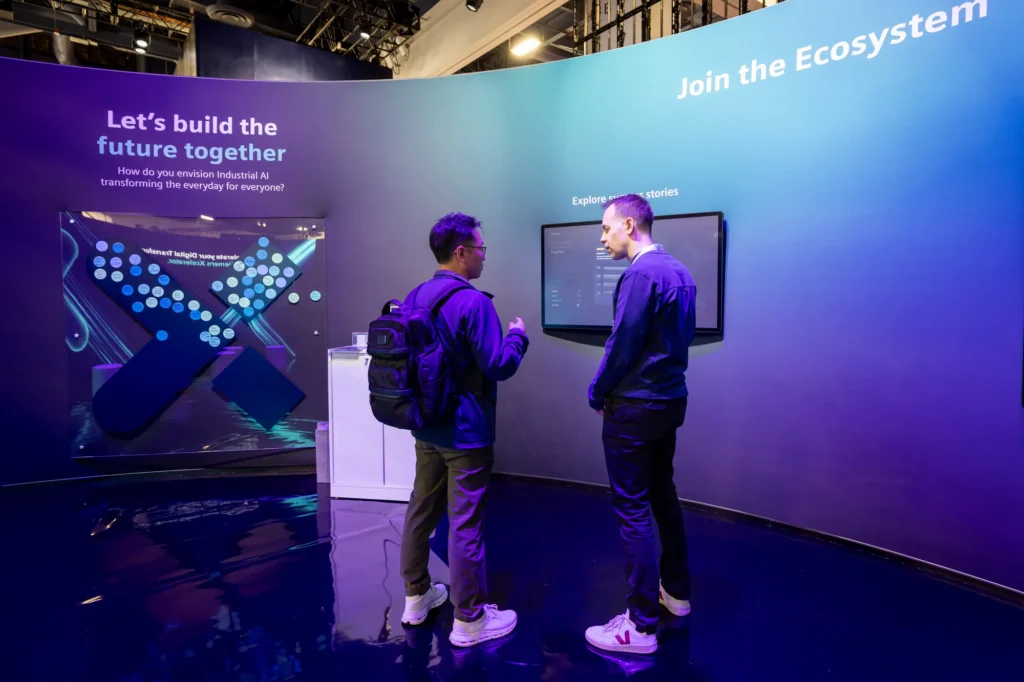
The central Siemens Xcelerator environment addressed three questions: why Industrial AI is needed, what it is doing for industry, and how organizations could begin using it. The content placed particular emphasis on explaining the need for Industrial AI. A curved LED screen introduced Siemens’ Industrial AI Revolution story, carrying forward the main-stage presentation’s comparison between today’s surge of innovation and the Industrial Revolution.
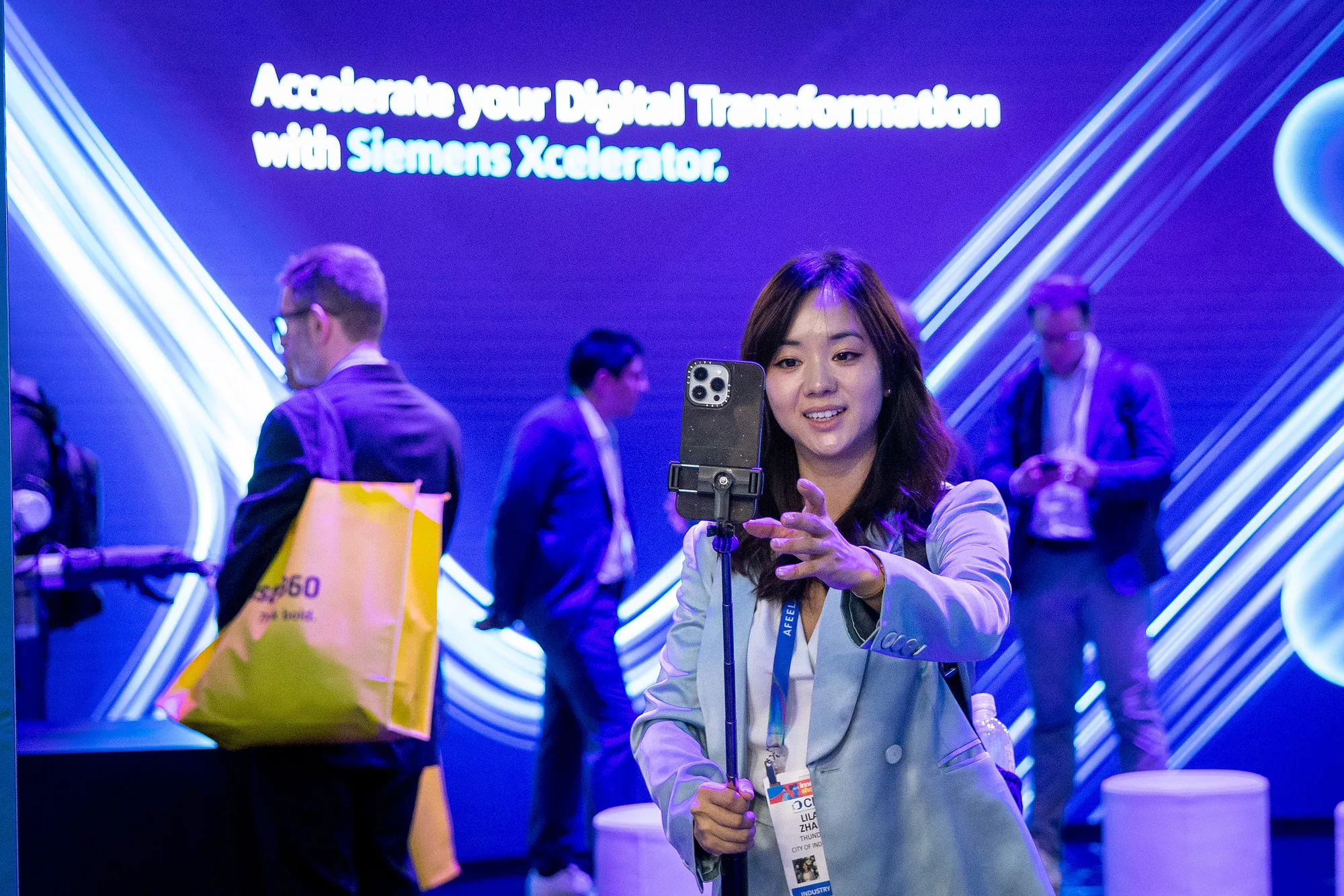
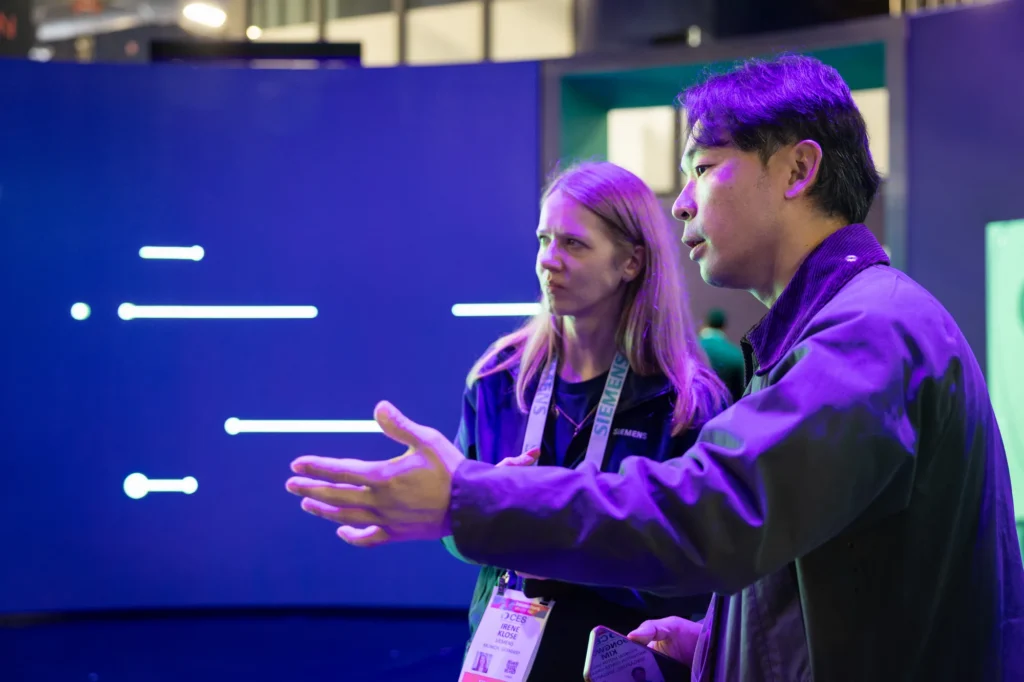
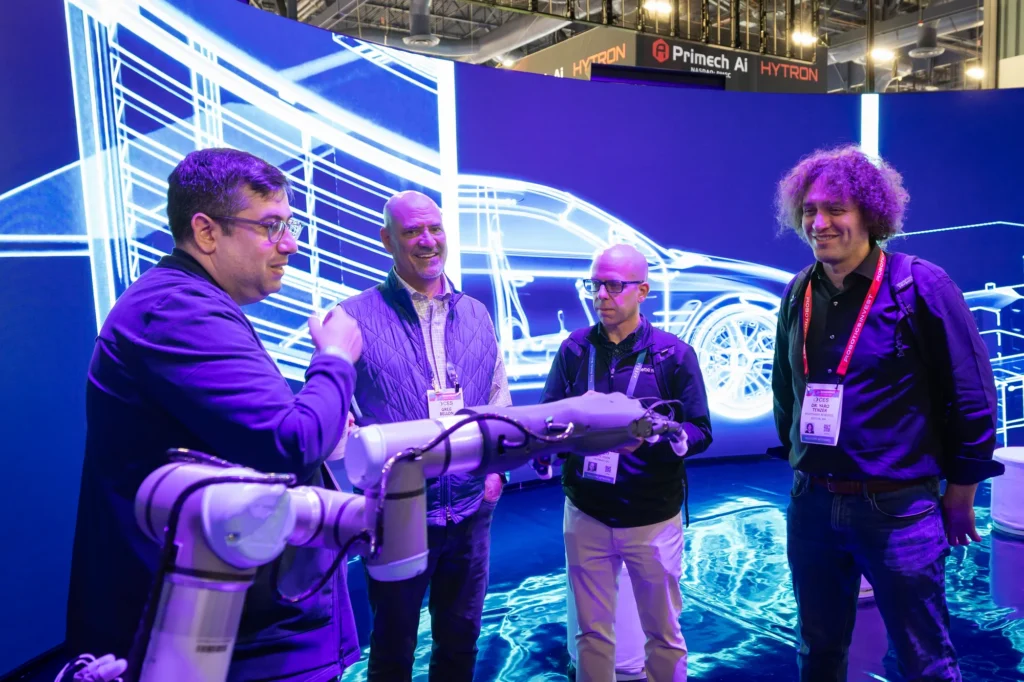
An interactive robotic hand demonstration, paired with its digital twin — a virtual representation of the physical device — provided a tangible example of the technology. This helped visitors evaluate how Siemens’ offerings could be tailored to their needs, while an idea-sharing activity invited contributions relevant to their professional roles. These activities addressed both the technology’s capabilities and how visitors could begin considering its use.
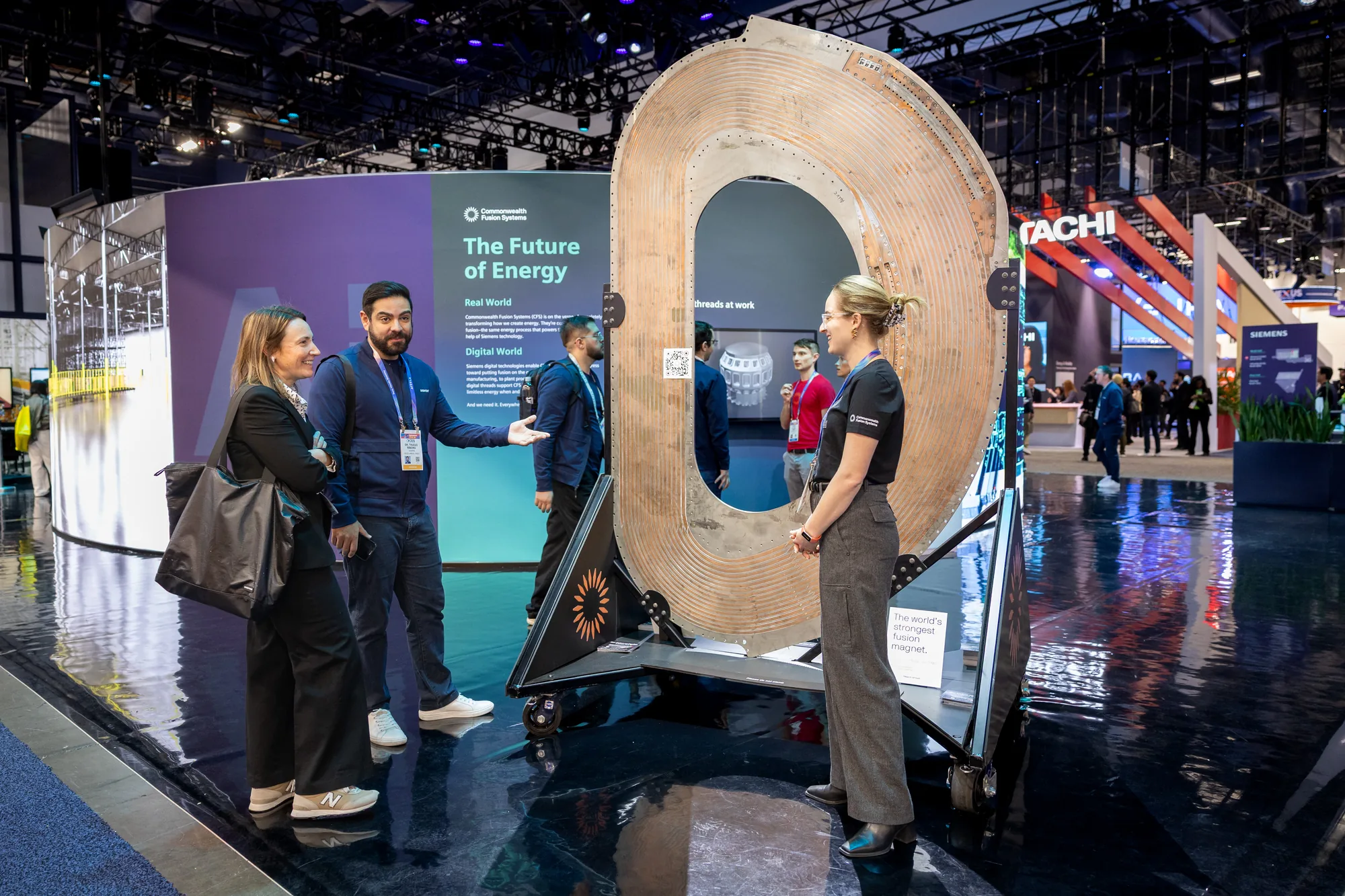
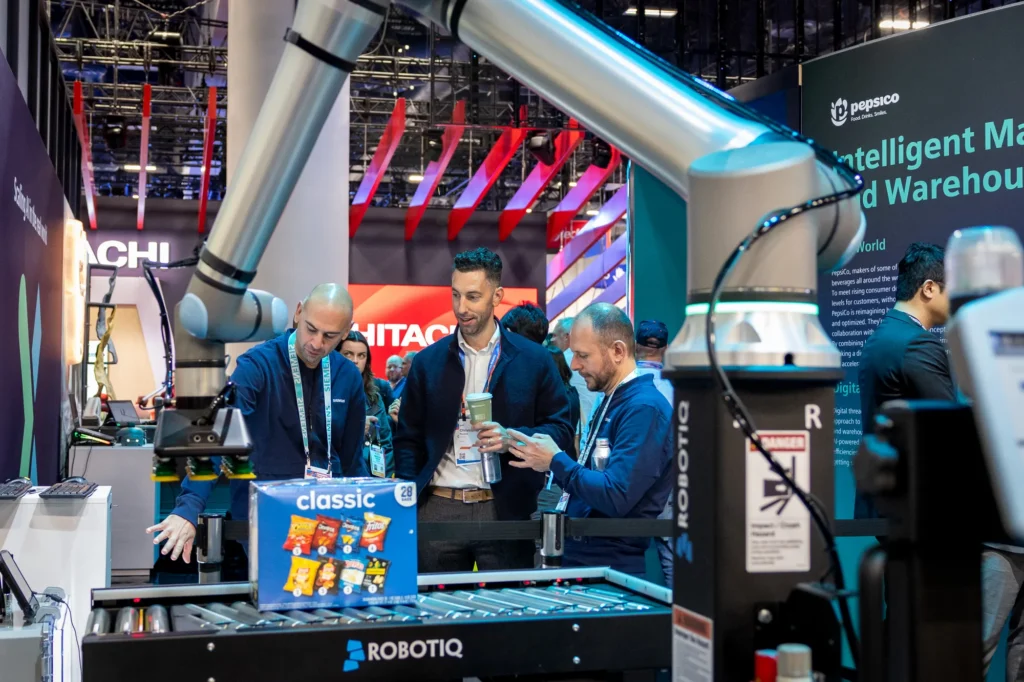
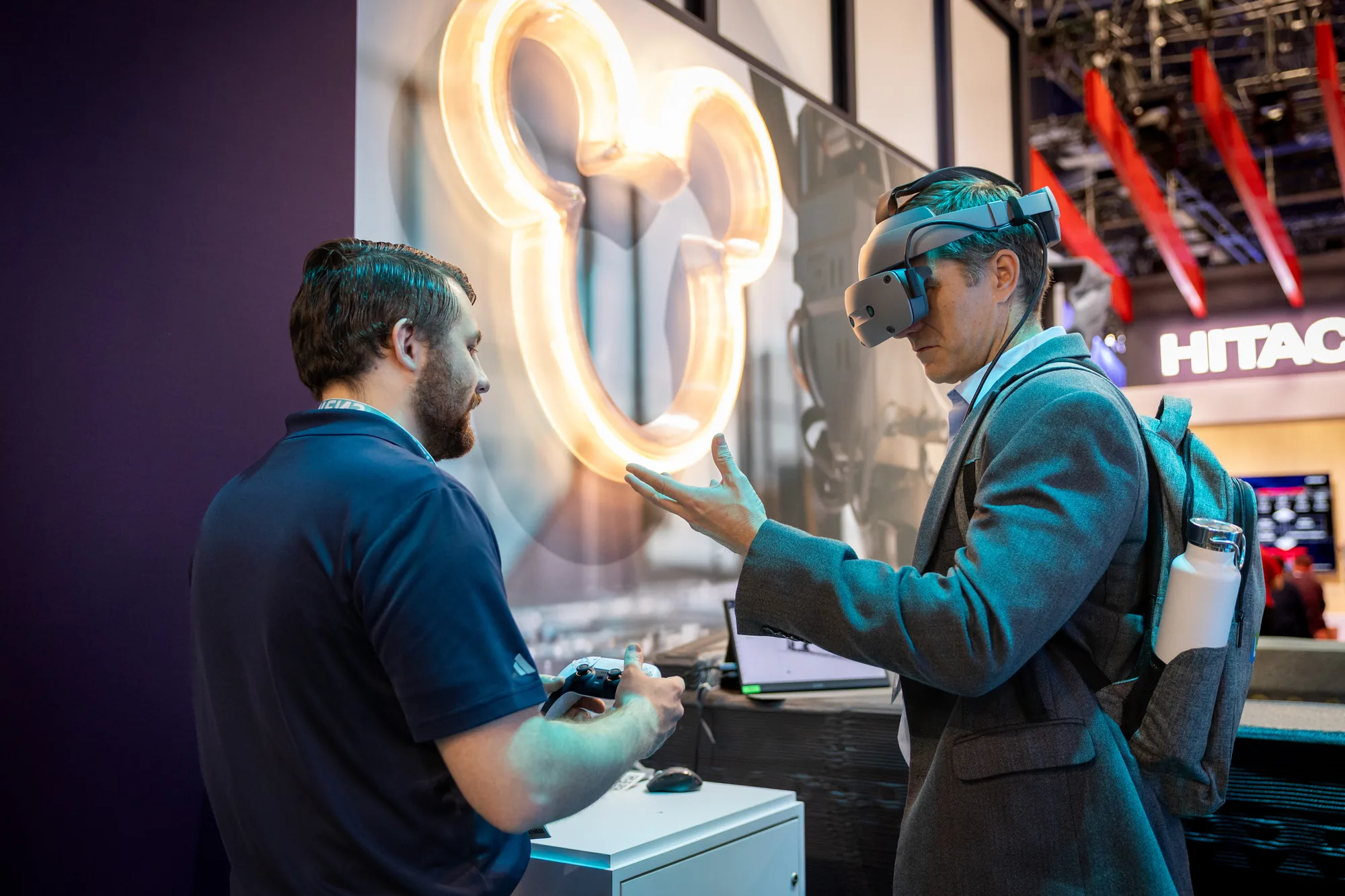
Three exterior areas showcased real deployments of Siemens technology through customer stories, physical artifacts, and interactive content. The examples spanned established global companies, startups, and university spinoffs, showing that Industrial AI is already being adopted across industries and stages of growth. These displays complemented the central platform presentation by showing what Siemens’ largely unseen technology helps customers accomplish in the physical world.
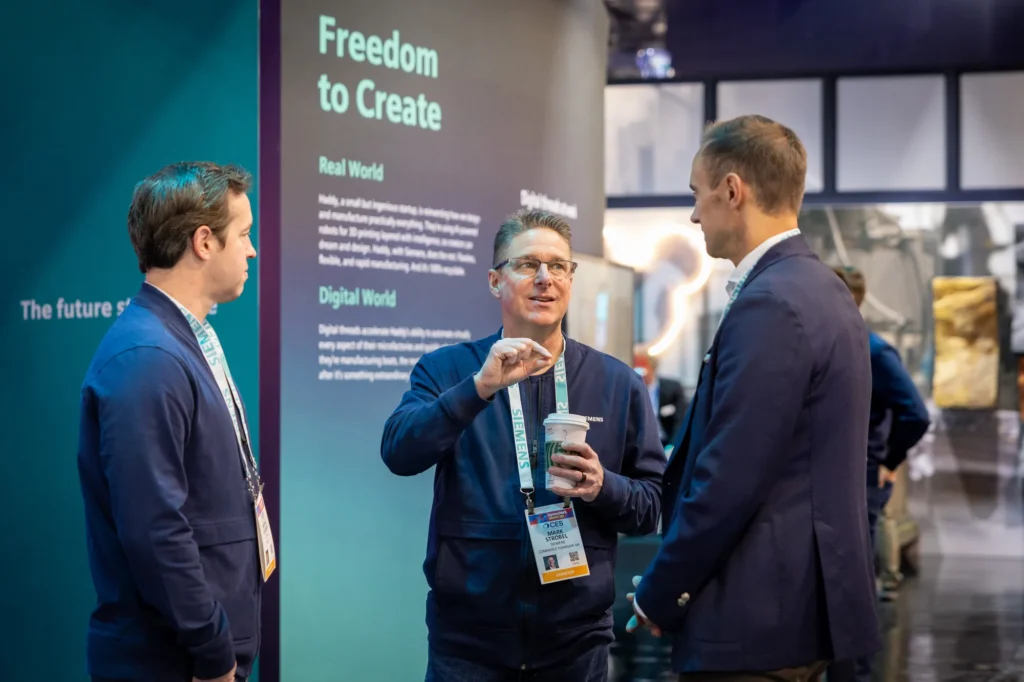
A separate, connected two-story engagement area provided dedicated meeting space on its upper level. There, Siemens executives and subject-matter experts held one-to-one and small-group discussions with priority customers and prospects about how Industrial AI could support innovation within their organizations. The meeting area gave decision-makers an opportunity to discuss their own needs in greater depth with Siemens experts.
The Impact
The exhibit sustained traffic throughout CES, with visitors engaging across multiple storytelling layers. Interactive demonstrations and physical artifacts anchored conversations in real deployments, moving discussions beyond awareness to application and relevance.
Deepening key relationships.
The dedicated executive engagement space enabled leaders and subject-matter experts to conduct high-value, one-to-one and small-group discussions with priority customers and prospects. These conversations directly supported relationship building, pipeline development, and strategic partnerships.
Recognition for the technology behind customer innovation.
Siemens’ story-first approach placed greater emphasis on clarifying its own role and the ingenuity behind its technology. Customer innovations remained prominent, with Siemens’ previously unseen intelligence layer at the center of their stories. Together, the experience delivered a key central message: Industrial AI is live, scalable, and transforming the physical world, and Siemens is making it tangible.
A wider presence for the Industrial AI story.
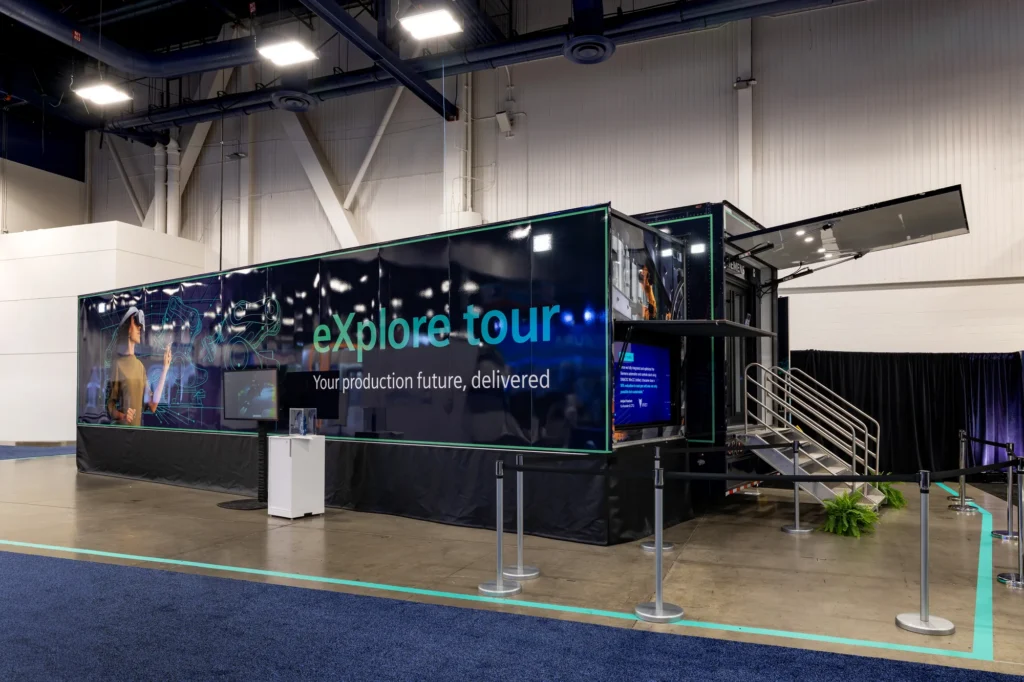
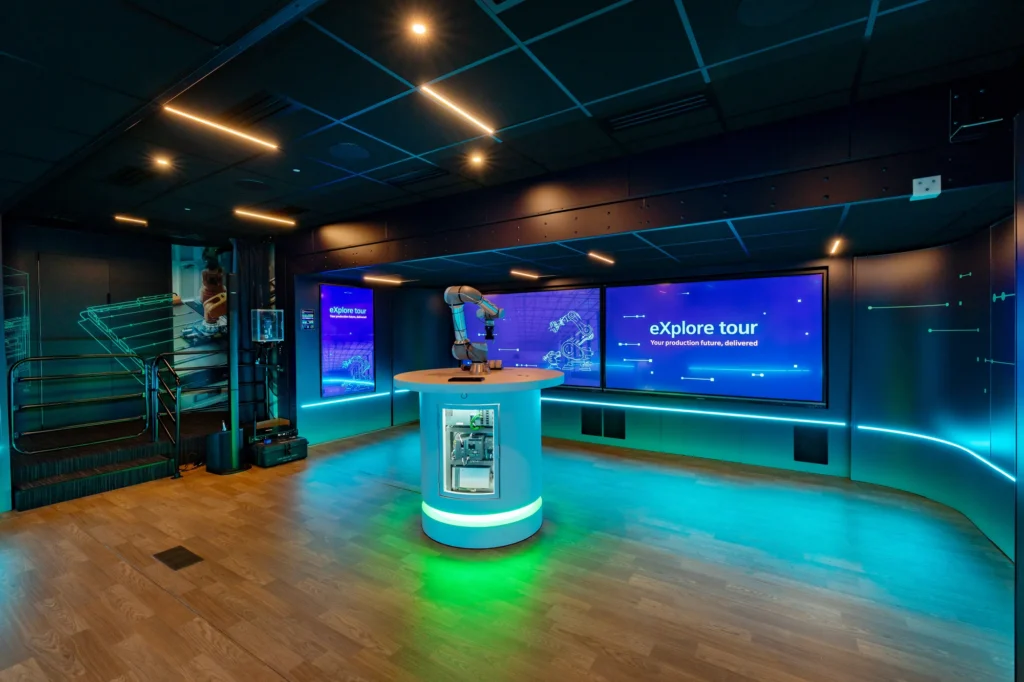
Siemens amplified its presence through a live broadcast, the premiere of the eXplore Tour mobile experience, and a dedicated mobility hall activation. These additional experiences extended Siemens’ presence beyond the main exhibit, reinforcing its leadership across multiple touchpoints.
A Note on Partners
Sparks designed and delivered the exhibition around Siemens’ Industrial AI narrative and real customer deployments in direct partnership with Freeman and Freeman AV of The Freeman Company.
Frequently Asked Questions
An agency designing and producing a CES exhibit should connect the company’s business objectives with its story, interactive experiences, and physical environment. Relevant examples should show how the agency made complex technology understandable and supported customer conversations. Sparks designed and delivered Siemens’ CES 2026 exhibit around those priorities.
A trade show exhibit can make complex industrial technology easier to understand by connecting it to real customer deployments, demonstrations, and physical artifacts. These elements give visitors different ways to explore the same story. Siemens’ exhibit paired its digital business platform with customer examples that showed the technology’s relevance across industries.
An exhibit agency can use established messaging and customer content as the basis for experience design. The agency’s task is to determine how that story should be expressed through the space and how visitors can explore it. Sparks’ Siemens exhibit aligned with the company’s main-stage narrative and featured real customer deployments around a central platform experience.
An exhibit can reinforce a company keynote by carrying the same central narrative into demonstrations and experiences that visitors can explore firsthand. At CES 2026, Siemens’ exhibit extended its main-stage Industrial AI Revolution story through customer examples and opportunities to discuss real-world applications with experts.
Customer stories can strengthen a technology brand’s trade show presence by showing what its technology helps organizations accomplish. The exhibit should make the relationship between the customer’s innovation and the technology provider’s contribution clear. Siemens’ inside-out design placed its technology at the center, surrounded by customer stories demonstrating its applications.
Physical products and digital storytelling can work together when they contribute to the same explanation. Screens can introduce a customer story, while artifacts and interactives provide opportunities for closer examination. Siemens’ customer zones combined curved LED screens with physical examples and deeper interactive content to prompt further conversation.
An exhibit for general visitors and technical decision-makers should offer an accessible introduction and opportunities for deeper exploration. Customer stories can establish relevance, while demonstrations and expert conversations address more specific questions. Siemens’ exhibit served broad CES audiences alongside decision-makers considering how Industrial AI could apply to their own organizations.
Booth design can support executive meetings and business development by providing dedicated space for focused conversations connected to the main exhibit. Siemens’ two-story engagement area enabled one-to-one and small-group discussions with priority customers and prospects, supporting relationship building, pipeline development, and strategic partnerships.
A technology company should assess trade show performance against its objectives, including engagement quality, depth of interaction, and the volume of meaningful business conversations. For an exhibit intended to support customer relationships, focused discussions with priority customers and prospects are also relevant. Siemens evaluated its CES experience through these engagement and conversation-based measures.
Sparks designed and delivered a large-scale exhibition with four storytelling areas and a connected, two-story executive engagement space. A circular central environment focused on Siemens Xcelerator, the open digital business platform enabling Industrial AI at scale. Three surrounding customer zones showcased real deployments through storytelling, demonstrations, and artifacts.
Visitors inside Siemens’ circular exhibit could explore why Industrial AI is needed, what it is doing for industry, and how to begin their own journey. The “why” was a priority, introduced through a curved LED screen. An interactive robotic hand paired with its digital twin made the technology tangible, while another interactive helped visitors consider how Siemens’ technology could be tailored to their needs.
The Siemens exhibit featured Disney’s King Louie throne created by Haddy, the superconducting magnet Commonwealth Fusion Systems is using to commercialize fusion energy, and a robotic arm demonstration from PepsiCo. Each customer area combined screen-based storytelling with artifacts and interactive content to encourage deeper exploration and conversation.