NRF 2026: The Era of Earned Attention

Sparks Strategy
NRF 2026 felt like your browser finally stopped buffering.
The lag had been noticeable for a while. Between 2022 and 2024, the show struggled to maintain momentum, with cautious spend and familiar formulaic executions dominating the floor. 2025 showed signs of recovery, but little that truly distinguished it from other major industry events.
NRF 2026 felt different. Not because it expanded, but because it refined. The show signaled a clear shift in how brands compete for attention, trust, and relevance. That shift showed up everywhere, from where brands placed themselves on the floor, to how demos were designed, to the way AI was quietly embedded rather than loudly announced. The show rewarded brands that made deliberate choices; where to be, what to say, and how to stop talking.
What emerged wasn’t a trend, but a tone.
The Big Shift
The simple truth: attention is no longer guaranteed, it has to be earned. And designed for.
Visitors could understand what a brand did, who it was for, and why it mattered within seconds, and only then decide whether to go deeper. Long walkthroughs and dense narratives gave way to optional depth. Brands led with clarity first, then earned the right to explain more. In short: clarity became the new confidence signal.
This shift changed the pacing of the entire floor. Experiences felt more curated and more respectful of time. Less energy went into convincing. More went into delivering. Confidence showed up quietly, through clarity, not future promise.
Ryan Reynolds, Actor, Entrepreneur & Co-Founder, Maximum Effort
When I use less, people remember it. You have to scrutinize every cent—and it’s a conscious decision.
Across the floor, brands made more disciplined choices about what mattered, and what didn’t. Experiences felt edited. Footprints felt intentional. The result wasn’t minimalism, but precision.
That mindset extended beyond individual booths. For the first time, the show organizer made a clear effort to uplevel areas outside the main expo floor. The River Pavilion felt genuinely premium. A defined entry moment signaled arrival into a distinct environment, while cohesive sub-branding and consistent booth builds created a curated, elevated experience. Less expo floor, more destination.
The Pit Stop applied the same discipline at a smaller scale. Designed specifically for retailers in food service and delivery, the experience was niche by intent and stronger because of it, proving that targeted environments drive deeper engagement than broad, catch-all spaces.
Together, these moments reinforced a broader recalibration. NRF 2026 wasn’t optimized for spectacle or futurism. It was optimized for trust, relevance, and real-world retail execution.
"What got us here won't get us there." - Fran Horowitz, CEO, Abercrombie & Fitch and NRF 2026 Visionary Award Recipient
The Show Floor, but More Self-Aware
Location Is Strategy Now
Where brands placed themselves mattered more than how big they were.
The effective center of gravity narrowed decisively around Entrances A and B, with major players clustering near anchors like SAP. Brands that once commanded broader or secondary zones consolidated inward, signaling that adjacency to credibility now outweighs raw footprint. Being outside the core isn’t neutral anymore, it’s a risk. Location is functioning as a brand signal before engagement even begins. See the NRF 2026 Floor Plan.
Assurance Is Replacing Ambition
Messaging across the floor shifted away from speculative futures and toward operational certainty.
Rather than selling what might be possible someday, brands emphasized what works now: reliability, readiness, and proof. Language felt grounded and pragmatic, reflecting a retail environment where confidence comes from performance, not promise. Brands sounded more certain, and therefore more believable.
Demos Got Smarter (and Shorter)
The strongest demos established value in seconds, not minutes.
Fast orientation replaced long walkthroughs. Clear framing replaced exhaustive explanation. Attendees were invited to go deeper only if interest was earned. Speed became a credibility signal, not a shortcut.
AI, Minus the Monologue
AI was everywhere at NRF 2026, but not in the way it has been in years past. Instead of louder claims or bigger buzzwords, brands showed restraint. AI was no longer positioned as a futuristic headline or experimental layer but rather embedded into workflows, demos, and decision-making.
Brands demonstrated reality: AI improving merchandising, accelerating personalization, tightening operations, and reducing friction across the customer journey. This shift mirrored the broader tone of the show: certainty over aspiration, usefulness over spectacle.
"Technology is supposed to make us better merchants." - David Lauren, Chief Branding & Innovation Officer, Ralph Lauren, speaking on the NRF 2026 main stage.
AI as a Supporting Character, Not the Hero
AI didn’t need to headline this year. Instead, it worked quietly in the background, powering demos, enabling faster outcomes, and supporting clearer narratives through agents, automation, and predictive systems. Positioned as tools for real retail needs rather than abstract intelligence, AI felt grounded, credible, and ready for the pressure of day-to-day execution. At AWS, AI worked quietly behind the scenes, powering demos and decision paths without ever needing to take center stage. Check out AWS at NRF 2026.
Fewer Promises, More Proof
AI storytelling compressed dramatically.
Long explanations of model capabilities were replaced by outcome-driven framing: faster onboarding, smarter recommendations, cleaner data flows, and clearer decision paths. When AI was mentioned, it was tied directly to visible impact. In many cases, AI didn’t even need to be named explicitly to be felt, and that subtlety became a strength.
The Soft Launch of Better Design
Design got quieter this year, and the exhibits seemed relieved. Still striking, but no longer desperate for attention, booths leaned into confidence, trading neon and wall-to-wall LEDs for thoughtful materials, considered lighting, and layouts that rewarded presence over pass-through. The result was more welcoming spaces designed to draw people in and keep them comfortable. Brands like Shopify and SAP demonstrated how clarity, hierarchy, and ecosystem thinking can replace visual noise without sacrificing impact.
Modularity, Upgraded
Modular design finally shed its rental stigma. Systems were clearly designed for reuse across broader show programs, but execution at NRF felt custom, intimate, and audience‑specific. Components didn’t read as temporary or generic, they felt deliberate. Lightspeed proved that a compact, modular footprint can still feel polished, intentional, and fully realized.
Humanizing the Tech Floor
Cold, overtly high-tech aesthetics gave way to wood tones, softer finishes, and layered lighting. Warm, monochromatic palettes created spaces that felt premium, calm, and inviting, places people wanted to step into, not just pass by.
Hospitality as Infrastructure
Hospitality cues weren’t decorative, they were foundational. Lounge seating, café-style moments, and conversational layouts were built into the core experience, not added on. Comfort is now table stakes in premium B2B environments. JPMorgan leaned into quiet luxury, using materiality and hospitality to command attention without spectacle.
Designing for Lingering, Not Throughput
Booths were paced differently this year. Demos invited attendees in rather than broadcasting outward, requiring entry into the space to fully engage. Once inside, environments encouraged lingering, conversation, and exploration. Experiences shifted from rapid turnover to relevance and retention. At Adyen, storytelling extended beyond the booth itself, with physical touchpoints reinforcing the experience rather than competing with it.
Sub‑Brands with Discipline
From the River Pavilion’s cohesive sub-branding to partner ecosystems that felt unified rather than fragmented, NRF 2026 prioritized consistency, hierarchy, and shared visual language that elevated entire zones and strengthened the collective experience.
The Takeaway
This year made one thing abundantly clear: the bar has moved.
As competition for attention intensifies, the industry is entering a phase where polish matters more than presence and design must do real work. It’s not about doing less, but doing exactly enough, recognizing that attention is finite and trust is fragile. Fewer gimmicks. More substance.
As the floor gets denser and expectations rise, advantage shifts to brands that treat restraint as strategy, not limitation. Purposeful layouts, confident materials, and hospitality-driven pacing signal maturity and respect how people move, pause, and decide.
If this year is any indication, the future of the show floor belongs to brands that know when to speak, and when to let the room do the talking.
Sparks at NRF 2026
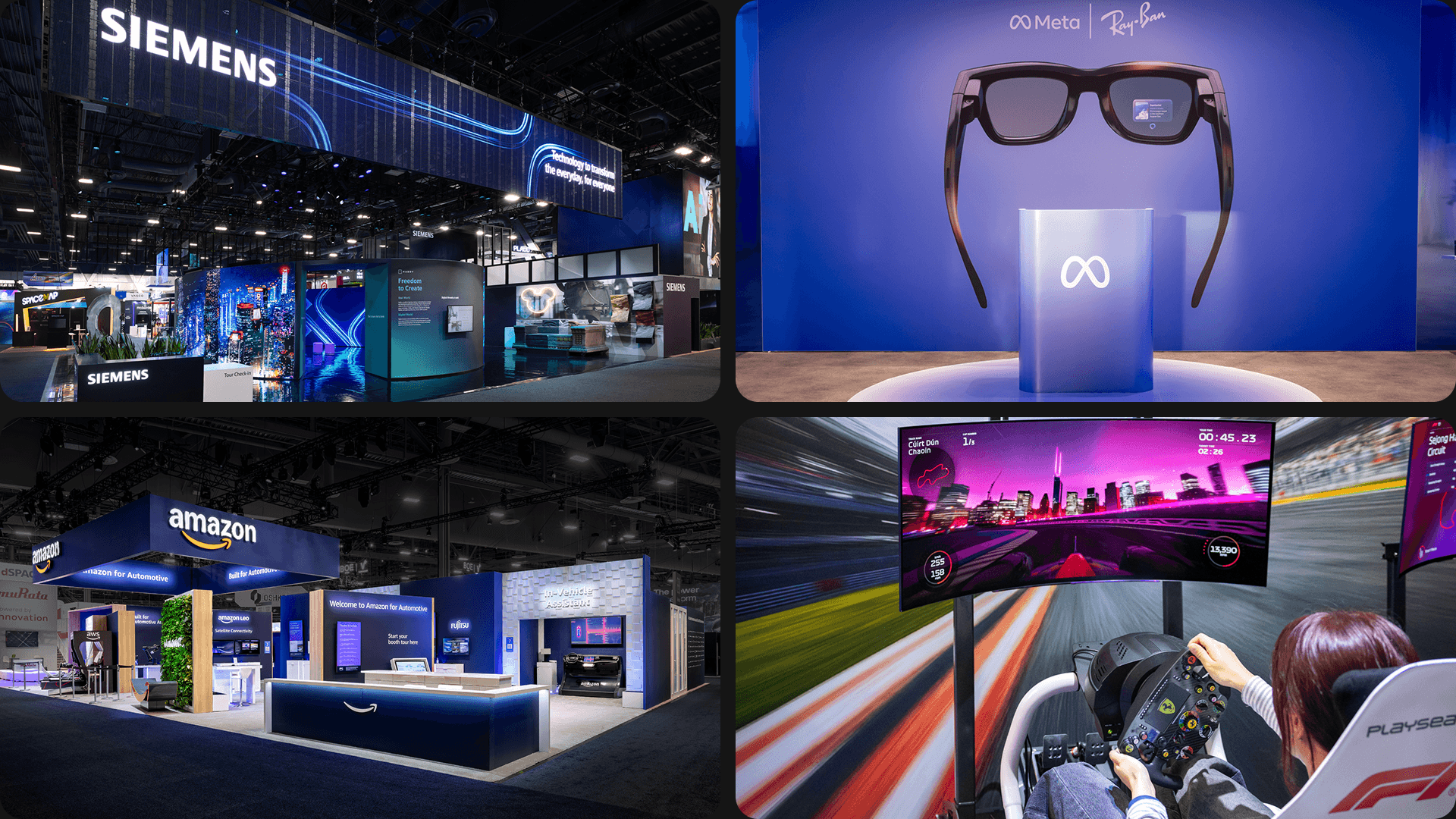
NRF brought together leaders shaping the future of retail, and Sparks showed up with one of the most strategic footprints on the show floor. From strategy and creative to fabrication and onsite delivery, we helped influential brands bring their stories to life while generating the conversations and momentum that will carry into the year ahead.