The Opportunity
Moving the conversation beyond signature
Many customers know Docusign primarily for electronic signatures. At Momentum 2026, the brand needed to show how IAM connects the full agreement process — from preparing and completing an agreement to storing it, finding important information, managing obligations, and using agreement data to make better decisions. The objective was to help customers see agreements not as static documents at the end of a process, but as active business systems that can be managed and improved.
Across four distinct scopes — production, experiential, sponsorship, and the Executive Summit — Sparks created one integrated program guided by a shared strategy and delivered by one working team. The approach connected the keynote, learning program, Agreement Expo, executive experience, sponsorship, and operations into a cohesive attendee journey, with each element extending and reinforcing the next.
As Docusign’s first Momentum at Javits and its first time producing the event in a convention center, Sparks needed to make fast, informed decisions while planning for the realities of a large, complex venue.
The Solution
Sparks organized the program around a simple rule: every team was building the same event.
Strategy and design decisions were shared across content, production, sponsorship, and operations. Specialist teams from The Freeman Company, Sparks’ parent organization, worked within the same plan. This gave Docusign access to different areas of expertise without requiring its team to manage a disconnected collection of agencies.
Starting with the customer
The experience needed to make a complex platform understandable across different roles and industries. Docusign and Sparks aligned around a unified, customer-first strategy, clarified what each audience needed from Momentum, and mapped how the IAM story should move from the keynote into education, demonstrations, and conversations.
Turning a platform into an experience
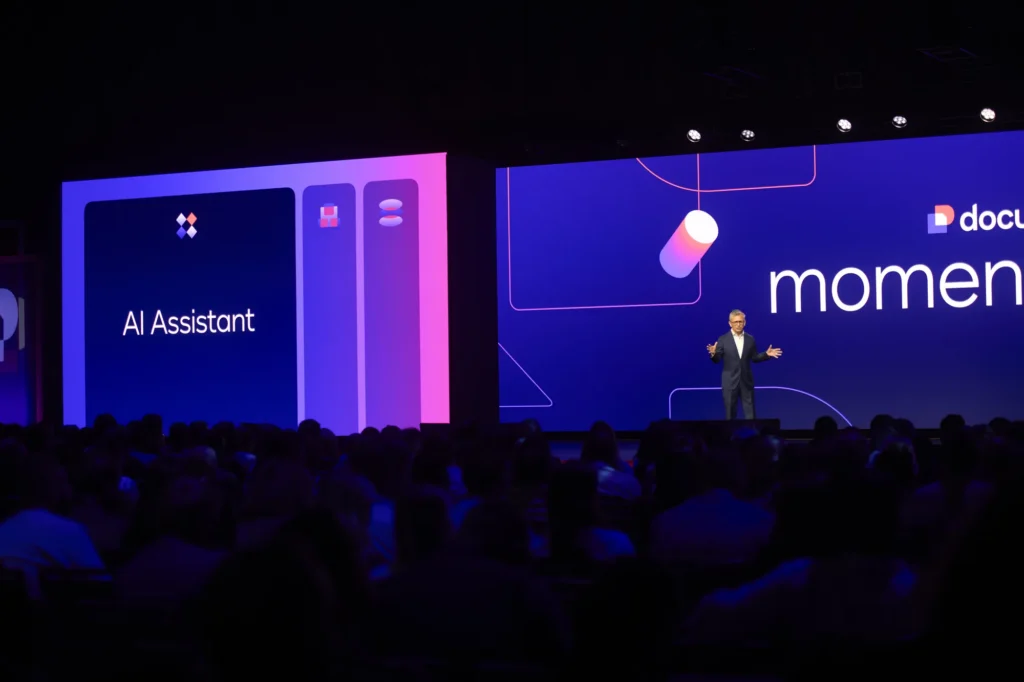
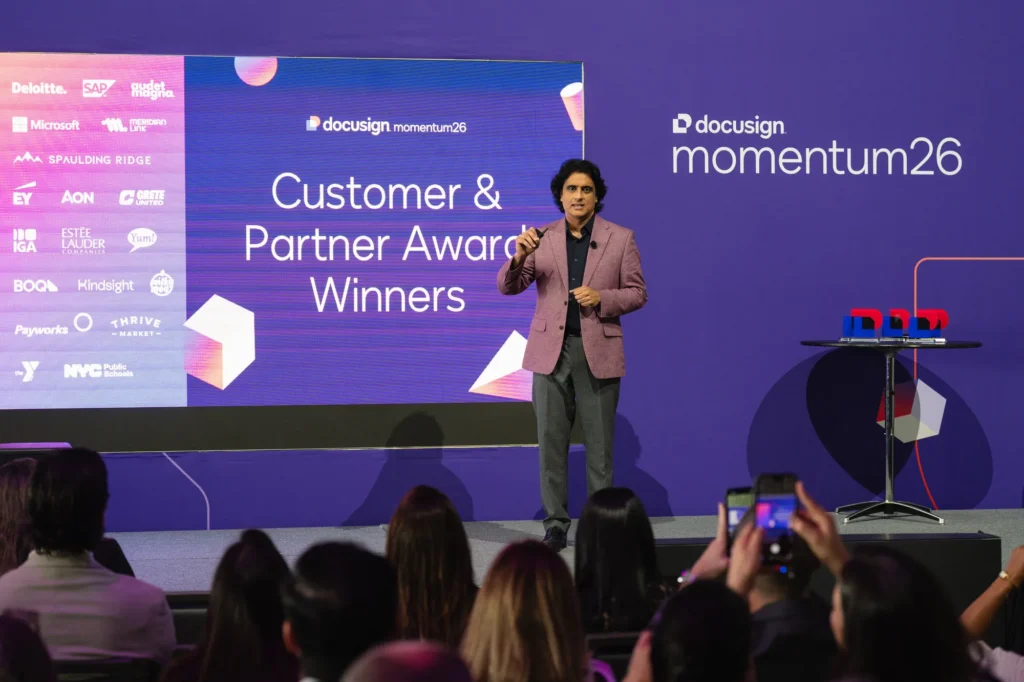
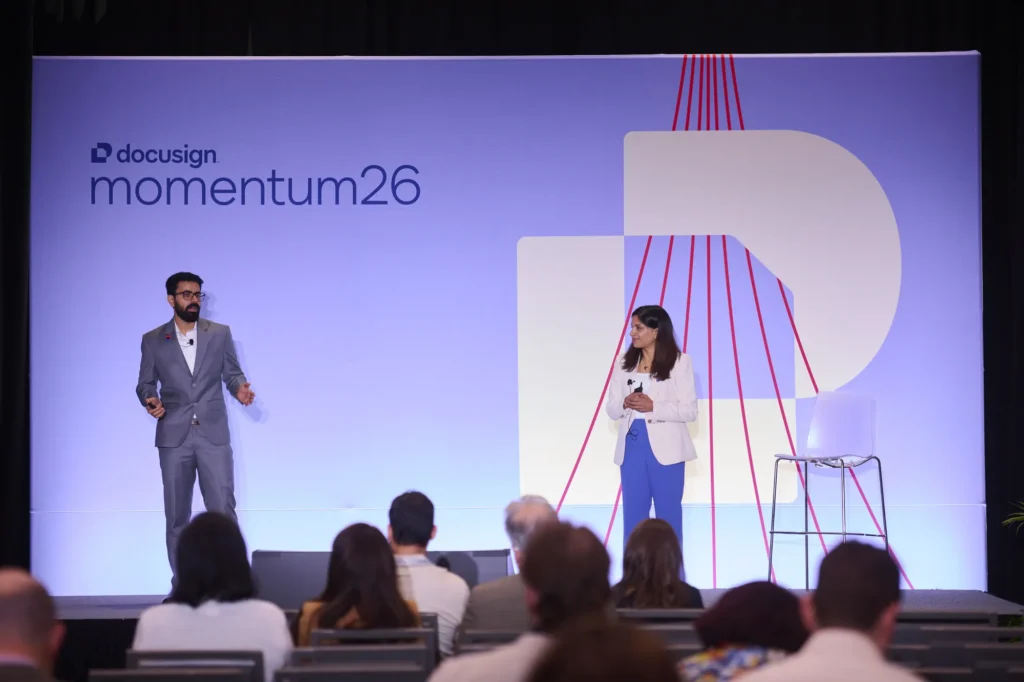
On the opening keynote stage, animated demonstrations and large-format LED content showed how IAM works across the agreement lifecycle. Customer stories connected the platform to real business needs rather than leaving the message at the product-feature level.
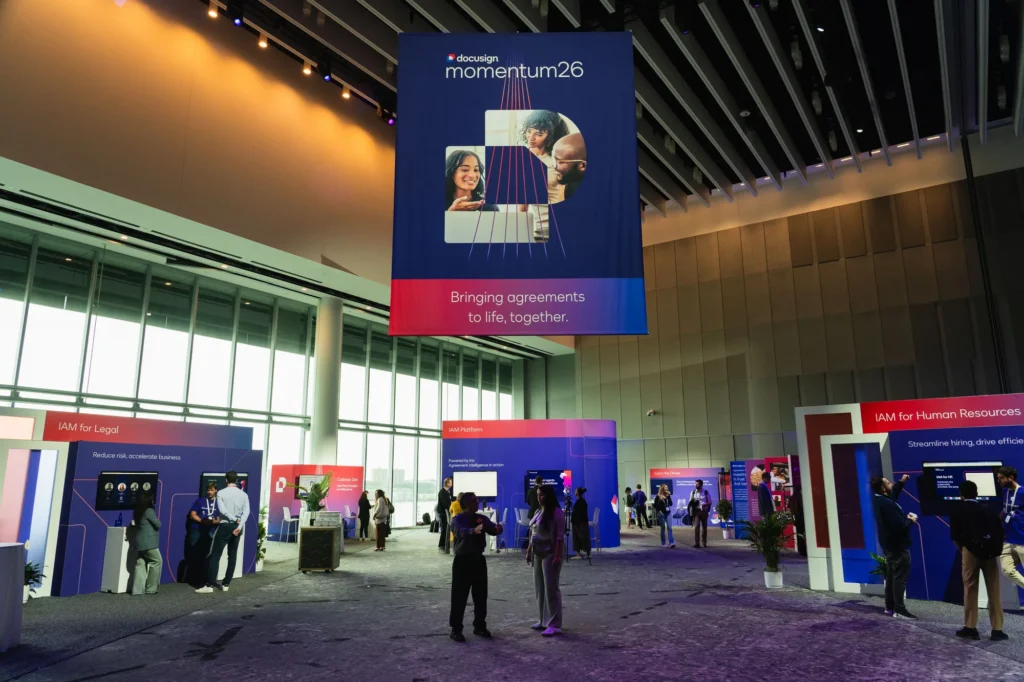
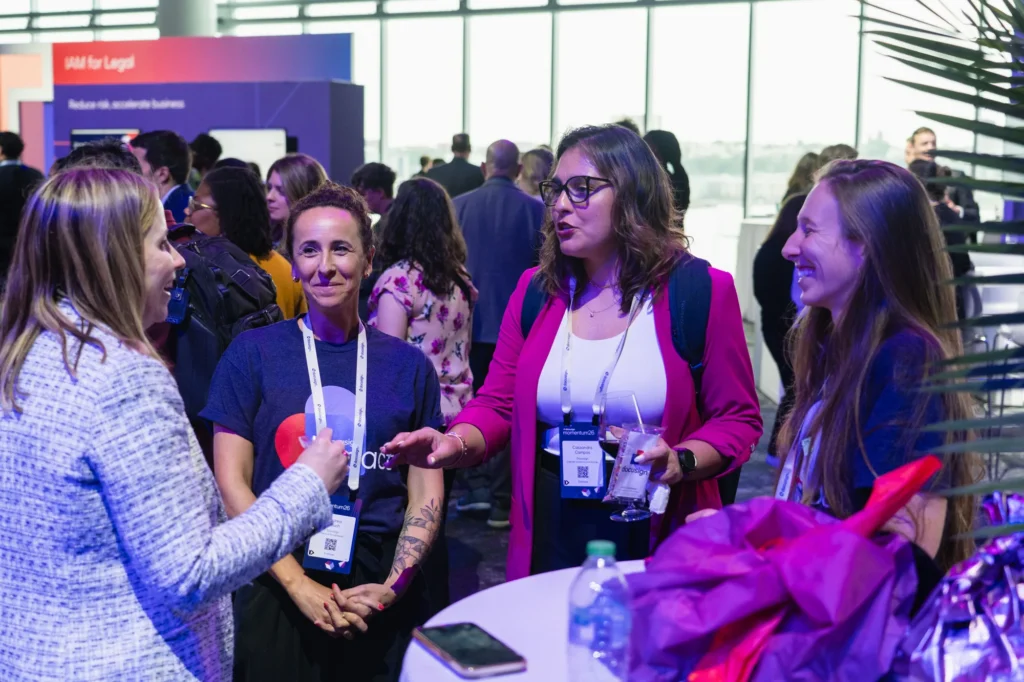
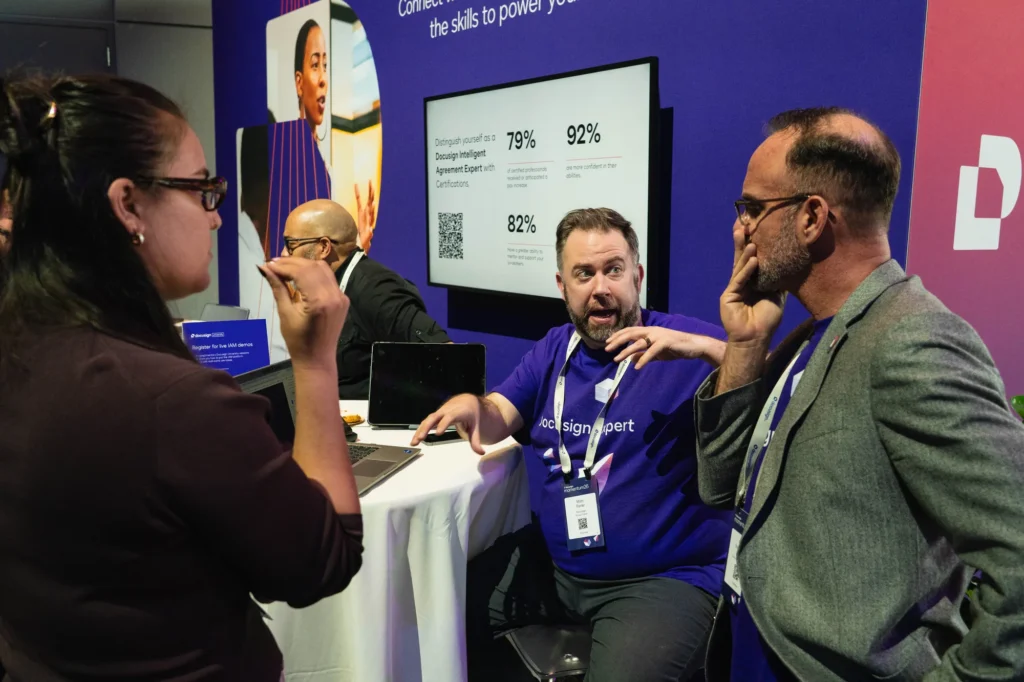
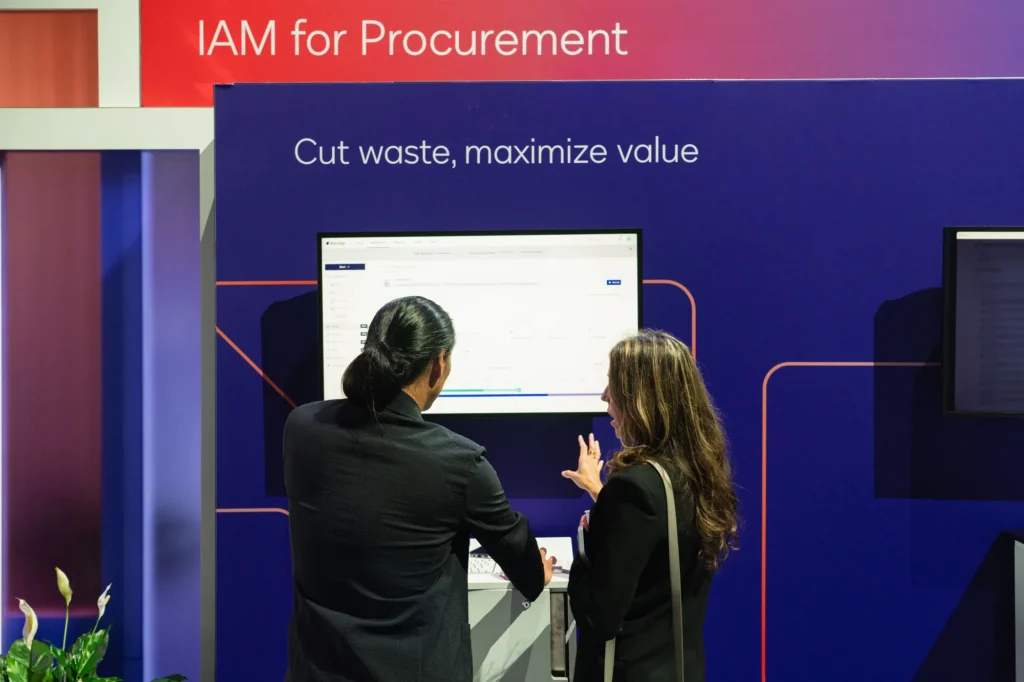
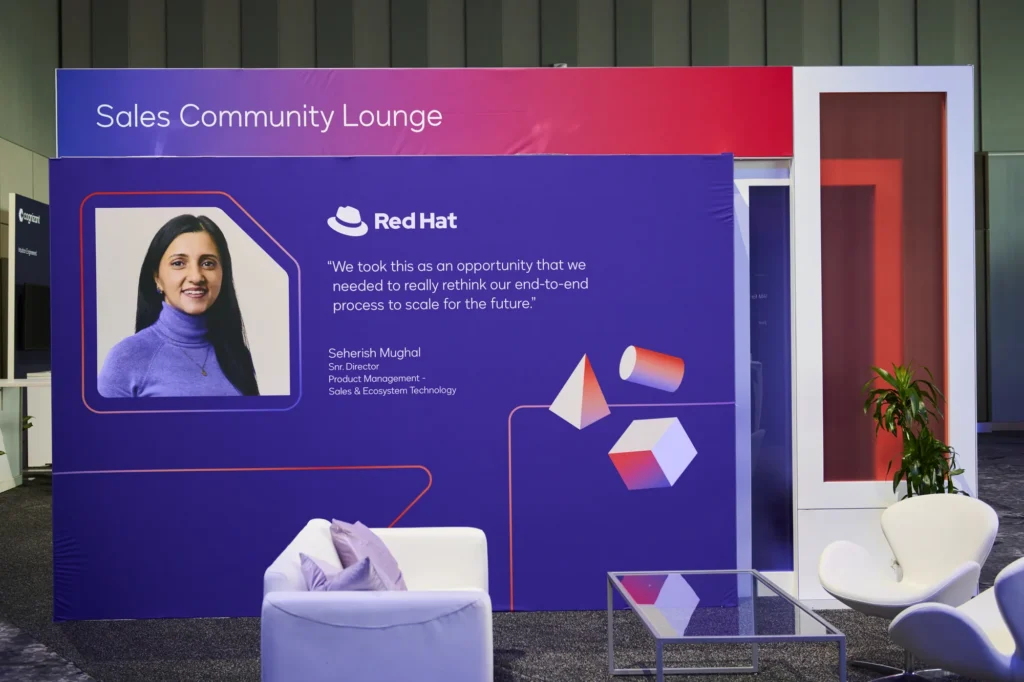
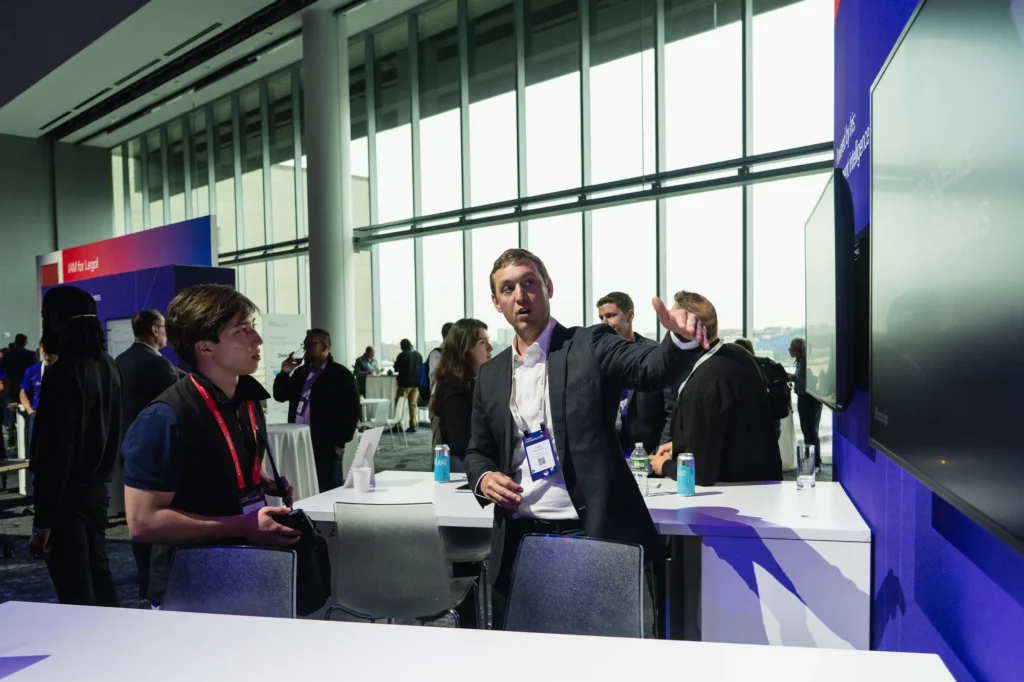
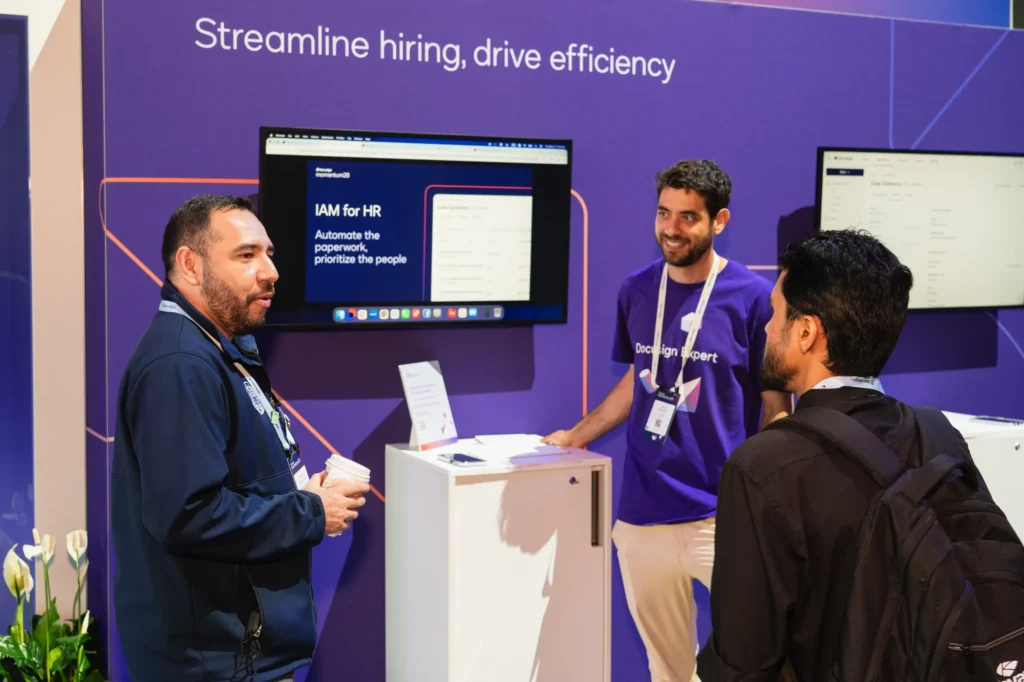
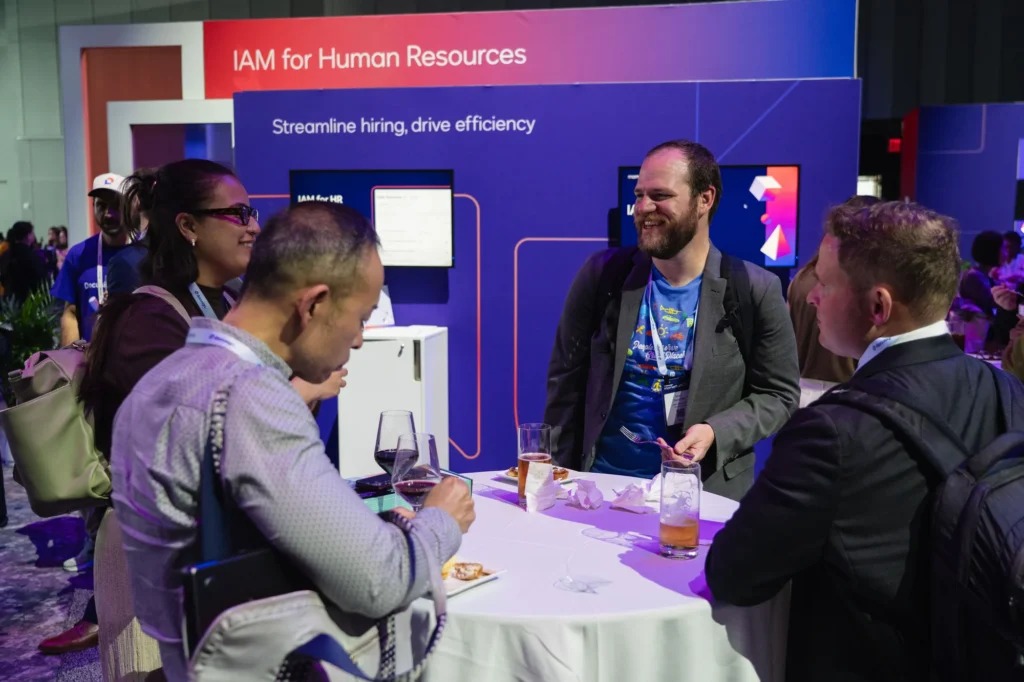
Docusign University — a day of product education and hands-on learning — gave attendees a deeper foundation before the broader conference program. In the Agreement Expo and breakouts, demonstrations, expert conversations, and industry-specific content translated the same ideas into practical use cases. Attendees could encounter IAM at different levels of detail depending on their role, experience, and business needs.
Designing for different audiences without fragmenting the event
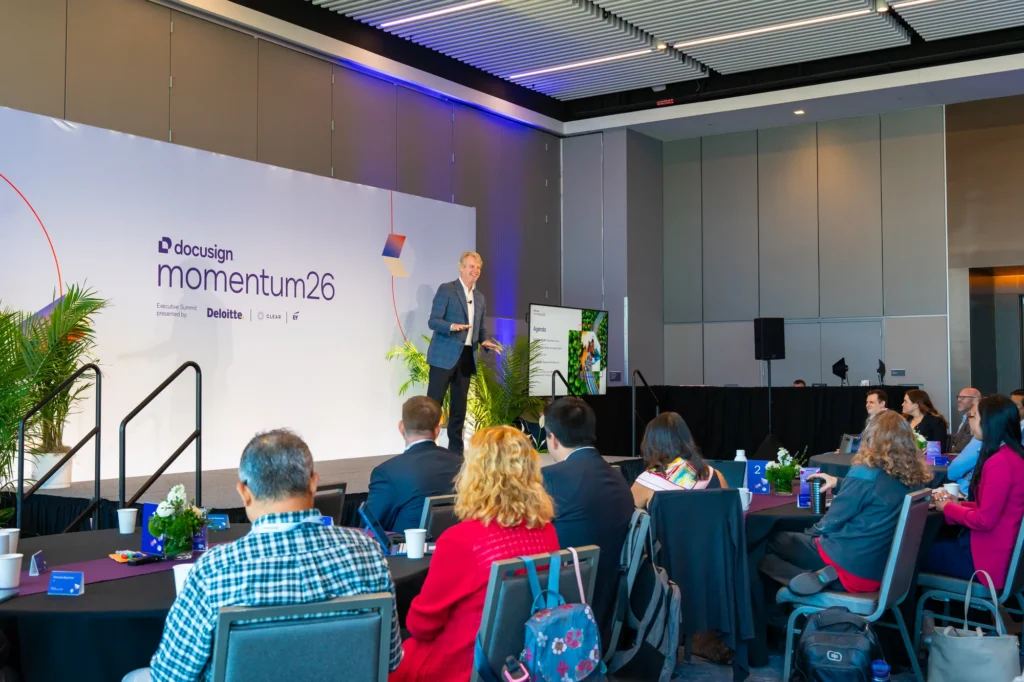
Momentum needed to work for C-suite executives as well as practitioners who use Docusign products in their day-to-day roles.
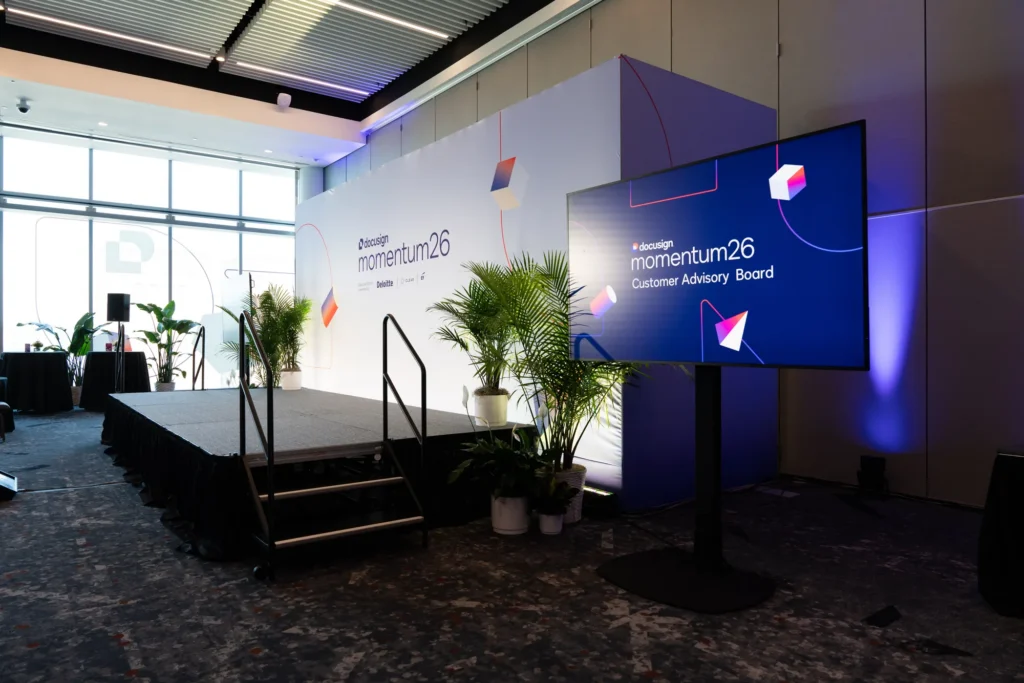
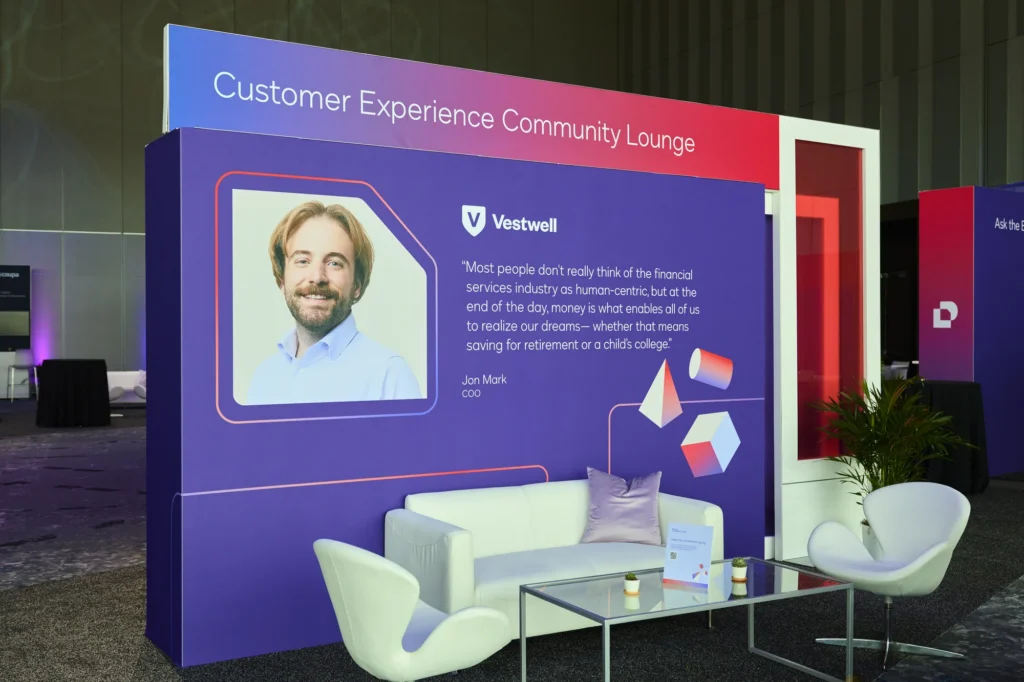
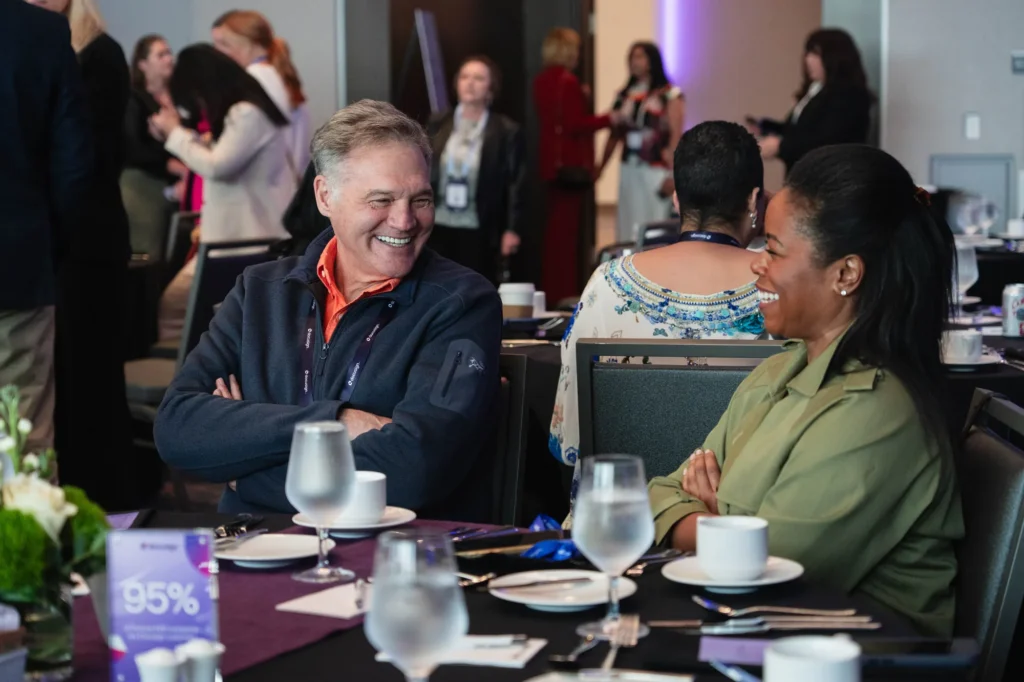
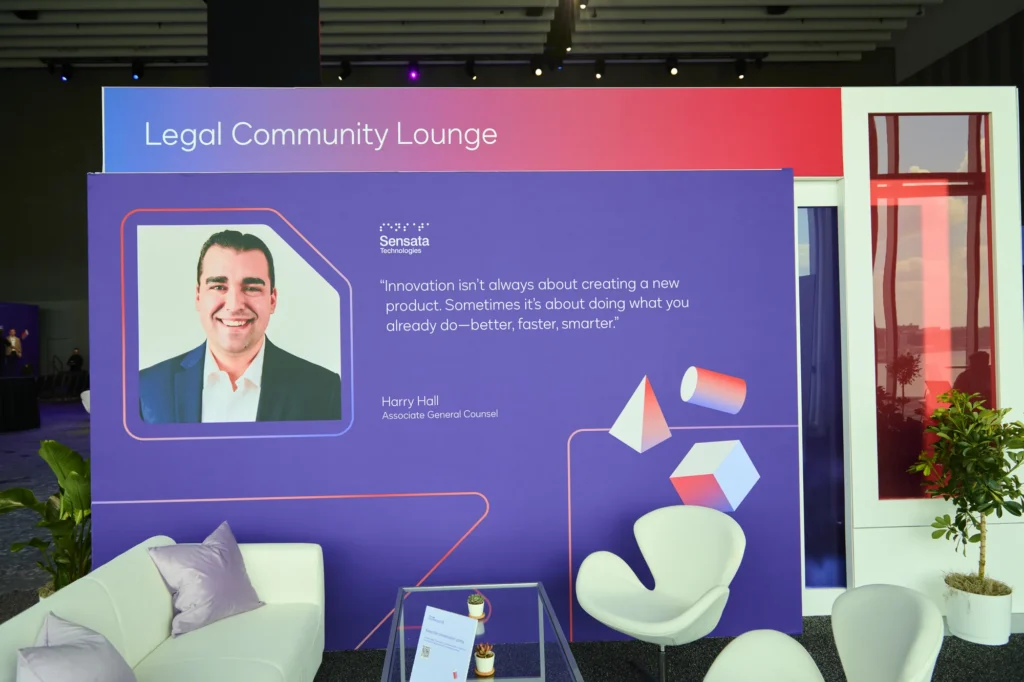
The Executive Summit provided senior leaders with a more curated environment for strategic content, peer conversation, and hospitality. Product education, breakout sessions, and hands-on demonstrations gave practitioners more detailed ways to engage. Customer and partner spaces created opportunities for direct conversation and shared learning.
Putting the budget where attendees would feel it
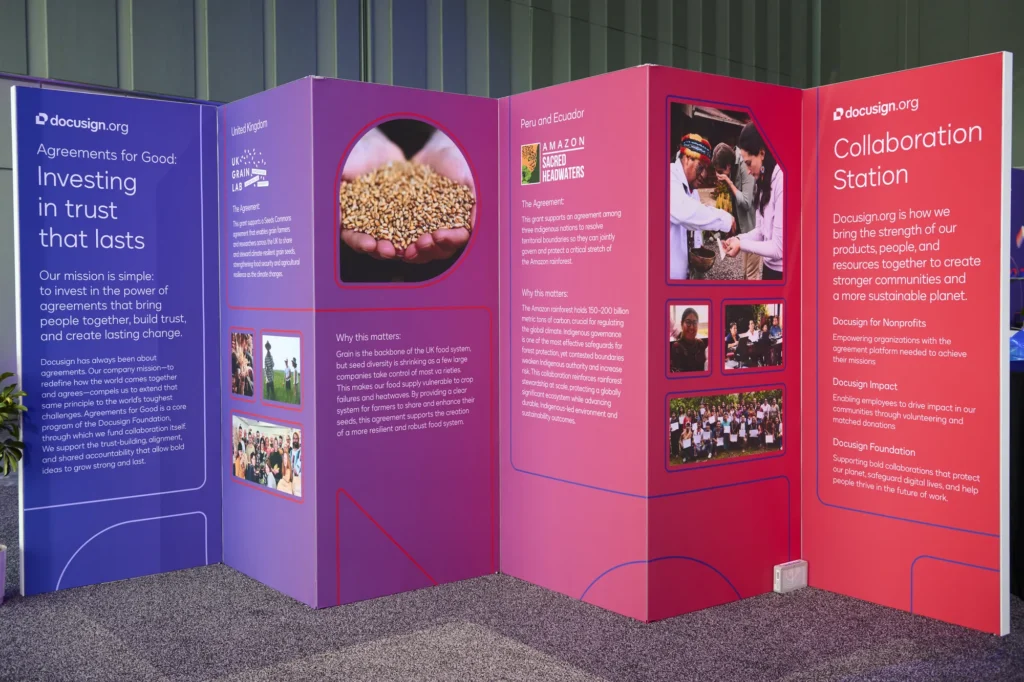
Sparks did not custom-build every structure in the event. Instead, the team used high-quality, reusable event systems as the foundation and customized them with Docusign graphics, lighting, media, scenic treatments, and branded details.
This approach focused the budget on the places where it would have the greatest effect: the keynote, product demonstrations, executive touchpoints, customer stories, and spaces designed for conversation.
Keeping moving while content changed
Sparks completed the parts of the event that could be approved early — including core graphics, branded transitions, and key environmental elements — while reserving flexibility for final keynote scripts, animations, and executive content.
Because the teams were connected, a change could be evaluated once and addressed across the stage, expo, graphics, and show schedule. It did not need to travel through a chain of separate agencies, each working from different information or deadlines.
Planning the building as carefully as the program
Momentum occupied levels four and five of the Javits North Building. Sparks and Freeman’s New York team developed a detailed sequence for deliveries, labor, and installation. Freeman’s familiarity with Javits also helped the team accurately estimate the labor required and plan around the building’s operating rules.
The complete event build was finished during a two-day load-in. After the conference, the team completed an equally coordinated teardown and removal.
The Impact
Momentum 2026 gave Docusign a convention-scale platform for demonstrating that IAM extends far beyond eSignature.
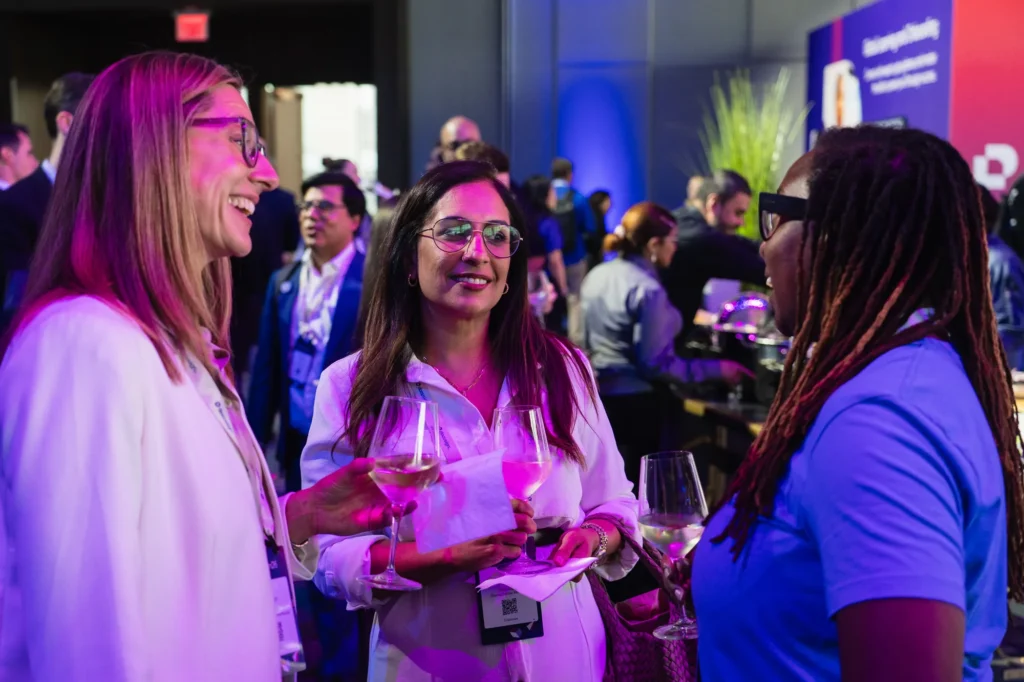
Attendees heard the strategy on stage, saw it visualized through content, explored it in demonstrations, and discussed it in the context of their own roles and industries. The event gave Docusign multiple ways to turn an unfamiliar technology category into something customers could understand and apply.
1,500+
attendees
300+
enterprises represented
250+
executives in attendance
30+
breakout sessions and hands-on lab
Sponsorship sales surpassed targets, finishing 52% above the program goal and 31% above the stretch goal.
The attendance and audience figures were also presented on Docusign’s official Momentum site. Sponsorship results were shared by the Sparks account team and remain subject to final confirmation.
Client Quote
“Momentum asked a lot of everyone this year.
Jackie Cone, Executive Sponsor, Docusign
Through countless changes, pivots, and late nights, the Sparks team consistently showed up with solutions, creativity, and the willingness to do what it took to get us across the finish line.”
A Note on Partners
Docusign owned the business objectives, product narrative, program, speakers, and brand direction for Momentum 2026. Sparks led the integrated experience and the work required to bring it to life.
Freeman acquired Sparks in 2023 and is Sparks’ parent company. For Momentum, that relationship gave the team access to additional specialists without asking Docusign to coordinate separate agency structures.
Freeman supported show-site planning, labor coordination, material movement, and venue logistics. Its New York team brought detailed knowledge of Javits and its operating requirements.
Freeman AVETA, including Freeman AV and Alford Media, supported audiovisual and technical production across the keynote and program environments. Alford Media specializes in event audio, video, lighting, visual effects, and related technology.
BaAM Productions, The Freeman Company’s sports and entertainment production specialist, sourced talent for the closing keynote.
Beyond the Metrics
A new category became practical
Momentum was designed to leave attendees with more than a new vocabulary.
By encountering IAM through a keynote, training session, demonstration, customer story, and expert conversation, attendees had several opportunities to connect the platform to work they already perform. The goal was to provide practical ideas that customers could apply after the event and beyond.
Integration gave the client more room to move
By managing the experience from end to end, when a decision shifted in one part of the program, Sparks could immediately evaluate its effect elsewhere and adjust the event as a whole. That speed was especially important on a first-year partnership with a tight timeline and evolving executive content.
Frequently Asked Questions
Docusign Momentum is the company’s annual customer conference. It brings customers, partners, executives, operators, legal professionals, sales leaders, and practitioners together to learn about AI, Intelligent Agreement Management, and new ways to improve agreement processes.
Momentum 2026 took place May 20-21 at the Javits Center in New York City.
Intelligent Agreement Management, or IAM, is Docusign’s AI-powered platform for managing the full agreement lifecycle.
It connects the work that happens before, during, and after signature—including preparing agreements, verifying signers, collecting signatures, storing documents, extracting information, managing renewals, and using agreement data to support business decisions.
Electronic signature is one step in an agreement process. IAM connects that step to the work before and after it.
The broader platform is intended to help organizations create agreements more efficiently, complete them securely, manage them centrally, find useful information, automate workflows, and reduce risk.
Docusign University is Docusign’s product-learning program. At Momentum 2026, it formed the first day of the event and gave attendees dedicated time for product education and hands-on learning before the broader keynote, expo, and breakout program began.
Sparks served as the lead experiential partner, connecting the event’s strategy, creative development, content, environments, production, logistics, sponsorship, and executive programming.
The goal was not simply to produce individual parts of the conference. It was to make those parts work together as one attendee experience.
Yes. As an example, Docusign’s Momentum 2026 conference demonstrates how Sparks can connect strategy, creative design, content, environments, production, fabrication, technology, sponsorship, logistics, and show-site management within one program.
The advantage is not simply access to more services. It is the ability to make decisions across those services together.
An integrated model is particularly useful for customer conferences, technology events, product launches, executive summits, sales meetings, partner events, multi-track programs, and convention-center experiences.
It becomes more valuable as the number of audiences, spaces, content streams, technical systems, and operational requirements increases.
Yes. The ability to work quickly depends on early alignment, clear decision-making, experienced teams, and a plan that distinguishes fixed elements from content that may continue to change.
A company should bring in an experiential agency as early as possible — ideally before the event format, venue plan, content structure, and production approach are fully locked.
Early involvement allows strategy, audience needs, creative ideas, technical requirements, sponsorship, budget, and logistics to inform one another. An experienced integrated team can also step into a compressed schedule, but earlier alignment generally creates more options and reduces avoidable rework.
A team that knows a venue understands more than the floor plan. It knows the loading procedures, labor requirements, access limitations, operating rules, and common schedule risks. That knowledge can improve cost estimates, reduce delays, and help the creative and production teams design something the building can support efficiently. For example, agencies such as Sparks have deep expertise in producing events at New York City’s Javits Center.
A premium event does not require every component to be custom-built. The budget should be concentrated where attendees will notice the difference: important stage moments, product experiences, executive and customer touchpoints, media content, lighting, and spaces that support useful conversations.