
The Opportunity
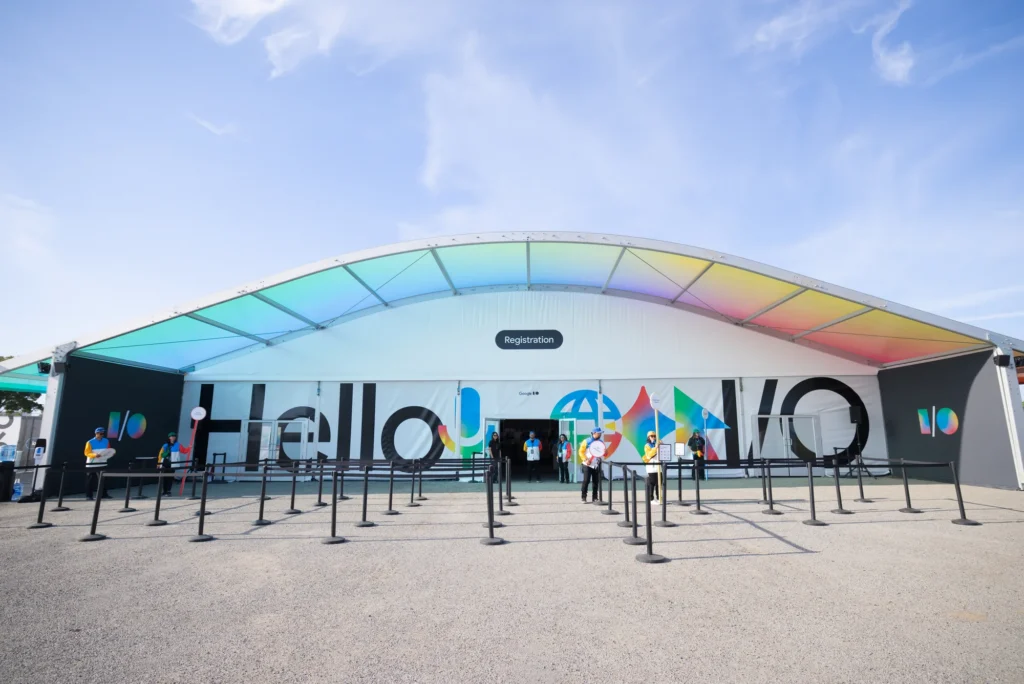
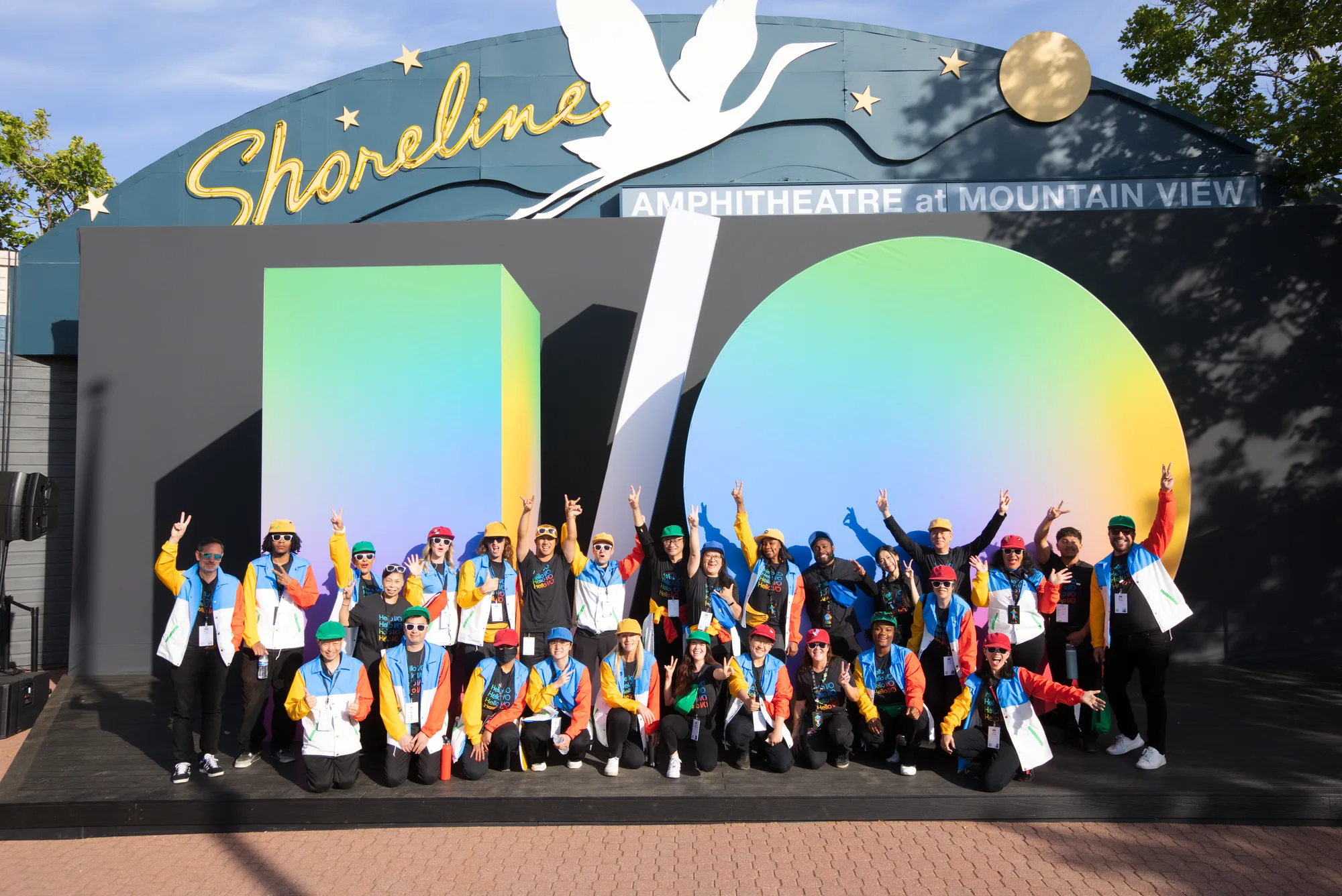
As a large outdoor concert venue minutes from Google’s headquarters, the Shoreline Amphitheatre seats thousands of people in front of its existing main stage — perfect for the event’s global livestream keynote. Google I/O is also where developers get a first look at the company’s latest product announcements and interact with the teams behind them, and that demands parallel session stages, demo spaces, meeting rooms, dining areas, kitchens, and quiet corners for conversation. Meeting the needs of the conference meant building far beyond the confines of the amphitheatre itself.
For the majority of the year, the amphitheatre’s surrounding grounds are empty parking lots. It was Sparks’s mandate to design and build a complete developer conference experience with multiple theaters, classrooms, demo areas, meeting and dining spaces on that open canvas of asphalt, with over a month of onsite installation leading up to the actual event. The team also needed to operate at a planned capacity of more than 5,000 attendees a day, keeping a dense, fast-moving program on schedule across a compressed two-day window. Then, it would all need to be taken down cleanly, returning the lots to service as if the campus had never been there.
The Solution
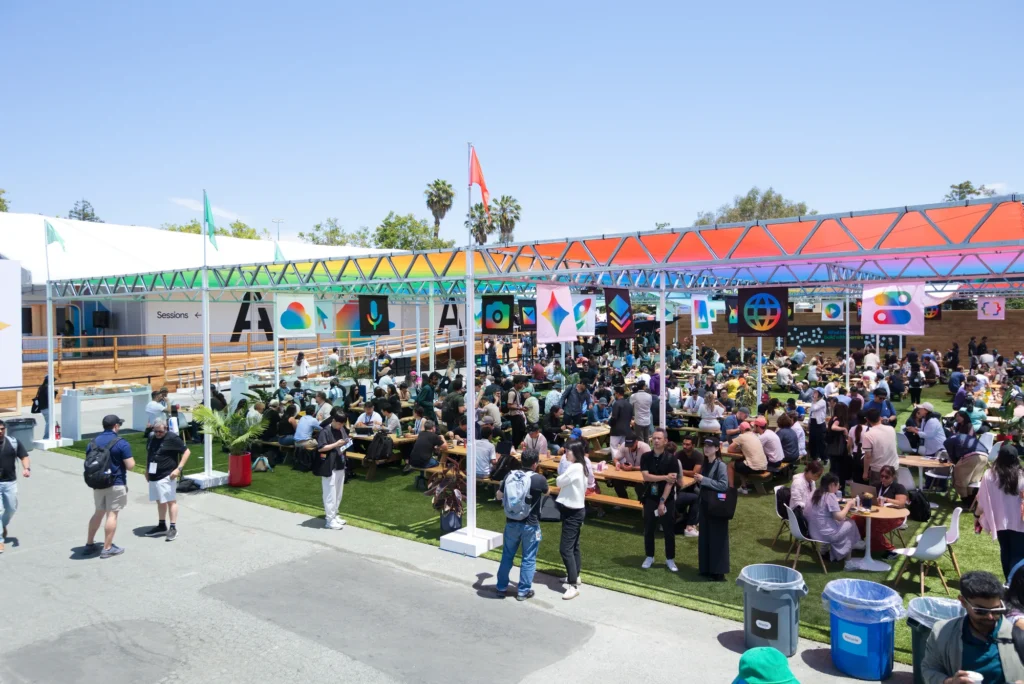
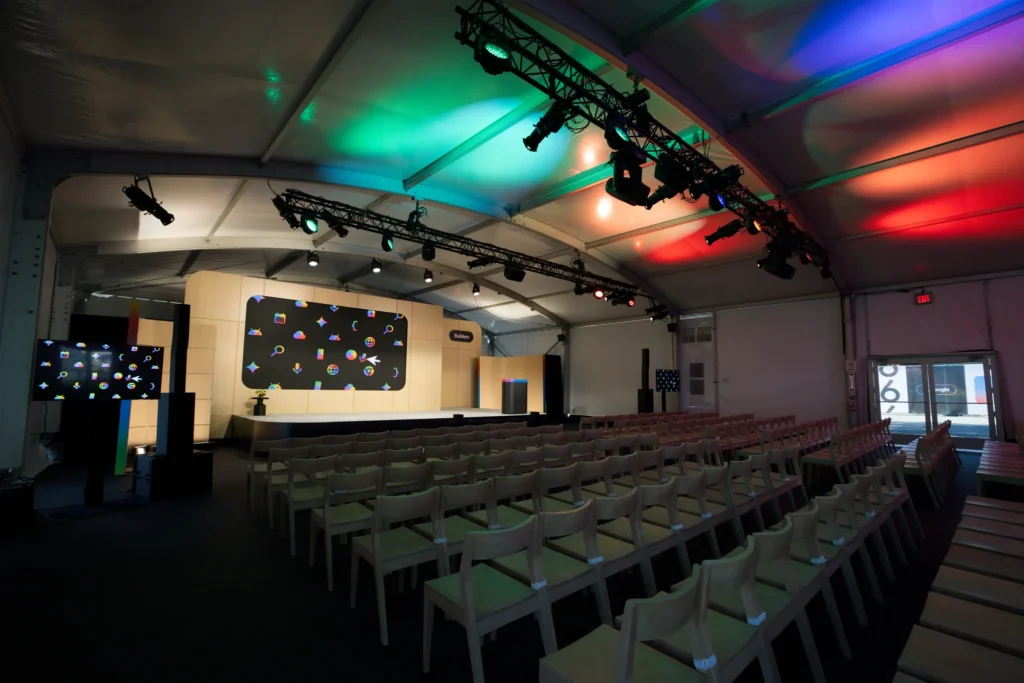
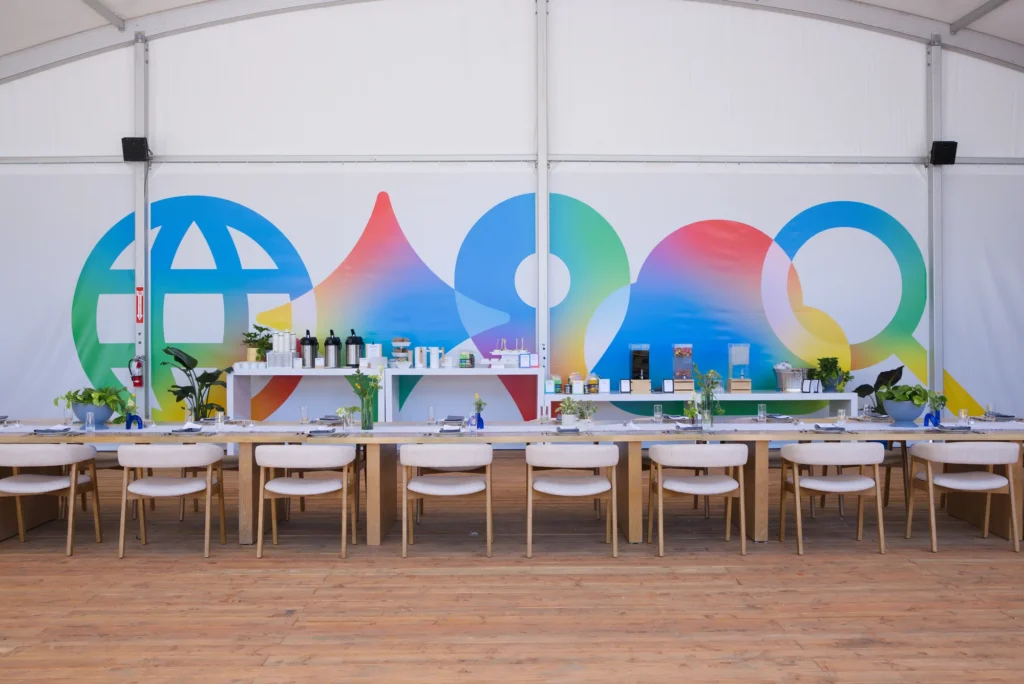
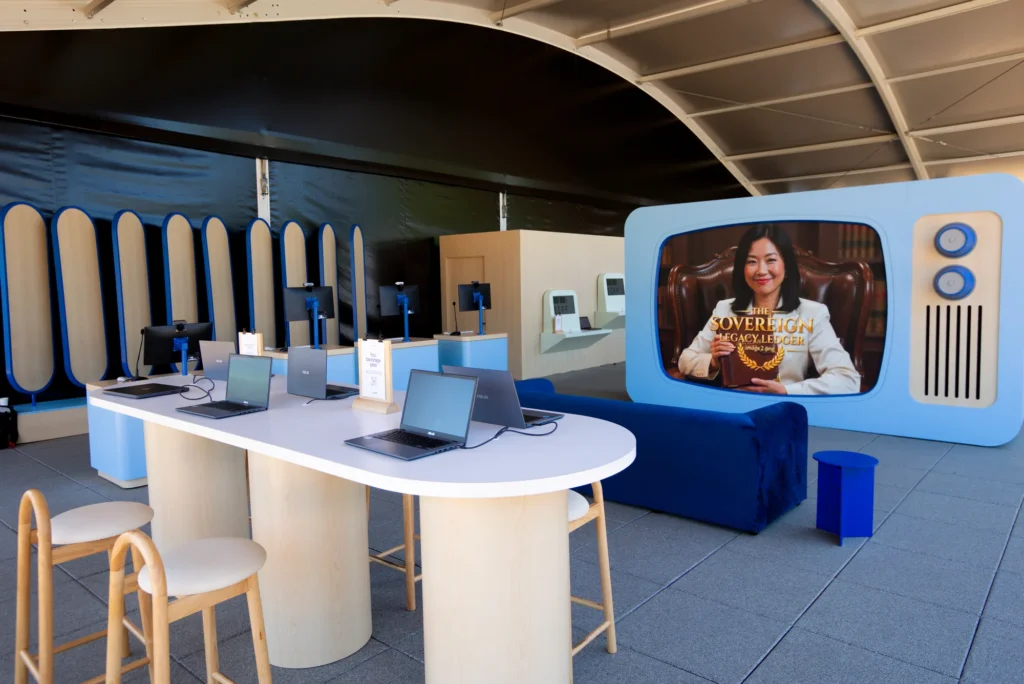
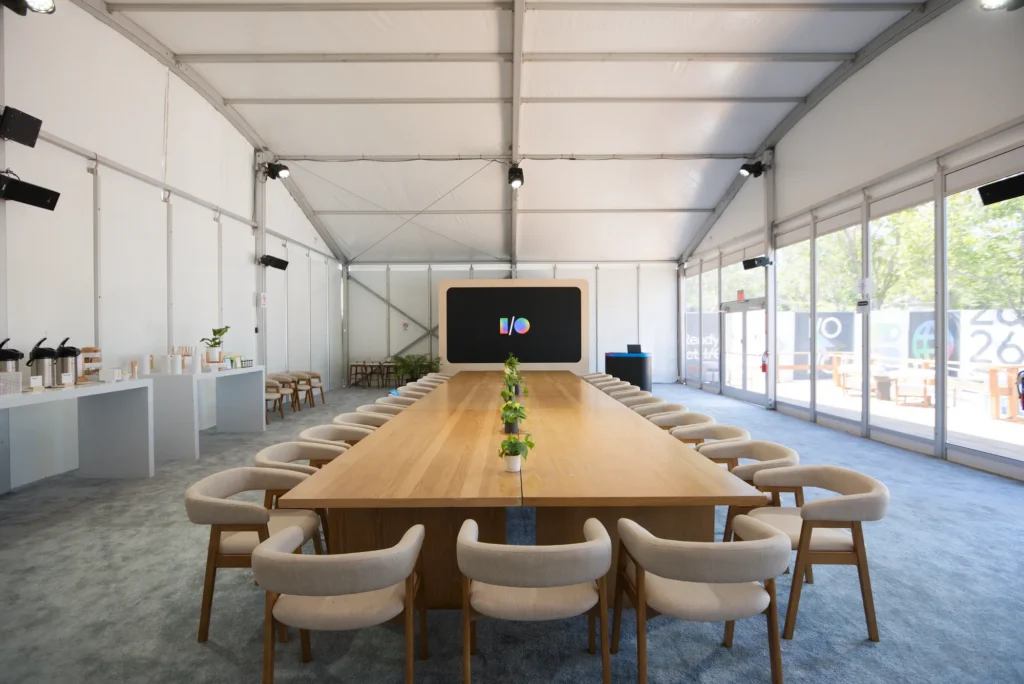
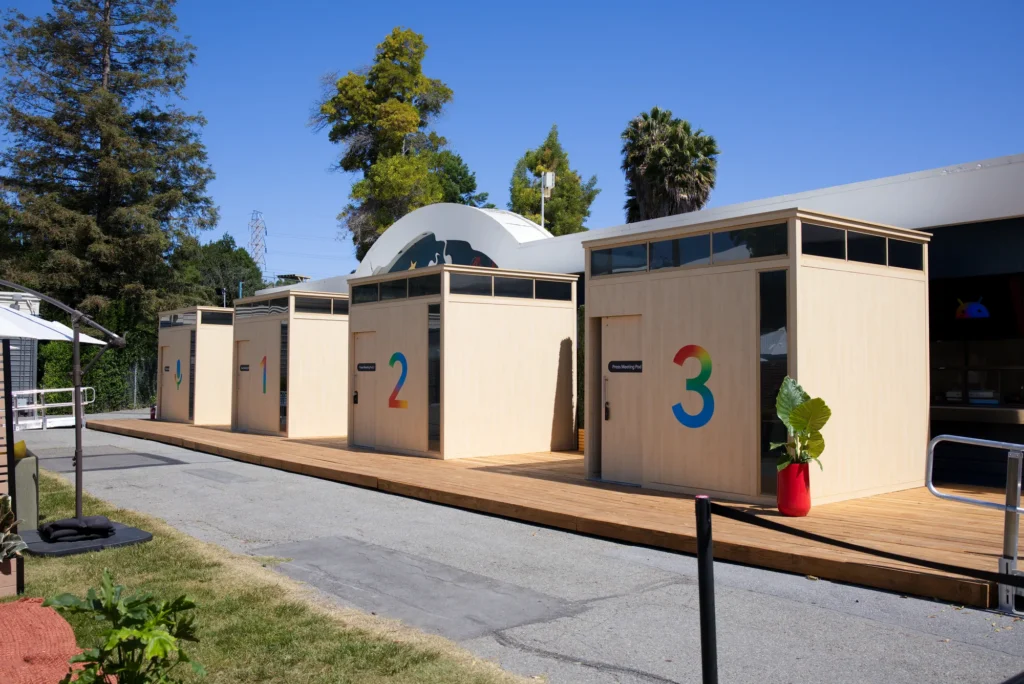
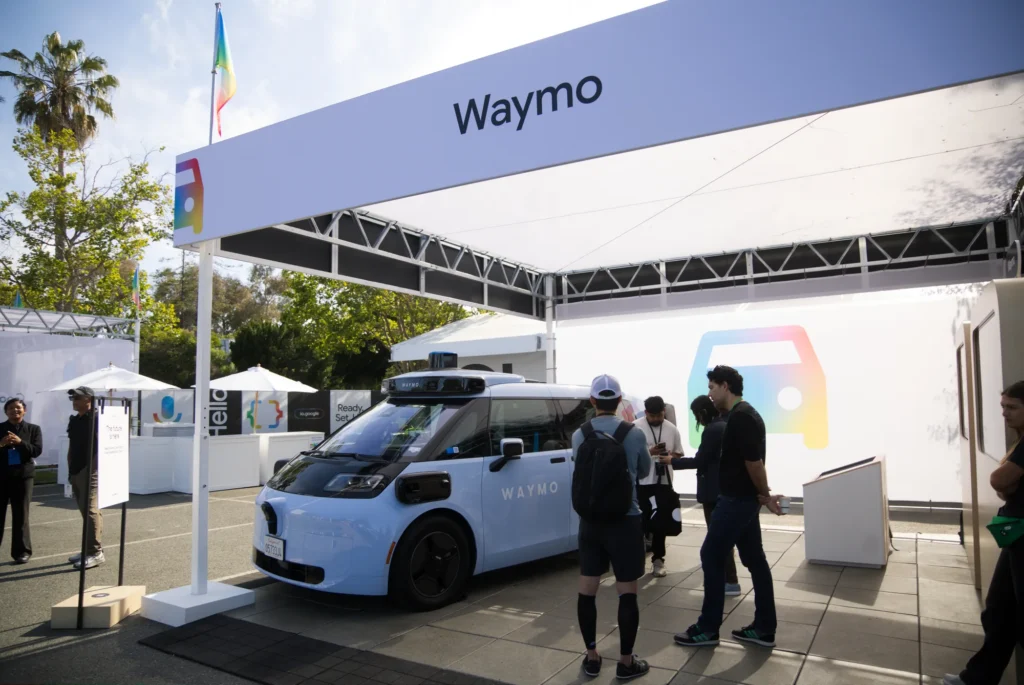
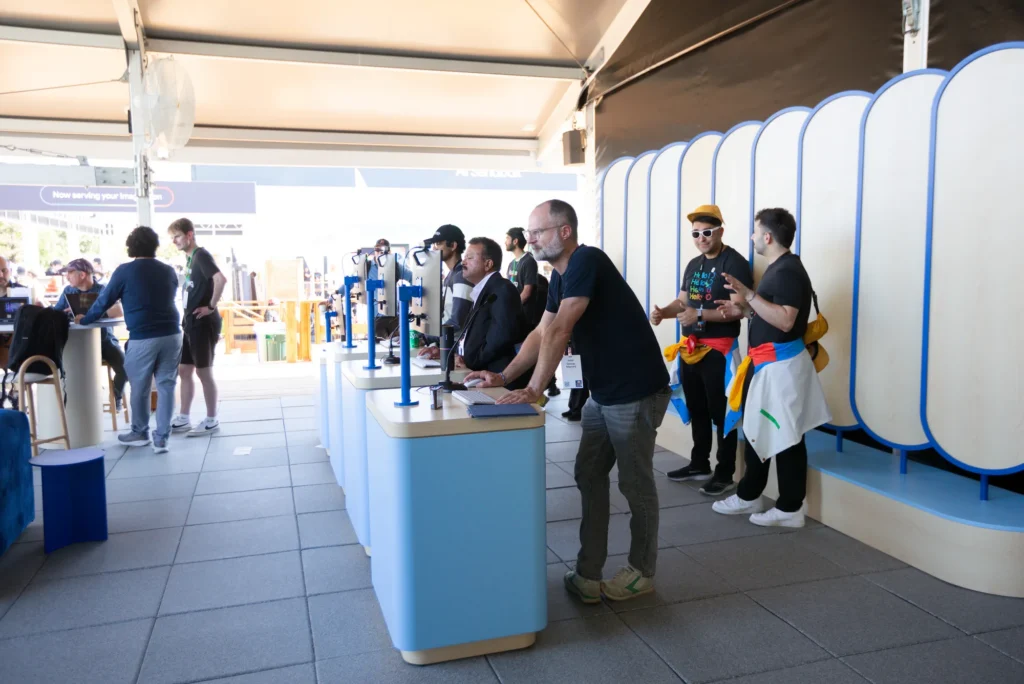
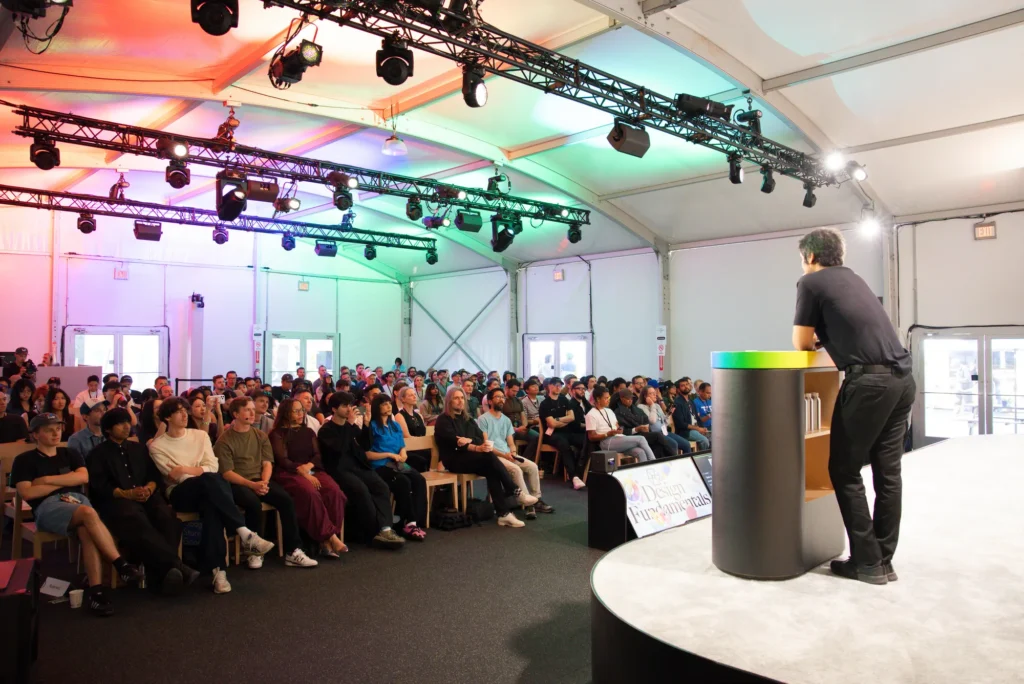
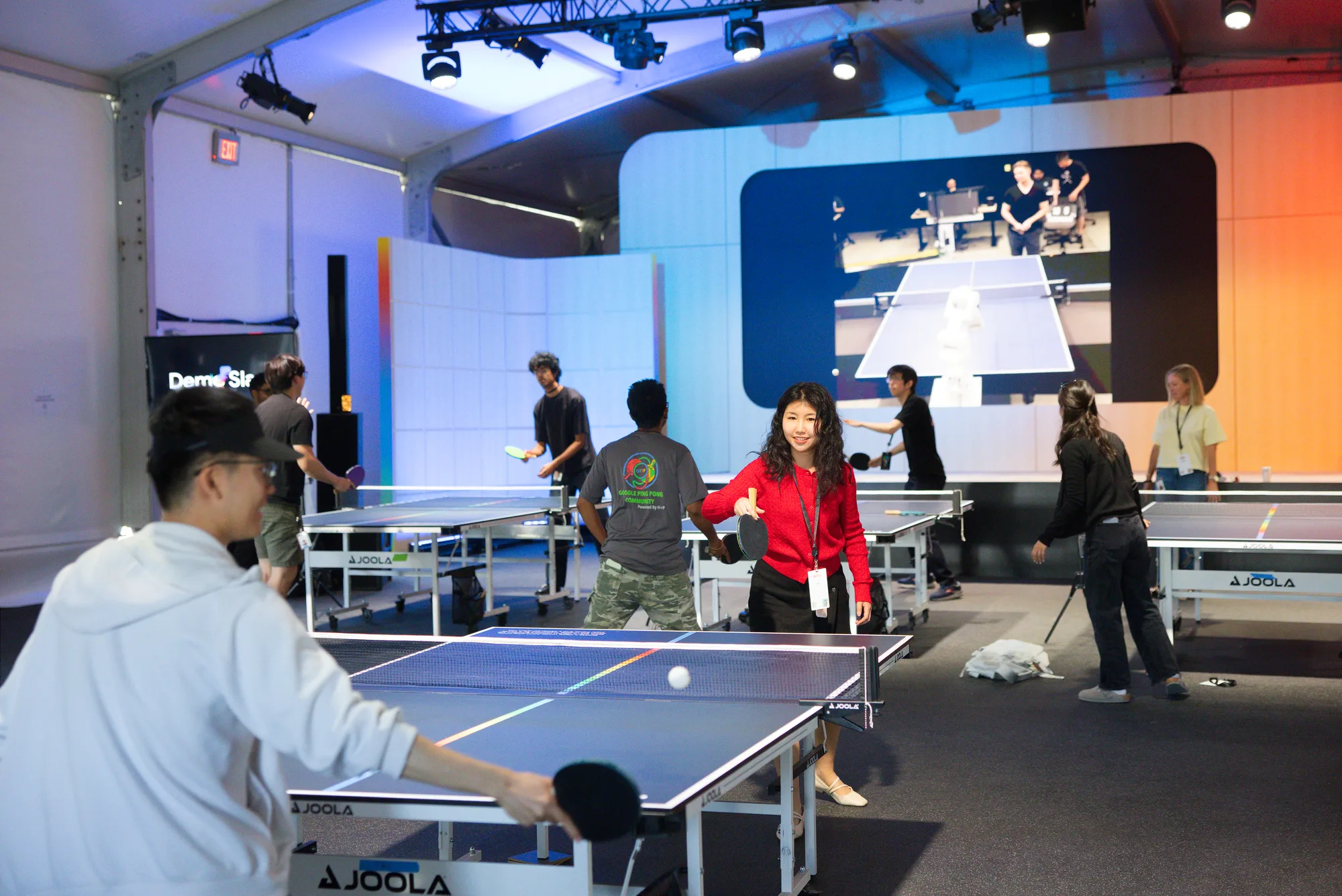
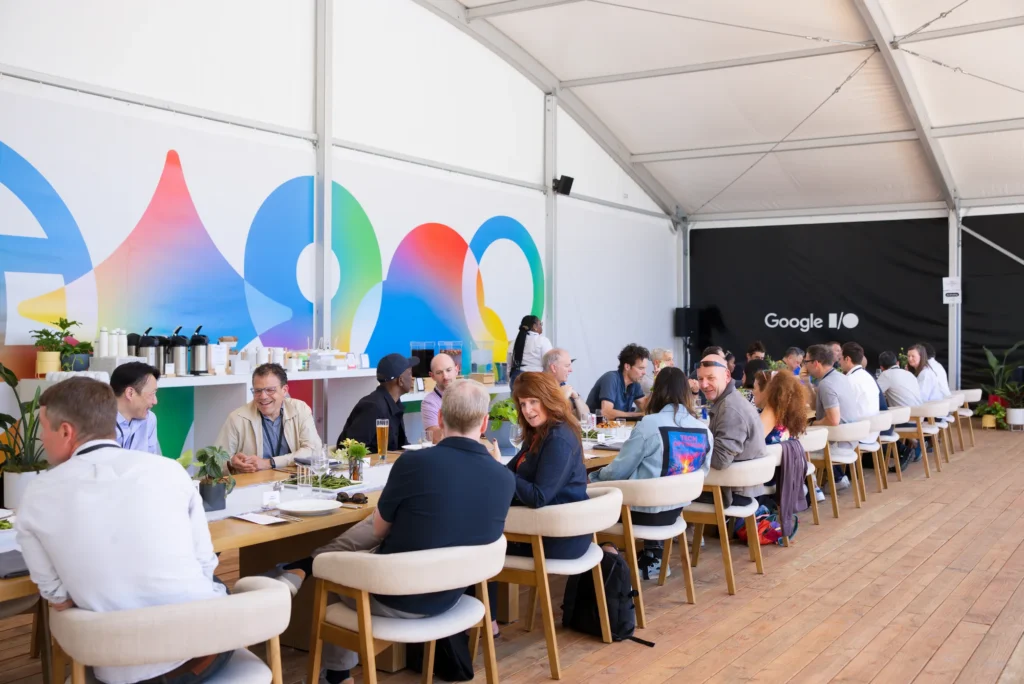
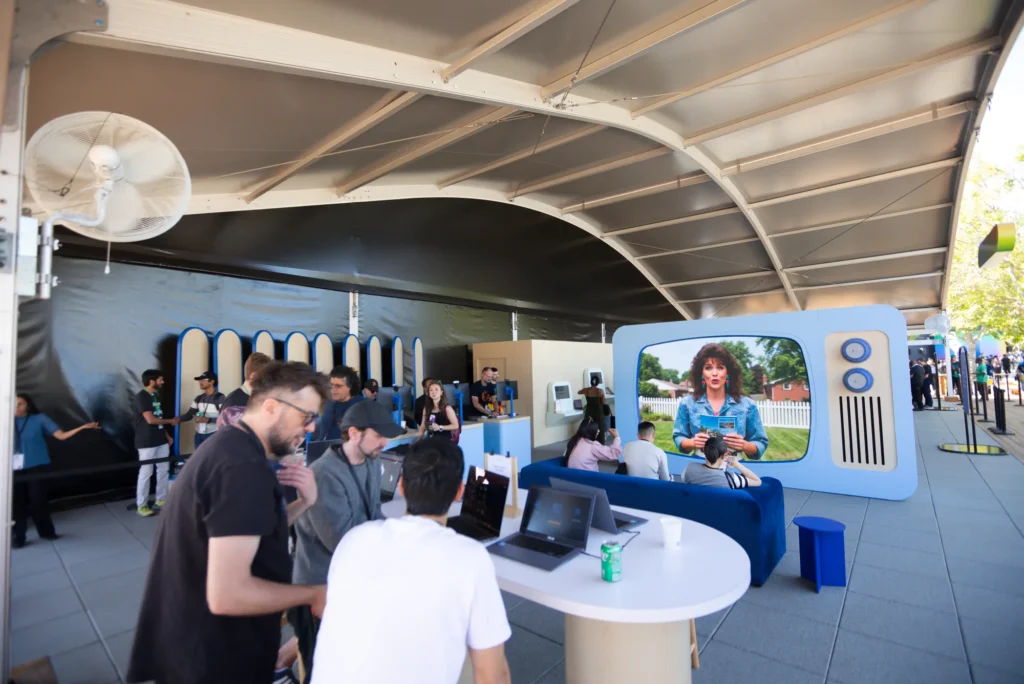
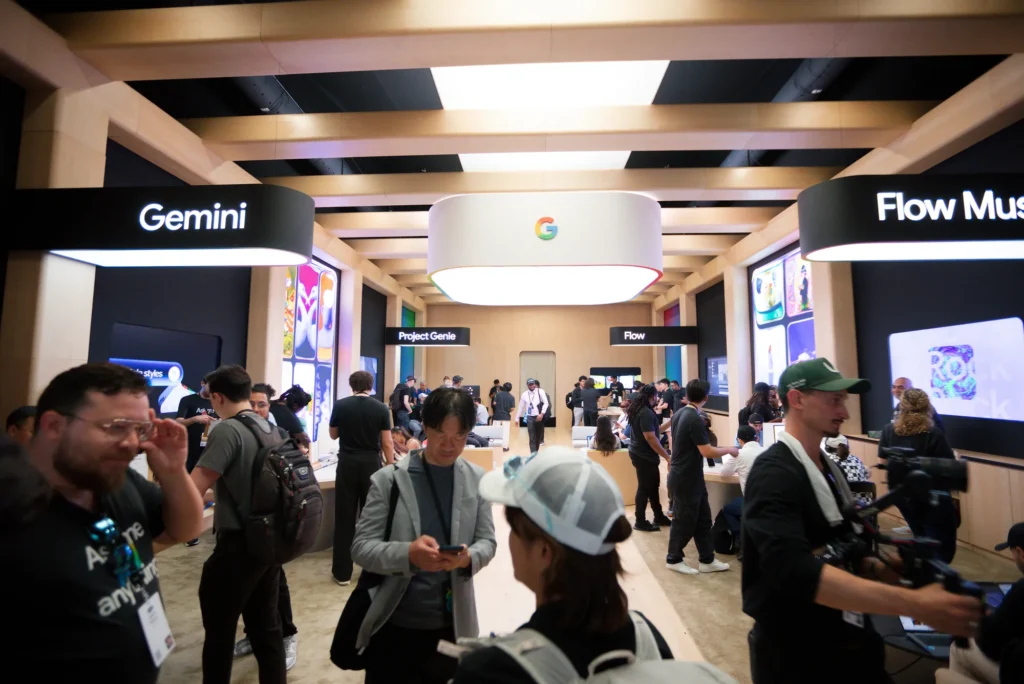
To meet Google’s needs, Sparks built a campus with over 114,000 square feet of temporary structures across the amphitheatre’s parking lots, and then organized the space into product villages. The team also partnered with Google to help implement the event’s programming, as well as design and build custom demo spaces to place the company’s newest technology in attendees’ hands.
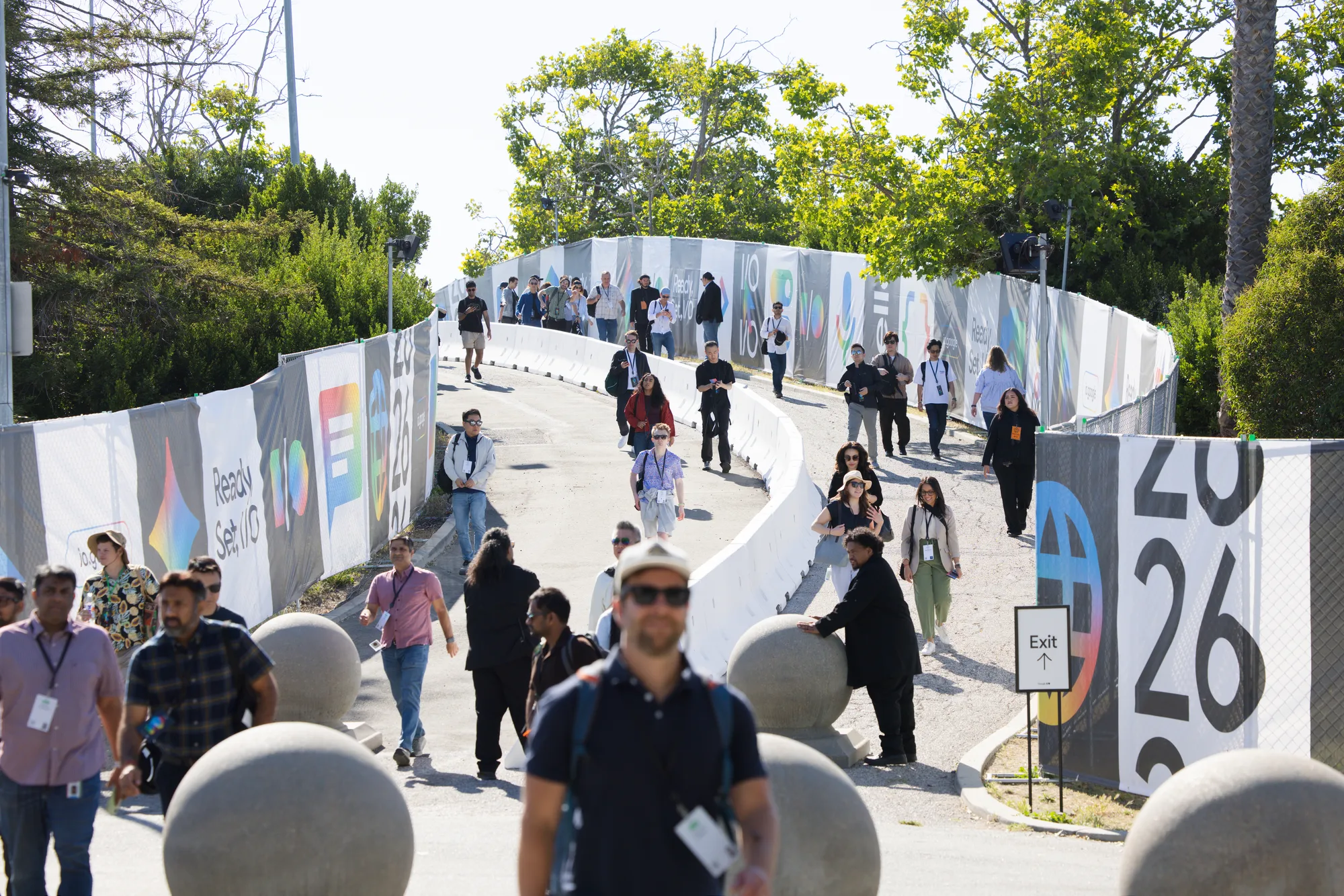
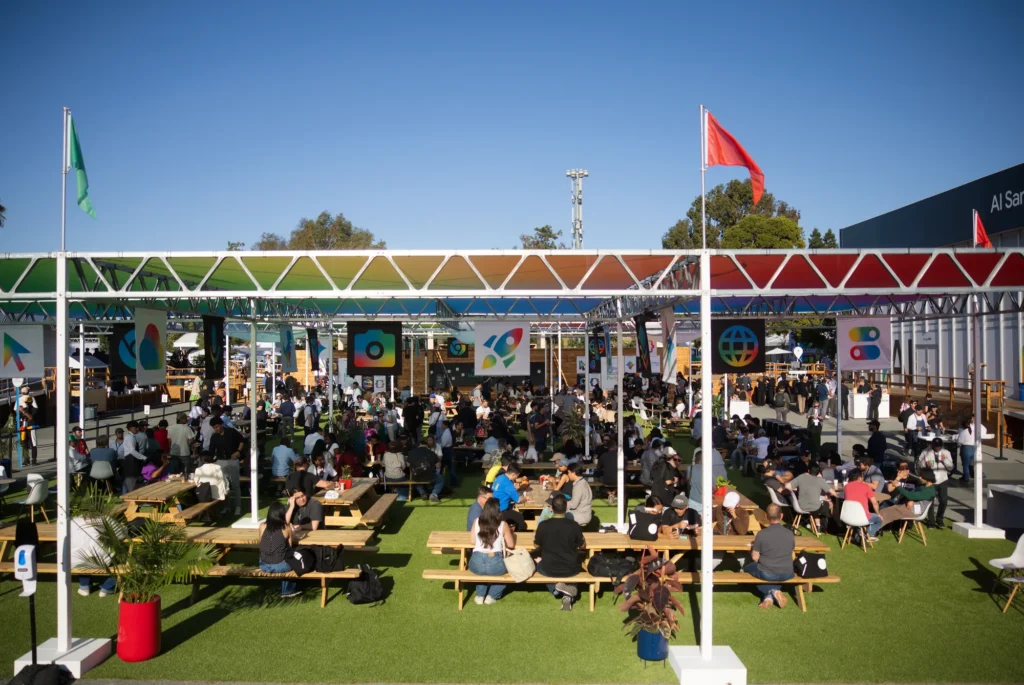
The on-site build began about a month before opening day. In that window, Sparks delivered electrical distribution across the lots, climate control for every enclosed structure, commercial kitchen facilities, decking and furniture, and the structures themselves — all permitted through the City of Mountain View, which in many instances held to the standards of permanent building codes. ADA-compliant pathways and seating ran throughout the grounds. The strategy was to create a campus that could hold a two-day program without sending any of the 5,000 guests off-site. By opening day, attendees walked into a finished campus with the parking lots barely visible beneath it.
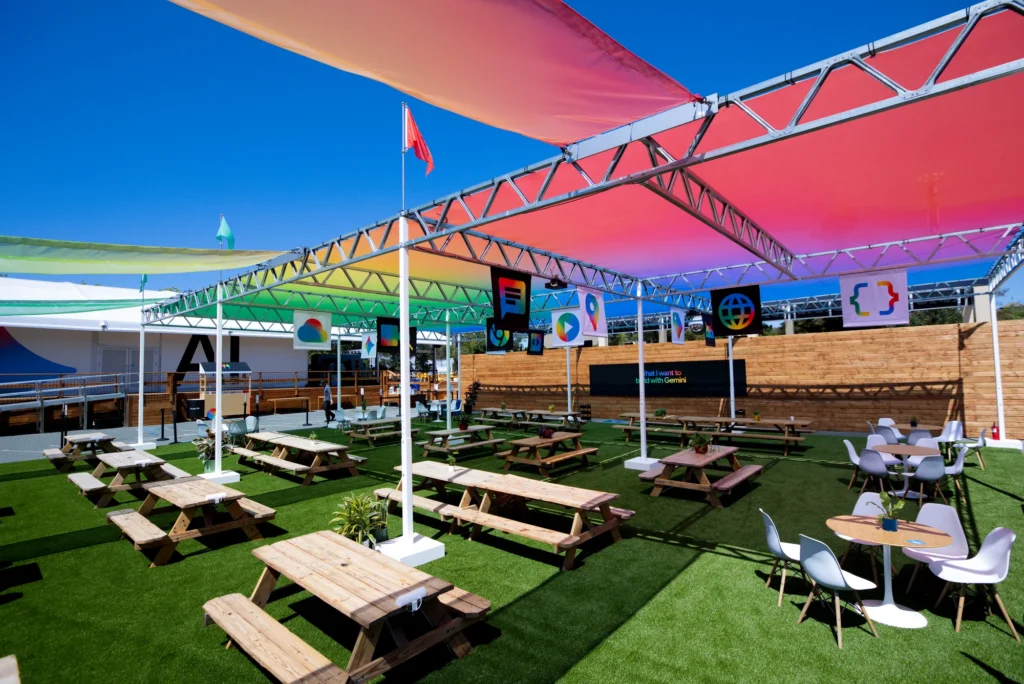
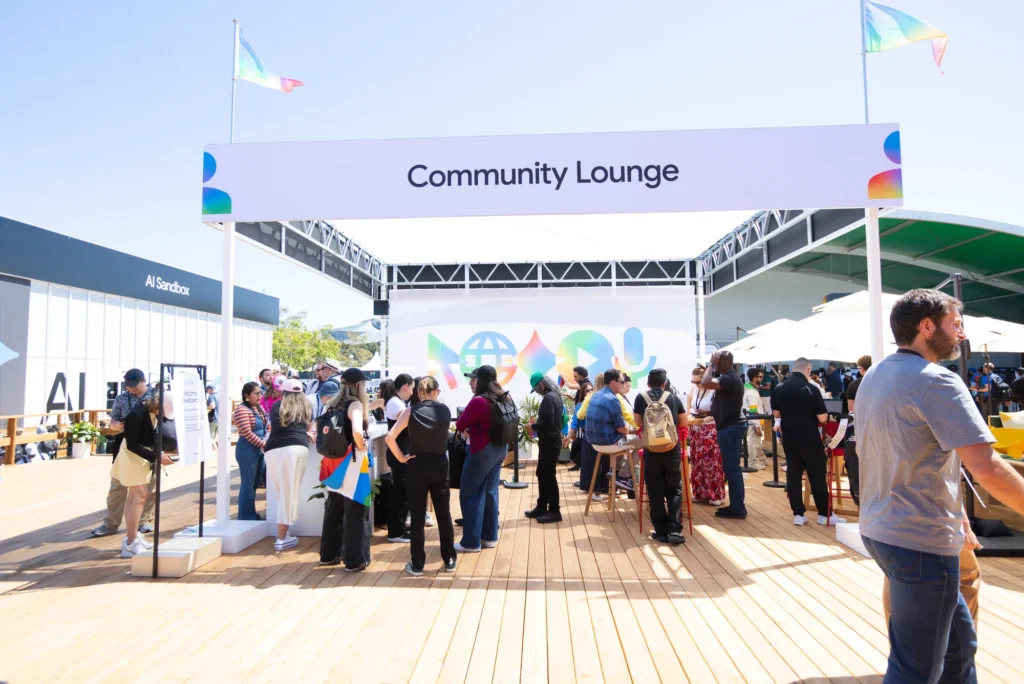
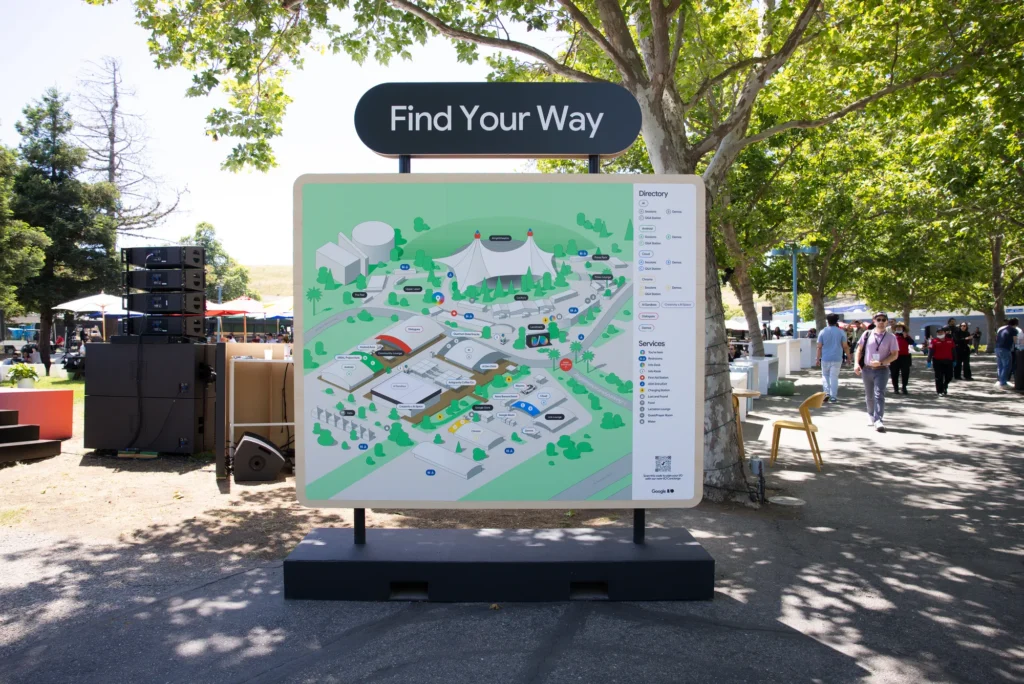
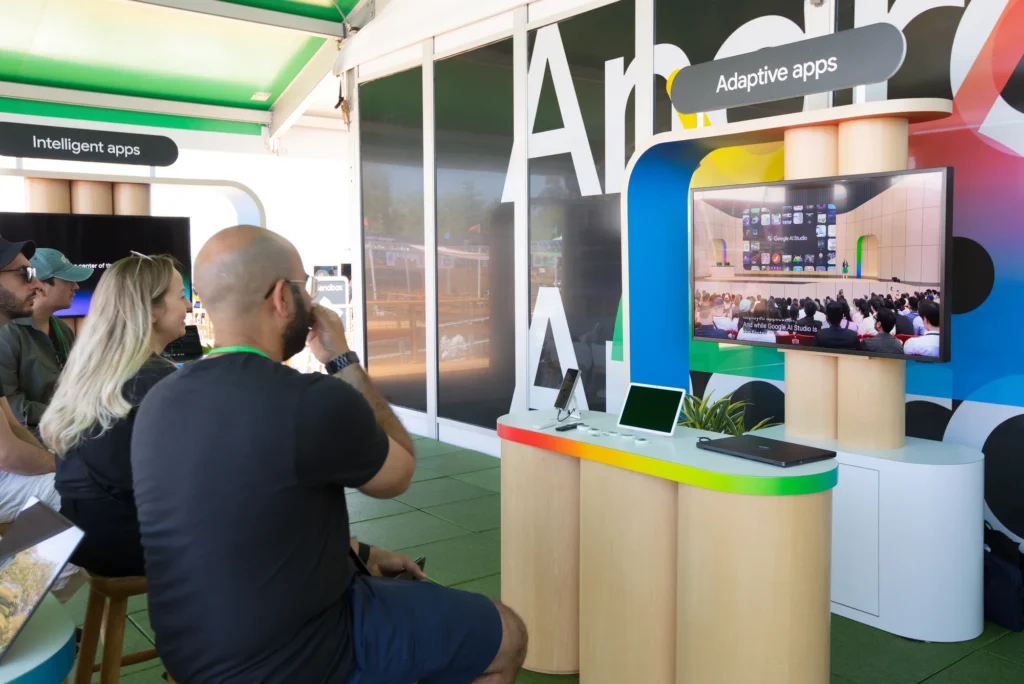
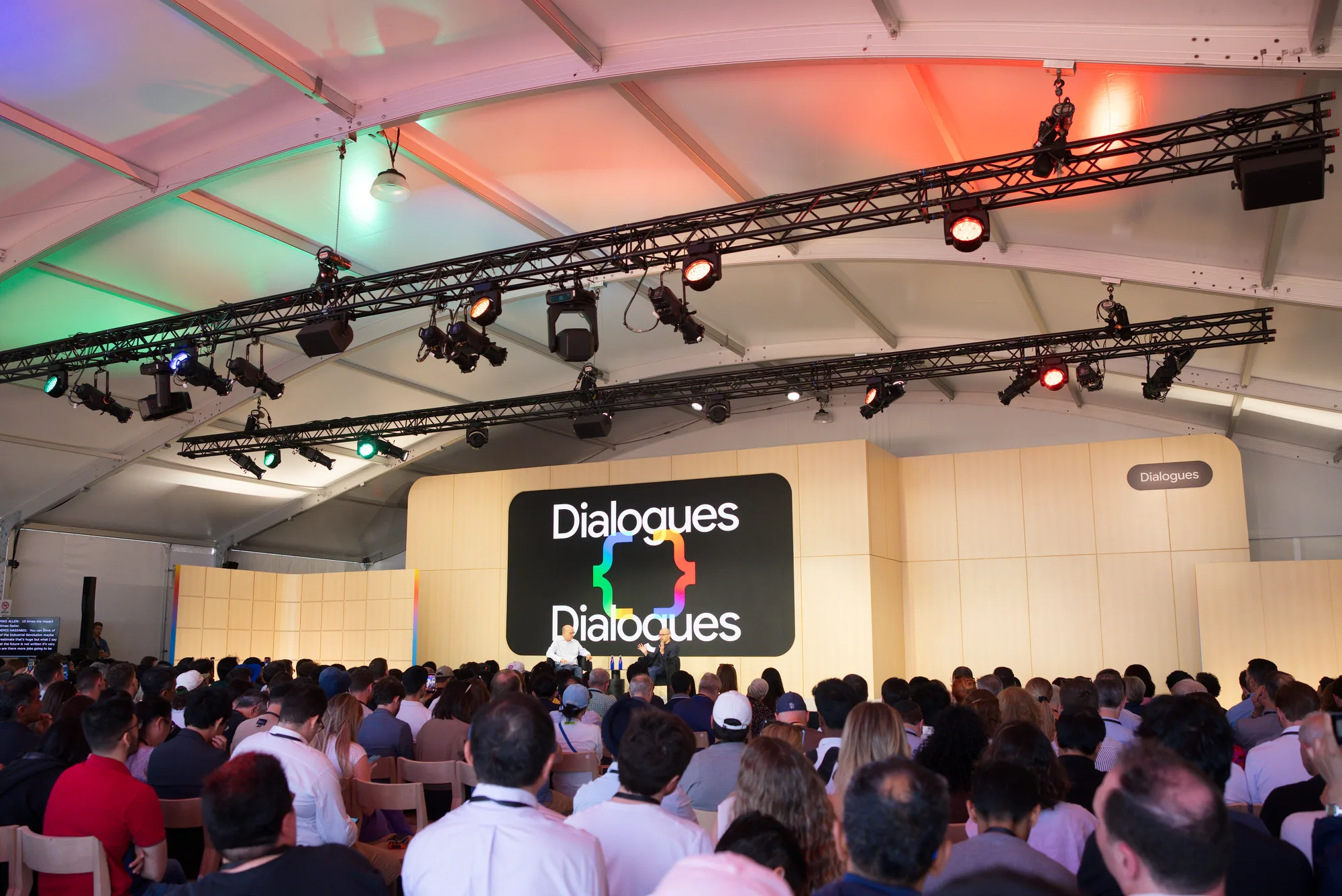
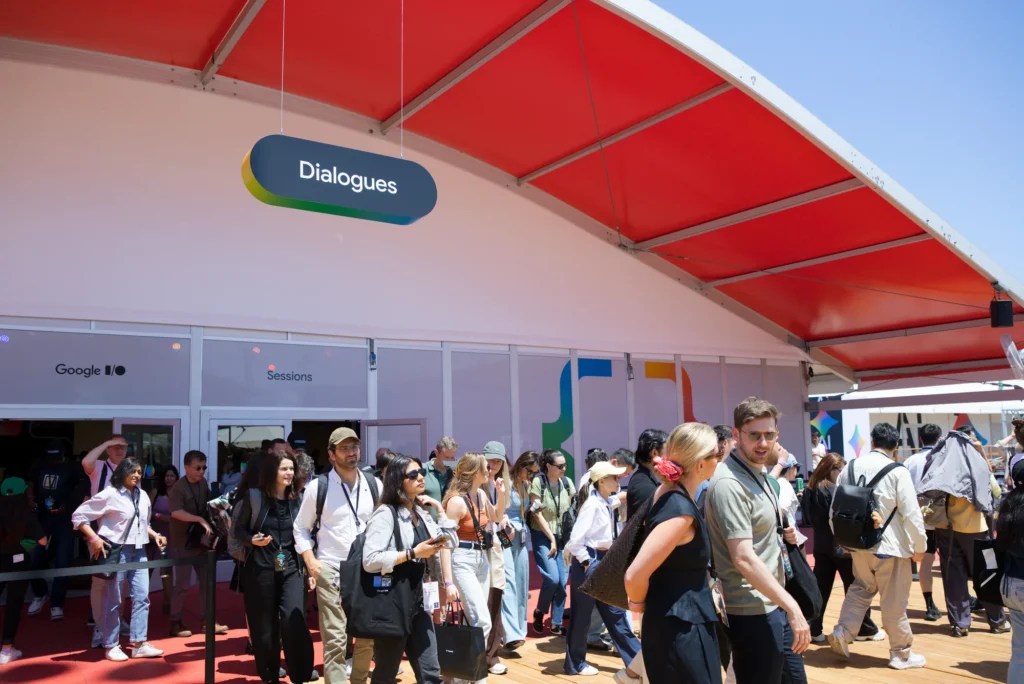
The grounds were organized around the concept of four product villages — AI, Android, Cloud, and Chrome — in the spirit of an experiential festival. Each village had its own session structure, demos on its porches, and a Q&A station where attendees could talk directly with the teams behind the products they were most interested in. The largest structures seated 380 people for sessions. Across the campus, a layered system of structure graphics, towers, street signs, and staffed information kiosks made the grounds easy to navigate from arrival onward.
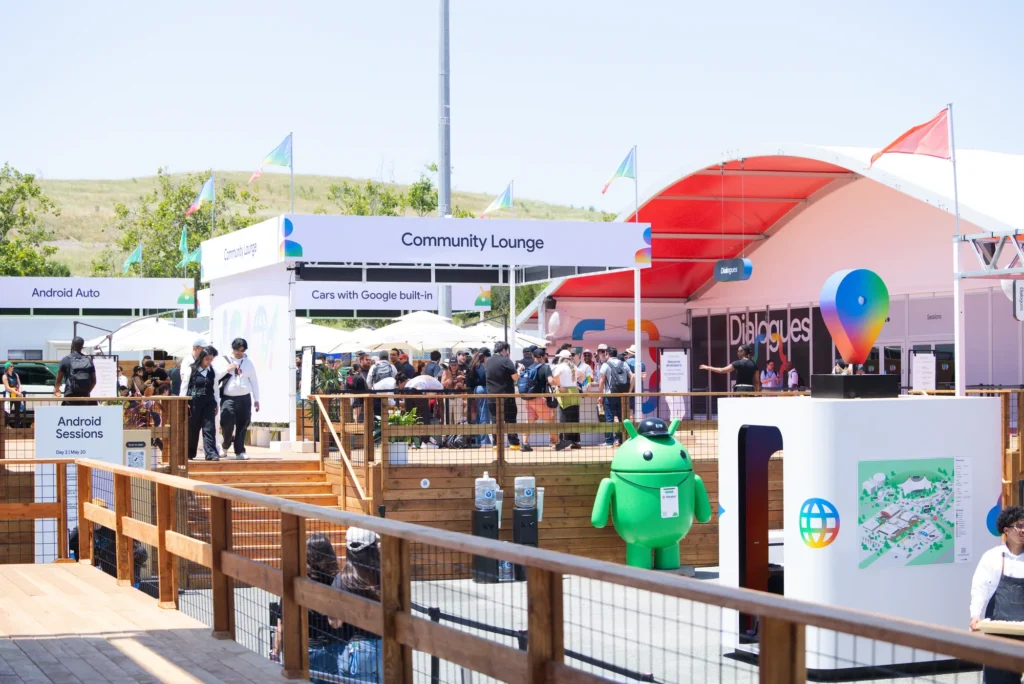
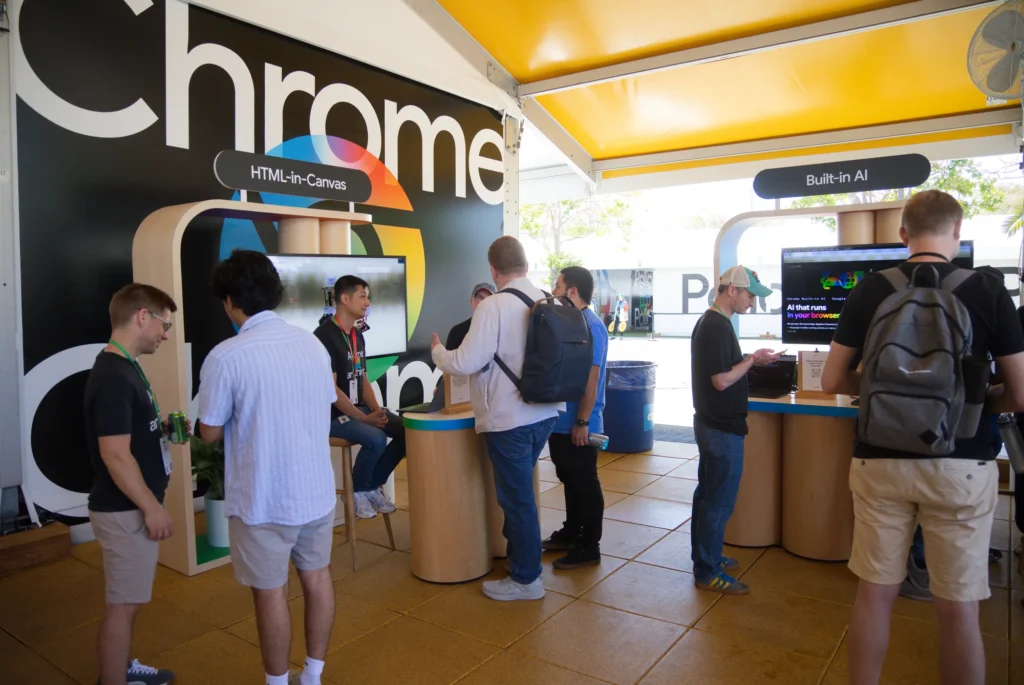
The defining rhythm of I/O is the speed from announcement to experience. A product revealed on the keynote stage at ten in the morning needs to run as a live demo on the grounds by lunch. Demo content across the campus was synchronized to the keynote’s reveals, staffed and rehearsed to go live the moment the news broke.
Sparks managed attendee flow and reserved seating for the highest-demand sessions, with transportation, security, and staffing working behind the scenes. Registration opened the day before the keynote, so attendees arrived on the first morning already badged and headed straight for their seats.
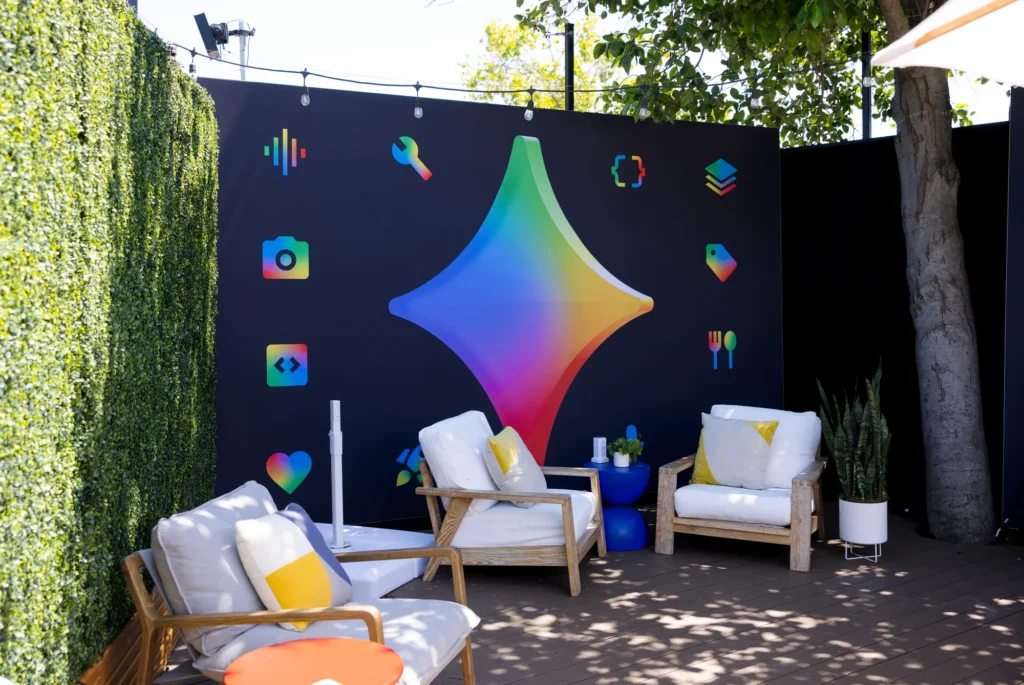
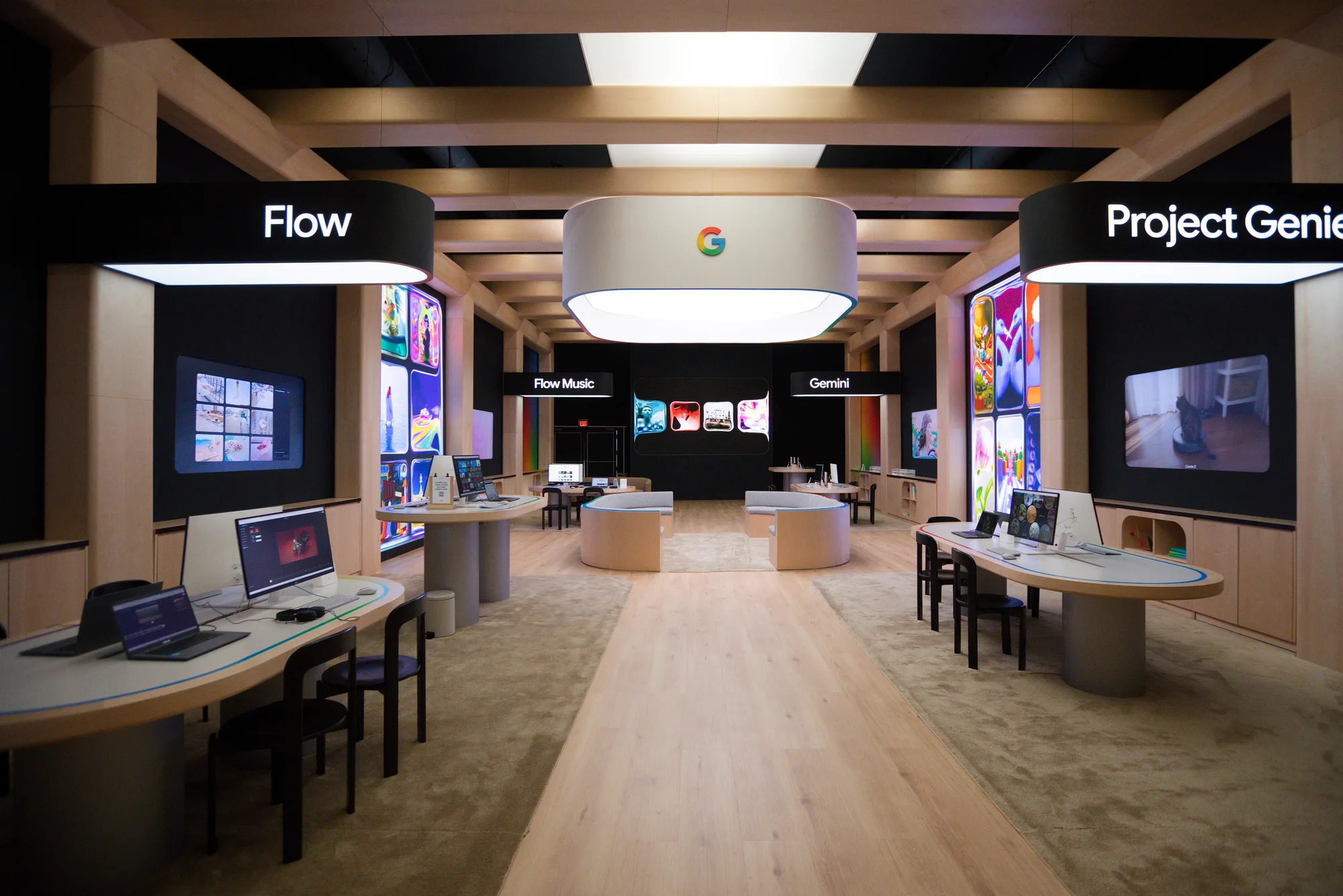
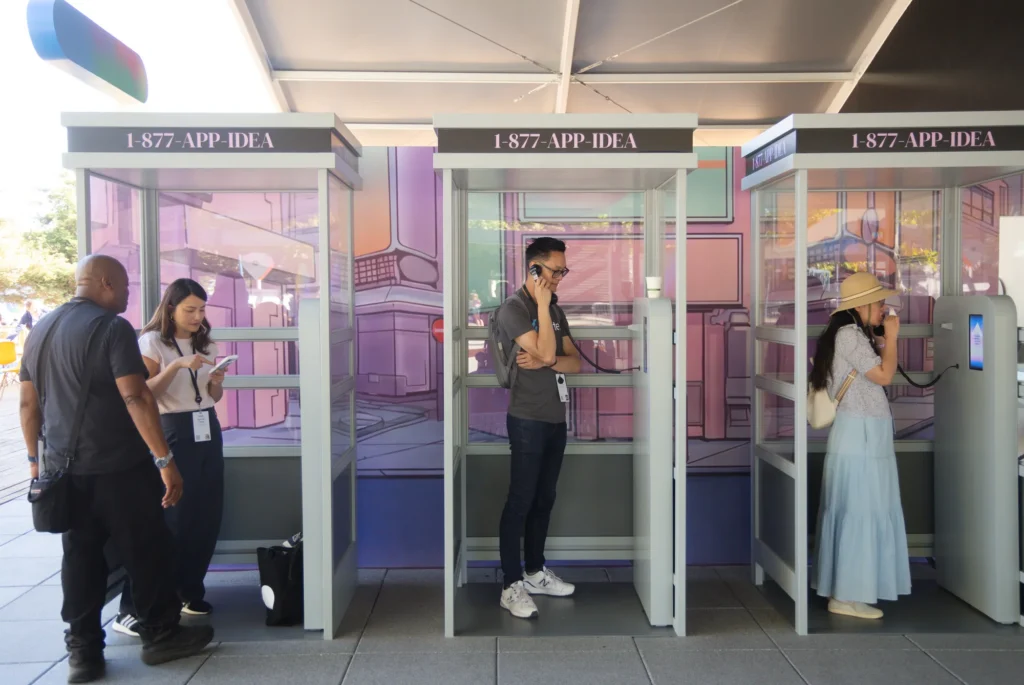
The AI Creativity Space gave the week’s central theme its most personal form. In an exclusive, 80-person, high-touch environment built for hands-on work, attendees reserved 45-minute small-group sessions to create with Google’s newest creative AI tools, guided by demo coordinators. Rather than watching a capability on screen, developers left having made something with it.
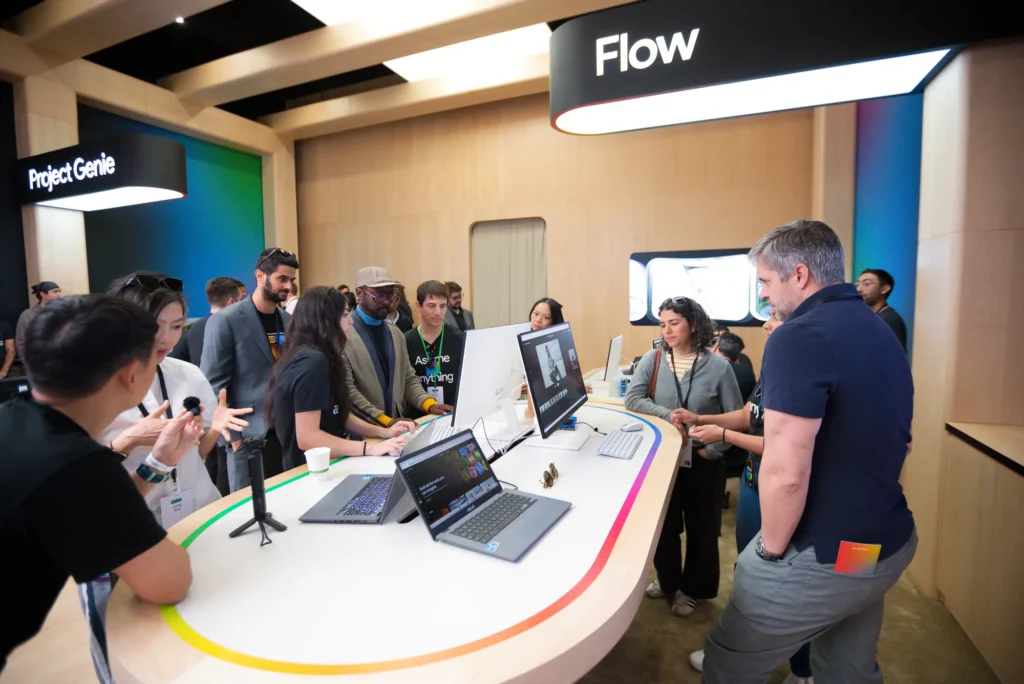
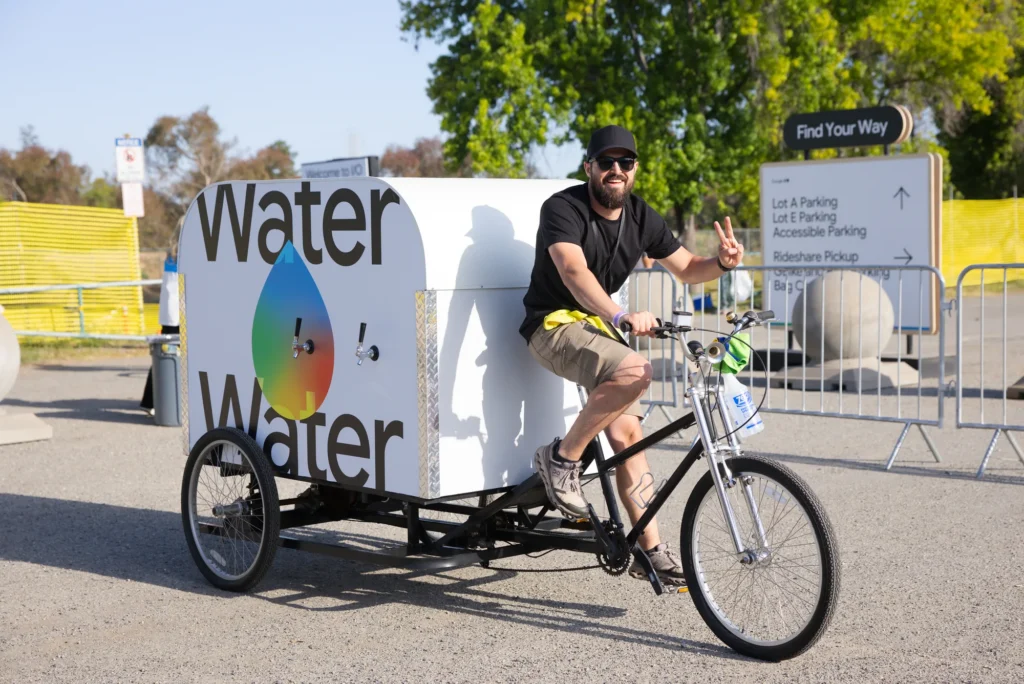
Two ten-hour days outdoors is a physical undertaking for attendees and hosts alike, and the campus was designed for the people spending them there. Accessibility infrastructure was reviewed area by area with a dedicated consultant. Along with many water and charging stations, shade against the California sun ran throughout the grounds. Food and beverage service also carried thousands through each show day. After the event, as part of Sparks’s and Google’s shared commitment to sustainability, the furniture and many of the materials were slated for reuse rather than disposal in a landfill.
The Impact
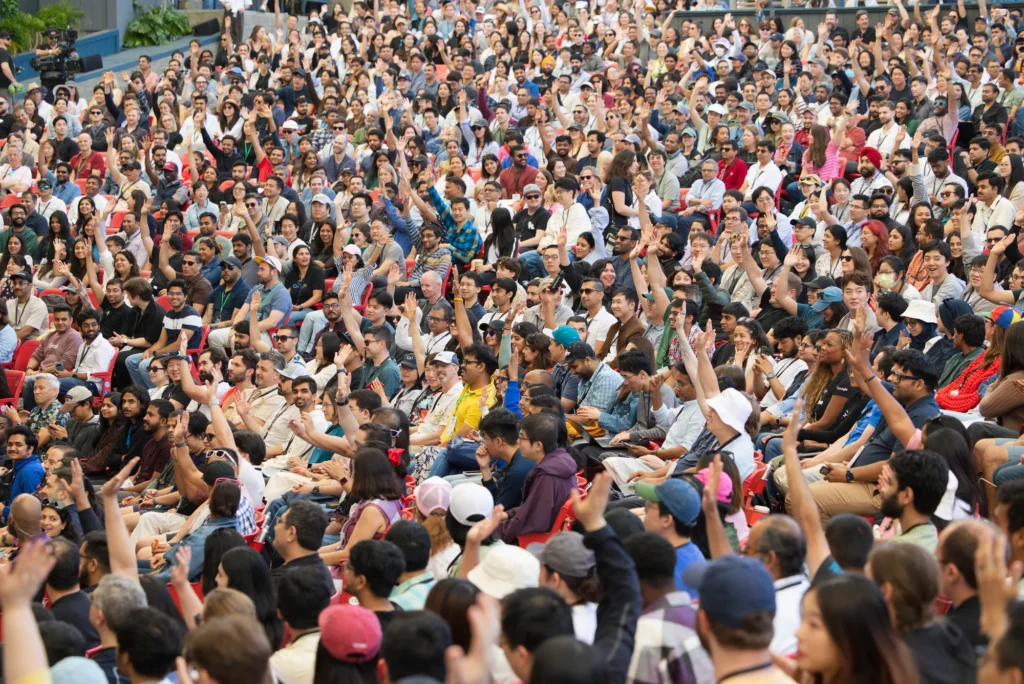
Google I/O exists to turn announcements into adoption — to send thousands of developers home building on what they saw. The campus was the mechanism to achieve that outcome: 114,000 square feet of temporary structures, including five session stages, built to welcome 5,000 developers, partners, and attendees across the two show days. Every structure, demo, and pathway was in service of maximizing the time attendees spent hands-on with Google’s newest products.
Beyond the Metrics
After a large developer conference like Google I/O wraps and the builds are taken down, what remains are the ways the event changed the people who attended it.
A launch is remembered by its first hands. I/O is where developers interact with Google’s products for the first time, which makes every demo an opportunity for a developer to form a judgment about a tool they may spend the next year working with. The environment had to perform at the standard of the announcements it hosted, because a rough edge in the experience becomes a rough edge in the product’s story.
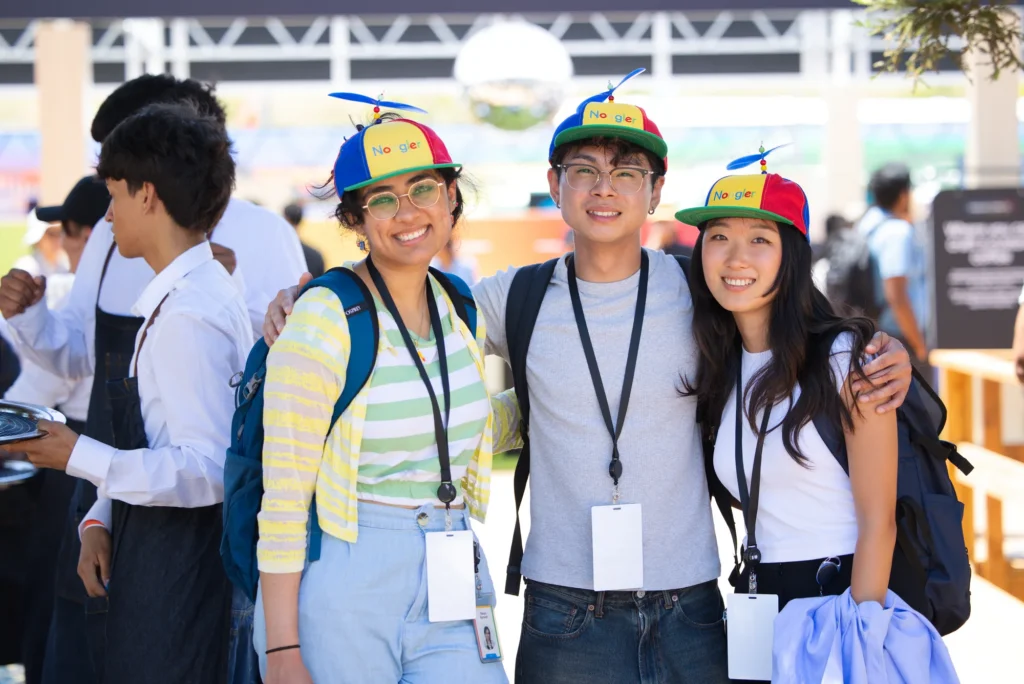
What people make, they carry home. A capability announced onstage is a moment; a capability built with your own hands is a memory — one that comes with a reason to open the tool again on Monday. The AI Creativity Space and the demo spaces were built on that conviction: experiences that engage people directly do more than inform — they change what people do next.
One-to-many becomes one-to-one. Keynotes put the same announcement in front of every attendee at the same moment. The campus then spent two days routing five thousand people into sessions they chose, demos they queued for, and tables where the conversation ran both directions. Developers went home with their own version of a product the rest of the industry was reading about that week. That’s what makes an announcement scale beyond the event.
A Note on Partners
Google owned the content of Google I/O 2026 — its announcements, its program, its speakers, and its creative direction, led by its events and experiences organization. Sparks served as the production partner for the grounds, responsible for the campus infrastructure and build, fabrication, environment and wayfinding design, and the on-site operations that kept the conference running across the show, alongside specialized supporting partners across the grounds.
Frequently Asked Questions
Google I/O is Google’s annual developer conference, held at Shoreline Amphitheatre in Mountain View, California. It is where Google announces its newest products and technologies — including AI models, Android releases, and developer tools — through a global keynote, live sessions, workshops, and hands-on demos.
The keynote is held in the Shoreline Amphitheatre itself. The rest of the conference— session structures, demo villages, food service, and gathering spaces — takes place on a temporary campus built across the venue’s parking lots, produced by Sparks for the event and removed afterward.
Sparks served as the overall production lead for the I/O grounds, responsible for the complete transformation of the Shoreline Amphitheatre parking lots. That scope covered technical infrastructure and structures — electrical, HVAC, kitchen facilities, furniture, and decking — along with 3D and 2D design, scenic fabrication and graphics, space planning, catering, and demo experiences including the AI Creativity Space. Sparks also managed brand ambassador staffing, evening events and entertainment, and the security, transportation, parking, backstage, and keynote load-in logistics that kept the event running. Google owned the event, its announcements, and its program. Sparks built and ran the campus around them.
For Google I/O 2026, the on-site build ran just over a month from first load-in to opening day, following months of design, engineering, permitting, and fabrication. Teardown returned the venue’s parking lots to normal service approximately 10 days after the event.
Yes. Sparks regularly transforms blank sites — parking lots, open lawns, beaches — into working event venues. Doing it well means producing to the standard of a permanent venue, with municipal permitting, structural engineering, ADA-compliant design, power and climate infrastructure, and wayfinding that makes a temporary campus navigable on first arrival.
Product launches at developer conferences such as Google I/O pair a keynote announcement with immediate hands-on access. Attendees watch a product debut on stage and then experience it as a live demo on the grounds within hours. That requires an event environment built and staffed to launch-day standards, where every demo station is a first impression of a new product.
Yes. At Google I/O 2026, Sparks built the stages and handled load-in for sessions across the campus, and managed the logistics that kept a dense two-day program moving — queuing, security, transportation and parking, and backstage and keynote load-in operations. Google’s teams ran the shows on those stages. Sparks made sure the stages, the grounds, and the flow of people were ready for them.
Technology companies typically own the content and program of their developer conferences and work with an experiential production partner to design, build, and operate the venue itself — infrastructure, structures, registration, staffing, and attendee logistics. Sparks, for example, produced the grounds of Google I/O in 2026, transforming the Shoreline Amphitheatre parking lots into the experience’s campus.