

Healthcare marketing rarely suffers from a lack of information. Between clinical data, regulatory language, and competing digital channels, healthcare and pharma brands are often working harder than most to be heard — let alone remembered. The harder question isn’t what to say. It’s how to make people stop, understand, and hold onto it once they walk away.
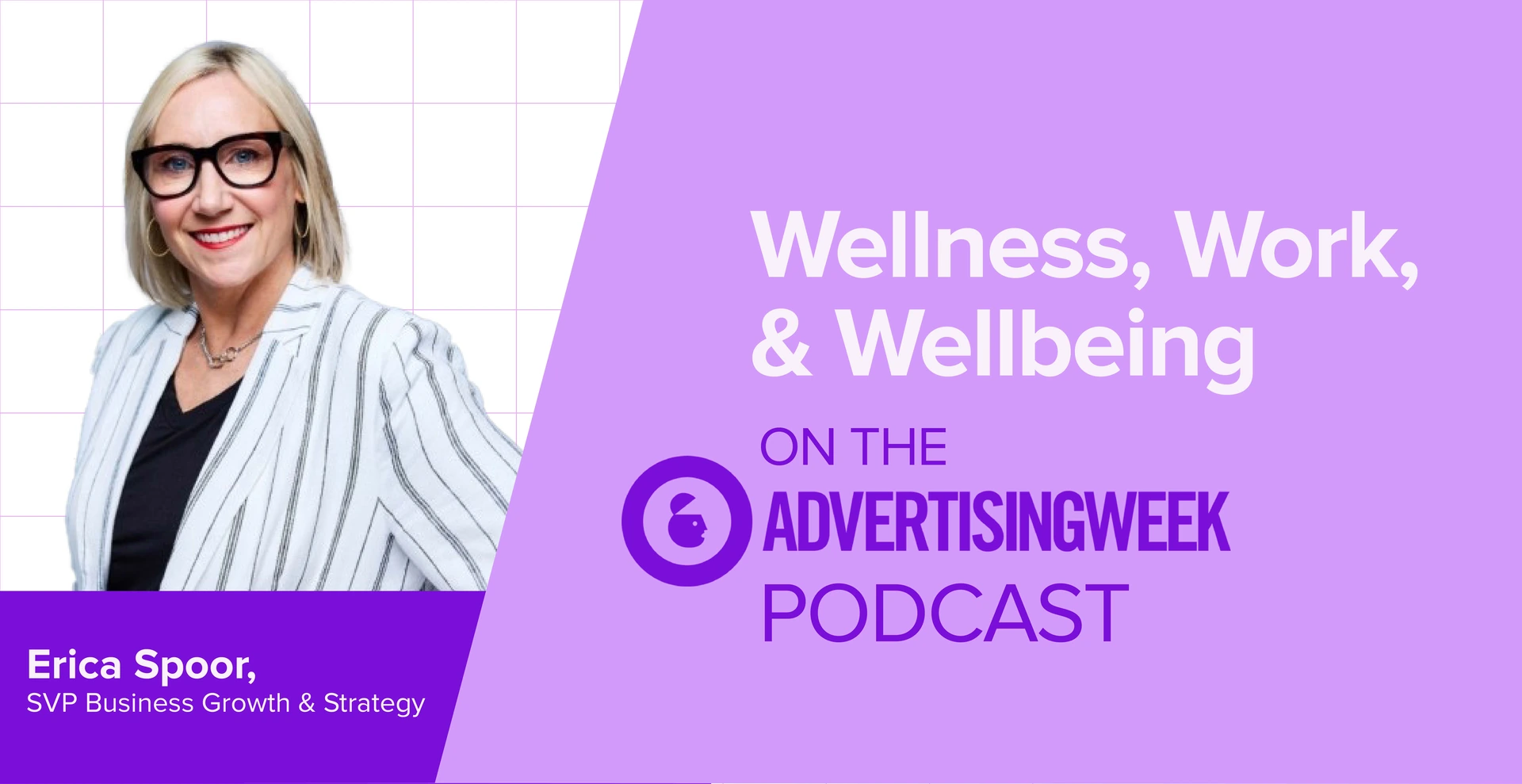
That’s the subject of a recent episode of Advertising Week’s Wellness, Work & Wellbeing podcast, featuring Erica Spoor, SVP Business Growth & Strategy at Sparks, who works with healthcare and pharmaceutical clients to turn complex science into experiences people can actually engage with in person.
Below are five ideas from the conversation on what makes healthcare experiential work — and where the industry still has room to take more risks.
1. Complex science needs one simple way in.
Healthcare brands typically have more to say than an audience can absorb in a single sitting — and most of it can’t be cut. The fix isn’t less information, it’s a clearer entry point. In one activation Erica describes, a COPD drug’s eight-minute dosing window became the organizing idea for the entire experience, built literally around a clock. Healthcare providers who wanted to go deeper into the science still could — but everyone walked away with one memorable idea first.
2. In person is where healthcare can rebuild trust.
As more of healthcare moves online — telehealth, direct-to-consumer prescriptions, an expanding volume of digital marketing — patients and providers are sorting through more noise with less certainty about what to believe. Erica points to live experience as one of the few remaining ways healthcare brands can create real conversations, put people in front of credible experts, and let them handle products and devices firsthand.
3. A room full of screens isn’t an experience.
If information is already available online, it doesn’t need to be the centerpiece of an in-person activation. Erica describes Sparks designing healthcare environments around conversation and hands-on learning instead — for GoodRx, that meant an open environment built for providers to sit down and talk rather than face a wall of monitors; for Alcon, it meant putting the technology directly into attendees’ hands so they could see how it actually worked.
4. The experience doesn’t start or end at the event.
The strongest healthcare programs are built across the full journey — what draws someone in, what happens while they’re there, and how the ideas and conversations continue once they leave. Erica notes that in healthcare, those extensions can reach as far as the doctor’s office or pharmacy, turning a single activation into a much larger, ongoing brand experience.
5. Regulation isn’t an excuse to be forgettable.
Scientific accuracy and regulatory review are non-negotiable in healthcare marketing — but Erica argues they’re not a ceiling on creativity. The brands getting the most out of experiential are the ones willing to find a genuinely memorable, physical way to tell their story: an eight-minute clock, a walk-through model of a blood vessel, or a conversation started over a cup of coffee.
Go Deeper
These five ideas are a preview of a longer conversation on how Sparks approaches experiential strategy for healthcare and pharma brands navigating complexity, regulation, and a widening trust gap.
Frequently Asked Questions
Healthcare experiential marketing uses live, in-person environments like medical congresses, brand booths, and immersive activations to help doctors, patients, and industry audiences understand and remember complex medical products, therapies, and clinical data. It works alongside digital and print channels by adding hands-on engagement, credible expert conversation, and physical demonstration that a screen alone can’t deliver.
Wellness, Work & Wellbeing is a podcast from Advertising Week, one of the marketing industry’s largest global conferences. The show looks at how brands, agencies, and workplaces are approaching employee, consumer, and audience wellbeing. Erica Spoor of Sparks joined a recent episode to discuss how healthcare and pharmaceutical brands can turn complex science into trusted, memorable in-person experiences.
Erica Spoor is SVP Business Growth & Strategy at Sparks, a global brand experience agency. She works with healthcare and pharmaceutical clients to translate complex clinical science into activations that audiences can actually engage with in person. Erica recently joined Advertising Week’s Wellness, Work & Wellbeing podcast to talk about how healthcare and pharma brands can build trust through live experience.
Healthcare brands build trust by giving audiences one simple way into the science before offering the depth. That usually means prioritizing conversation and hands-on demonstration over walls of screens, extending the experience past the event through provider and pharmacy touchpoints, and creating a physical moment memorable enough to stick. A working clock built around a COPD drug’s eight-minute dosing window, or a walk-through model of a blood vessel, will outlive the activation itself.
Telehealth, direct-to-consumer prescriptions, and rising digital marketing volume have left patients and providers sorting through more noise with less certainty about what to believe. In-person experience is one of the few channels left where healthcare brands can host real conversations, put audiences in front of credible experts, and let people handle products and devices themselves. That kind of firsthand engagement rebuilds trust digital channels struggle to earn.
Scientific accuracy and regulatory review are non-negotiable in healthcare marketing, but they aren’t a ceiling on creativity. The brands winning at experiential, including Sparks clients like GoodRx and Alcon, treat regulatory constraints as a design brief rather than a barrier. They invest in physical storytelling devices, whether that’s a working clock, a walk-through anatomy model, or a genuine product demo, that carry the message without compromising compliance.