The Opportunity
At Cannes Lions 2026, the Wall Street Journal set out to make a singular first impression. In a week when media companies compete relentlessly for attention, the brand chose to host an exclusive morning at sea that would embody the character of the iconic paper. While the invitation to a private cruise was a distinctive and strategic concept, the experience itself had to be worthy of the idea from the first step onto the deck.
Staging the event on the water raised the stakes. A heritage sailing yacht is a fixed and finite space, and the cruising schedule demanded absolute precision the first time through. The welcome, the breakfast service, the storytelling and performances, the route, the return to shore, and the planned surprises all had to unfold in deliberate lock-step, with each beat timed to the minute and delivered in a single, uninterrupted performance.
Sparks’s role was to both design and produce this experience and give WSJ an intimate setting to connect with its most important clients without distractions. The goal was not only to reinforce WSJ’s leading reputation during one of the industry’s biggest moments of the year, but also to create a space for unhurried conversation that would bring its guests together before a week packed with appointments.
The Solution
Sparks turned the idea of a private morning on the water into a fully realized world, pulling it off live with no second take. Delivering it took deep creativity and precision, managing everything from hosts who engaged guests in character to a staged surprise mid-cruise and a custom printed newspaper as a memento. The event was built to give WSJ’s guests a morning they’d remember long after the festival.
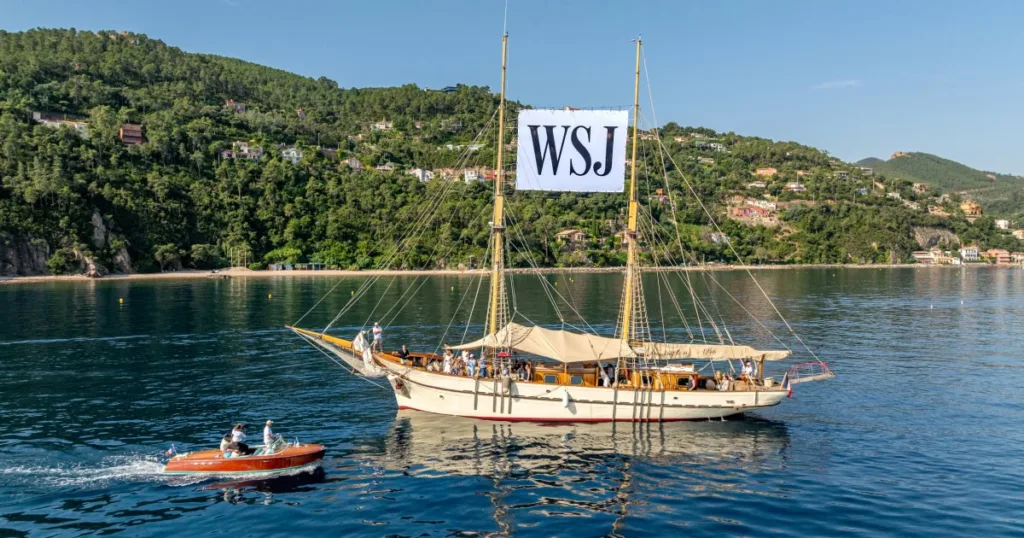
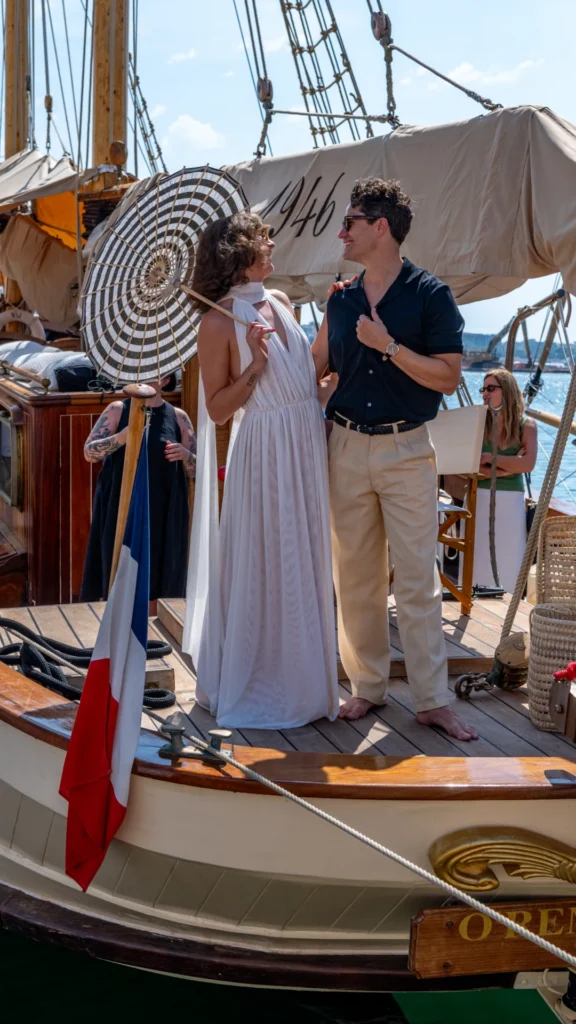
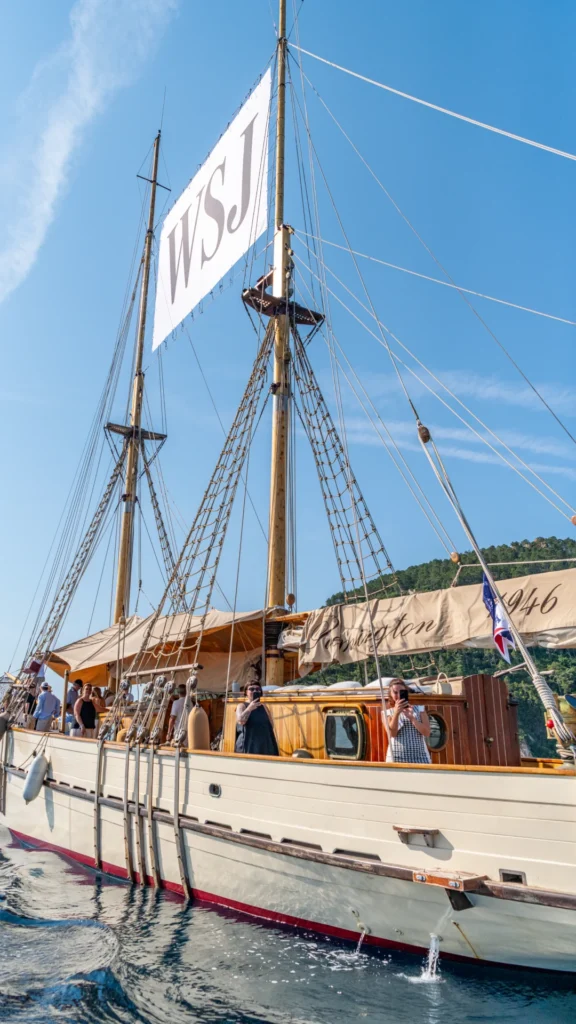
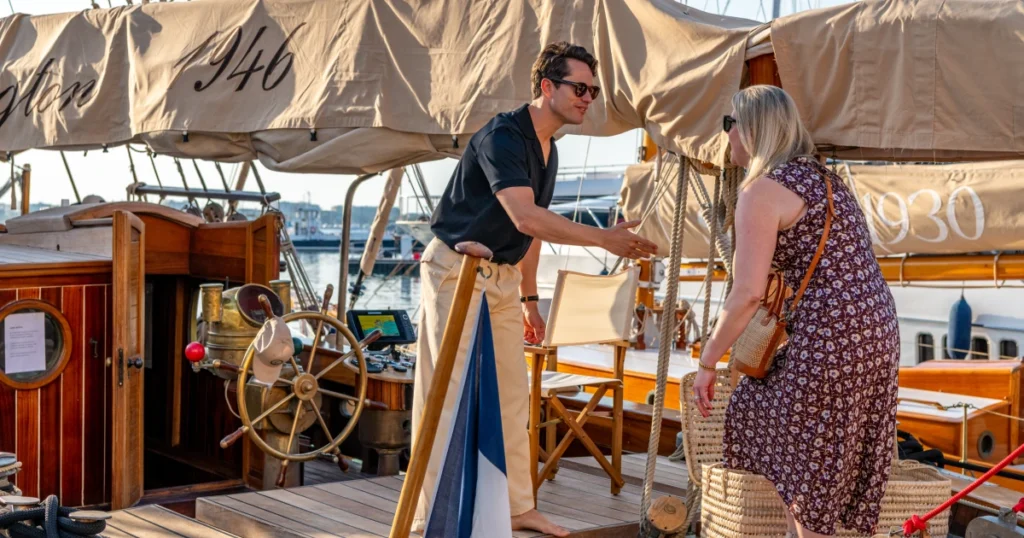
At the heart of the experience was the O’Remington, a 27-meter heritage schooner berthed at Port Canto, at the eastern end of the Croisette. Chosen for its deep roots in the history of Cannes, the boat hosted icons of the Riviera’s golden age, from opera singer Maria Callas to director Federico Fellini. After Fellini won the Palme d’Or for La Dolce Vita in 1960, he asked the ship’s owner, Lord Remington, to engrave the festival’s palms on the bow. At a festival crowded with tents and pop-up rooftops, a vessel with a genuine story gave the setting a sense of lineage and authority.
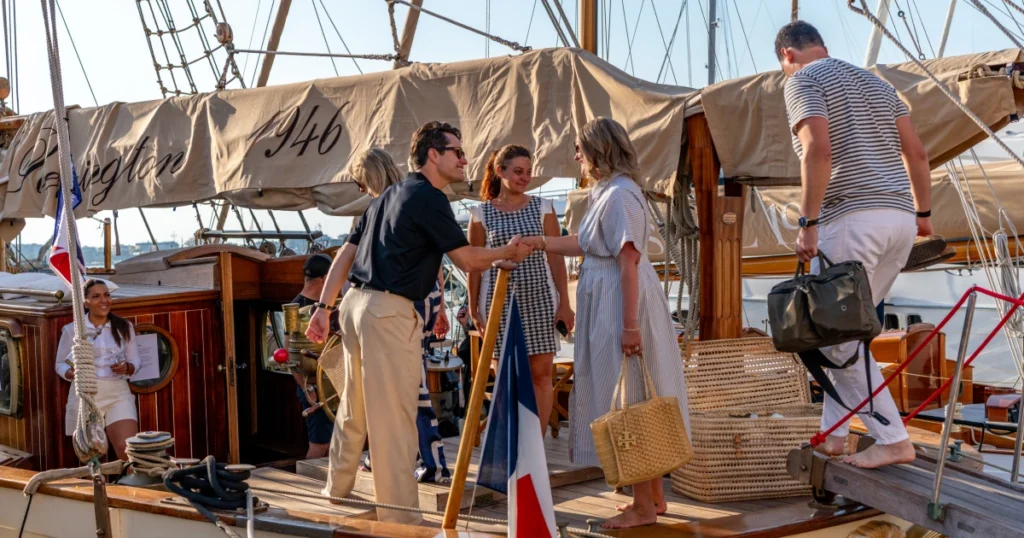
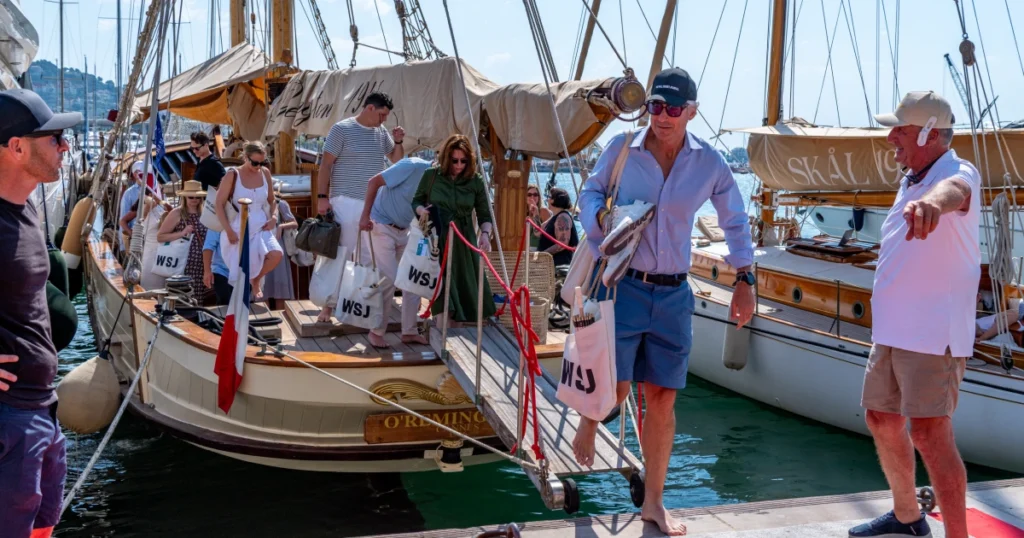
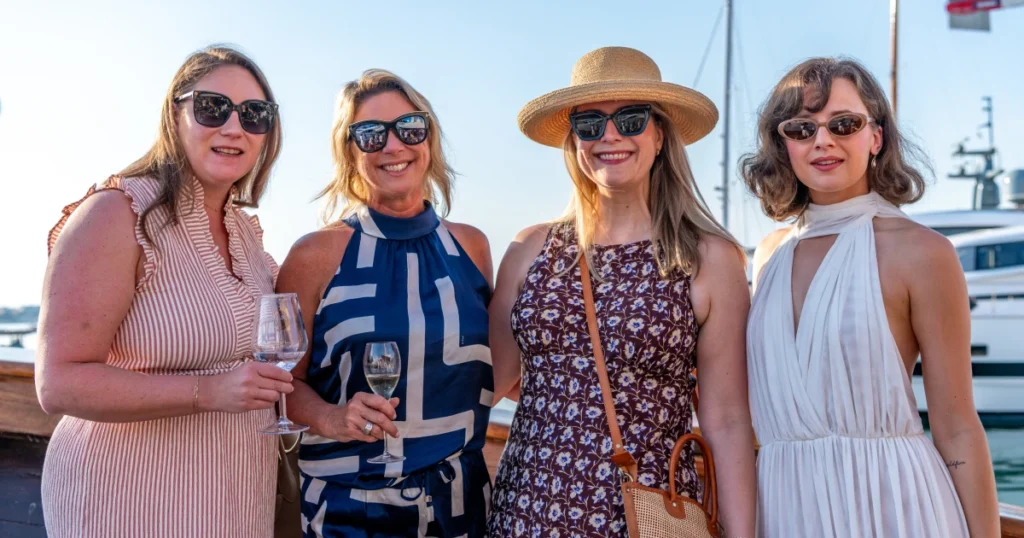
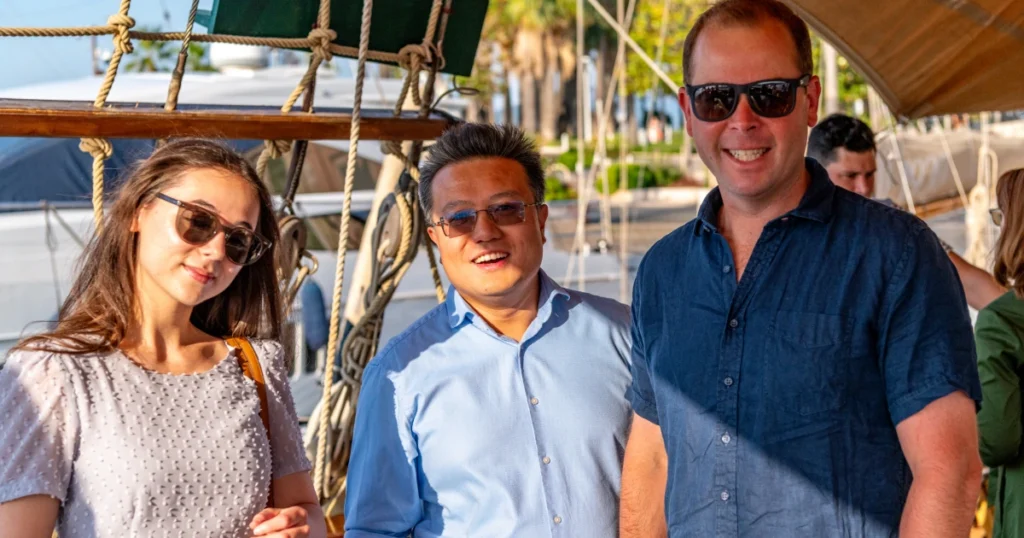
For the event, WSJ’s guests came aboard for coffee and champagne before the O’Remington set out toward the Lérins Islands.
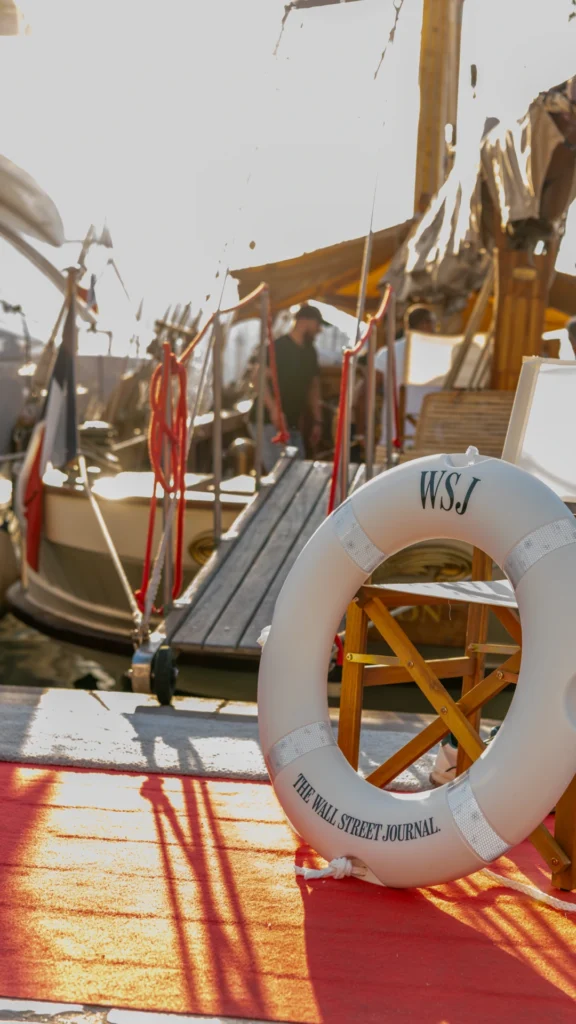
Branding a boat like the O’Remington calls for restraint, not flash. The charm that makes it worth being aboard is easy to overwhelm. Through a set of simple, clean illustrations, the WSJ brand was built into the experience rather than onto it, creating a visual world that felt native to the vessel and the coast. The same understated style carried across the guest giveaways, each one tied to the marine setting. The only overt mark of the brand was a single sail with the WSJ logo.
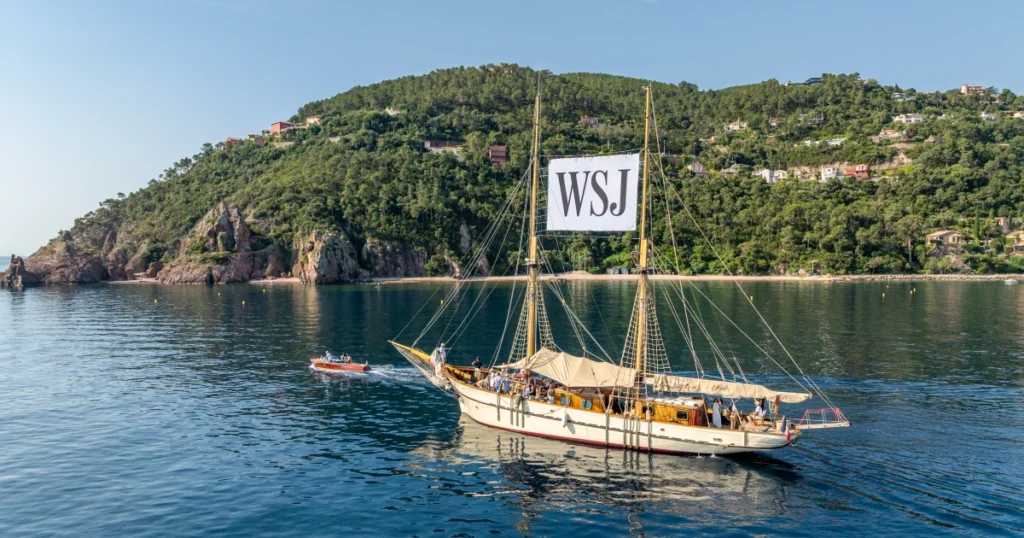
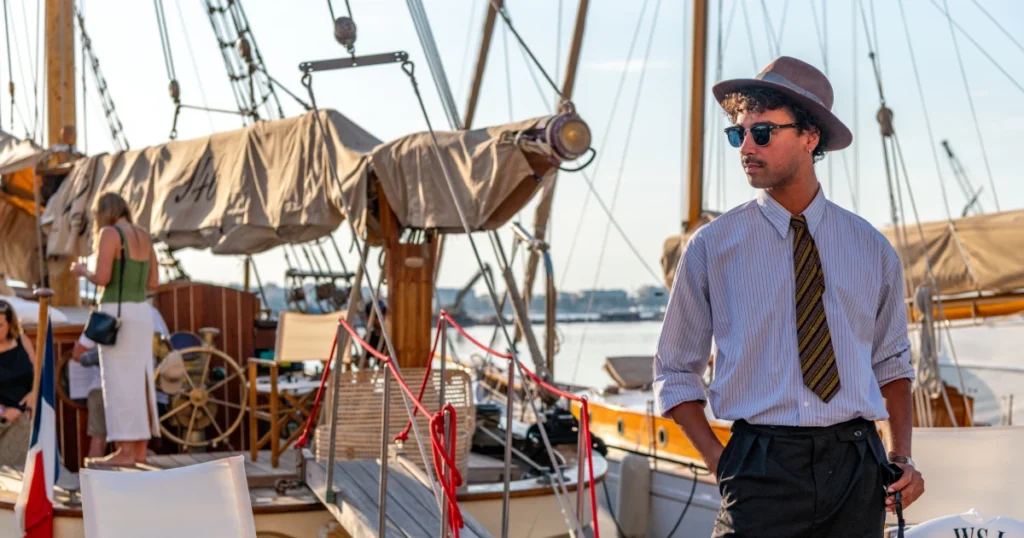
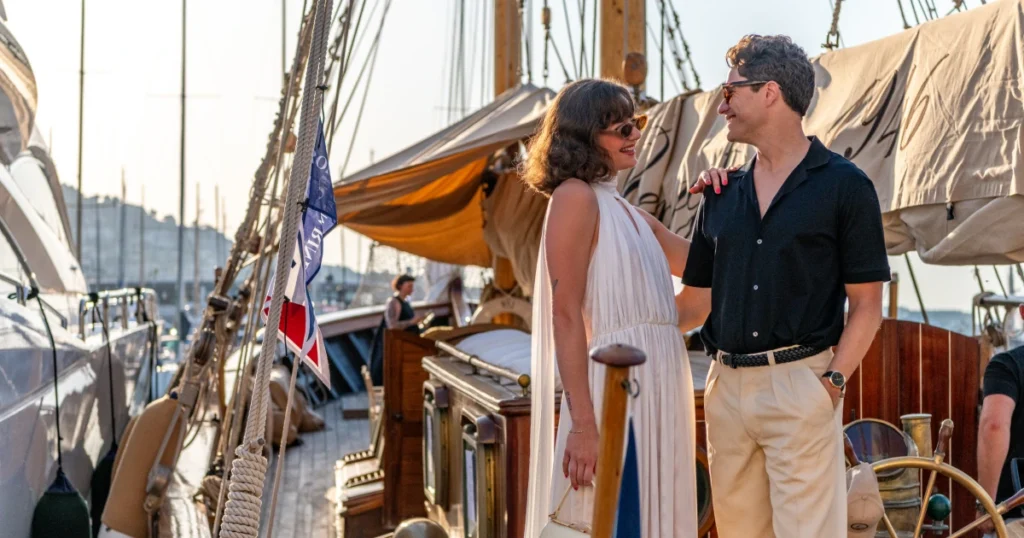
Throughout the morning, two hosts moved among the guests playing the ship’s owners, dressed in the style of the Riviera’s mid-century heyday. Rehearsed as characters rather than staff, they served as the morning’s narrators, drawing attendees into the history of the boat, the coast, and the Journal itself. Briefed beforehand on each guest’s background, they made everyone aboard feel personally looked after, giving the WSJ brand a warm, human voice on the water.
An hour into the cruise, a second boat came into view. A classic Riva runabout drew alongside the schooner carrying a photographer, as though the guests aboard were the subject of the morning’s news. This staged “paparazzi” moment made WSJ’s guests feel like they were the headline story, all the while nodding to the glamour of the coast. They came away with a memory they wouldn’t get anywhere else at the festival, and photos worth sharing well beyond it.
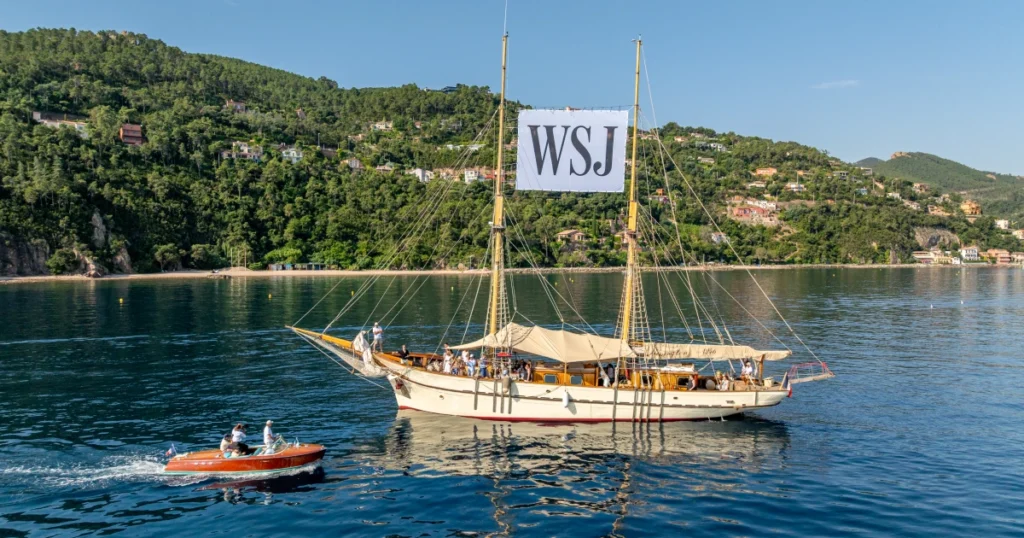
Holding the experience together was a tight production schedule that was planned down to the minute. Sparks rehearsed and loaded the vessel the day before the event, called its crew to the dock ahead of sunrise, and choreographed the arrival, the cruise, a breakfast served at sea, and the return without interruptions. Everyone aboard who was not a guest had a defined role, which left the guests with nothing to manage and nowhere to be but on deck with the WSJ team.
Back on land, additional Sparks team members captured the morning as it unfolded and created a custom souvenir newspaper in real time. As they returned, each guest was handed a printed copy, which served as a nod to the heritage of the Wall Street Journal.
The Impact
A morning built for a small group is measured differently from a conference or a show floor. Its impact shows up not in volume but in the relationships it deepens and the impression it leaves once guests are back on land. For Riviera at Dawn, 20 guests came aboard by invitation for two hours across the bay of Cannes.
An intimate experience like Riviera at Dawn asks more of its execution, not less. With a handful of high-profile guests and a single uninterrupted morning, every detail had to be right.
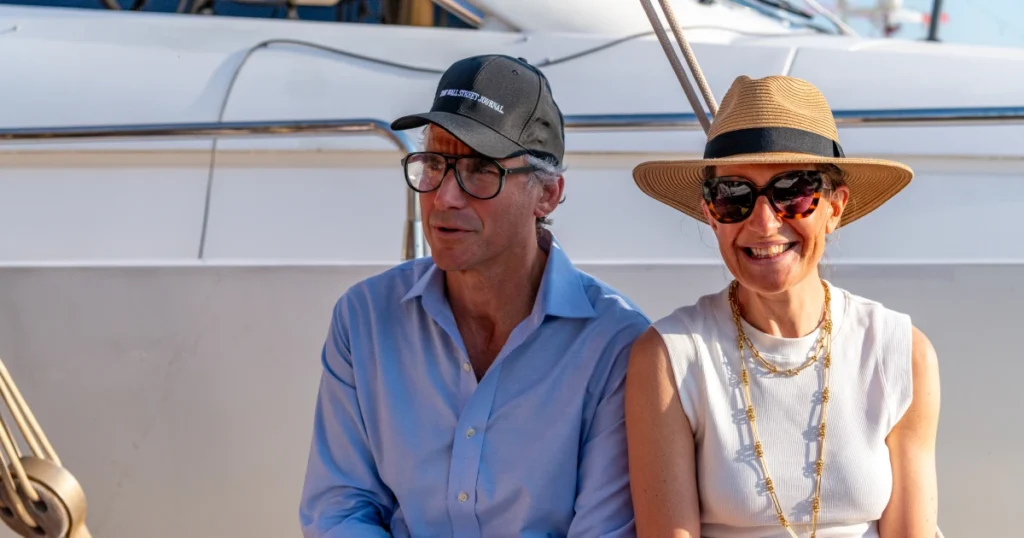
Time as the real luxury. Cannes Lions runs on scarcity of attention — five days with thousands of people whose schedules are double-booked. The rarest thing a brand can offer there isn’t spectacle, but uninterrupted time. By taking guests off the Croisette and onto the water, WSJ provided a world-class experience and received a few unhurried hours with the full attention of its key customers.
A start that set the tone. The first morning of a festival shapes the days that follow. By beginning at sea, ahead of the meetings and stages, WSJ gave its guests a generous open to the week — and a story they’d carry into it.
An impression that traveled home. The value of a morning like Riviera at Dawn isn’t spent by the end of the week. Long after Cannes, guests carry the experience back into their own work and decisions. That’s a shift in perception that no campaign could buy and that outlasts the festival by far.
Client Quote
A Note on Partners
The Wall Street Journal‘s Trade Events team owned the vision for Riviera at Dawn and the guests it welcomed aboard. Sparks served as the brand’s production partner, responsible for the design, branding, hosts, catering, and on-water experience that successfully brought the morning to life. Check out our other article on Measuring Experiential Impact at The Wall Street Journal House.
Frequently Asked Questions
The Cannes Lions International Festival of Creativity is the advertising and marketing industry’s leading annual event. Held each June in Cannes, France, it gathers brands, agencies, and media and technology companies for a week of awards, talks, and client hospitality along the French Riviera.
Riviera at Dawn was an invitation-only morning experience The Wall Street Journal hosted on the opening day of Cannes Lions 2026. Guests joined a private two-hour breakfast cruise aboard the O’Remington, a 27-meter heritage sailing yacht, in the bay of Cannes, with hosted storytelling, a bespoke illustration suite, and Riviera-inspired details throughout.
Sparks was the production partner for the experience, responsible for the creative concept, design, brand integration, themed hosts, catering coordination, sustainable giveaways, and on-water production and logistics. The Wall Street Journal hosted the event and its guests; Sparks designed and produced the experience around them.
Sparks designs and produces experiences across a wide range of formats and scales, from large conferences and exhibitions to intimate, invitation-only events for a brand’s most important guests. Each is built around the brand, its audience, and the setting.
Yes. Sparks regularly produces experiences in settings well outside the conventional ballroom or exhibition hall, including those with demanding logistics. Riviera at Dawn, produced aboard a heritage sailing yacht off the coast of Cannes, was designed and run end to end on the water.
Cannes Lions gathers much of the global marketing, media, and technology industry in one place for a week, which makes it a focal point for client hospitality and relationship-building. Brands use the festival to host key clients and partners, strengthen relationships, and shape how they’re perceived among an influential audience.
Cannes Lions is known for ambitious brand experiences along the Croisette, from beachfront takeovers and yacht events to hosted dinners and private hospitality. The most effective tend to be the ones built around a clear idea and a specific audience rather than scale alone — Riviera at Dawn, an invitation-only morning cruise produced for The Wall Street Journal, is one example.
Yes — yachts and boats moored along the Cannes waterfront are a common venue for hospitality during the festival. Producing a polished experience on the water carries particular logistical demands, from boarding and timing to catering and crew, which is why brands often work with an experiential production partner to manage it end to end.