
If you ask event marketing leaders about the hardest part of evolving their strategy, you get two answers, not one: proving what a program returned, and making every attendee feel it was built for them.
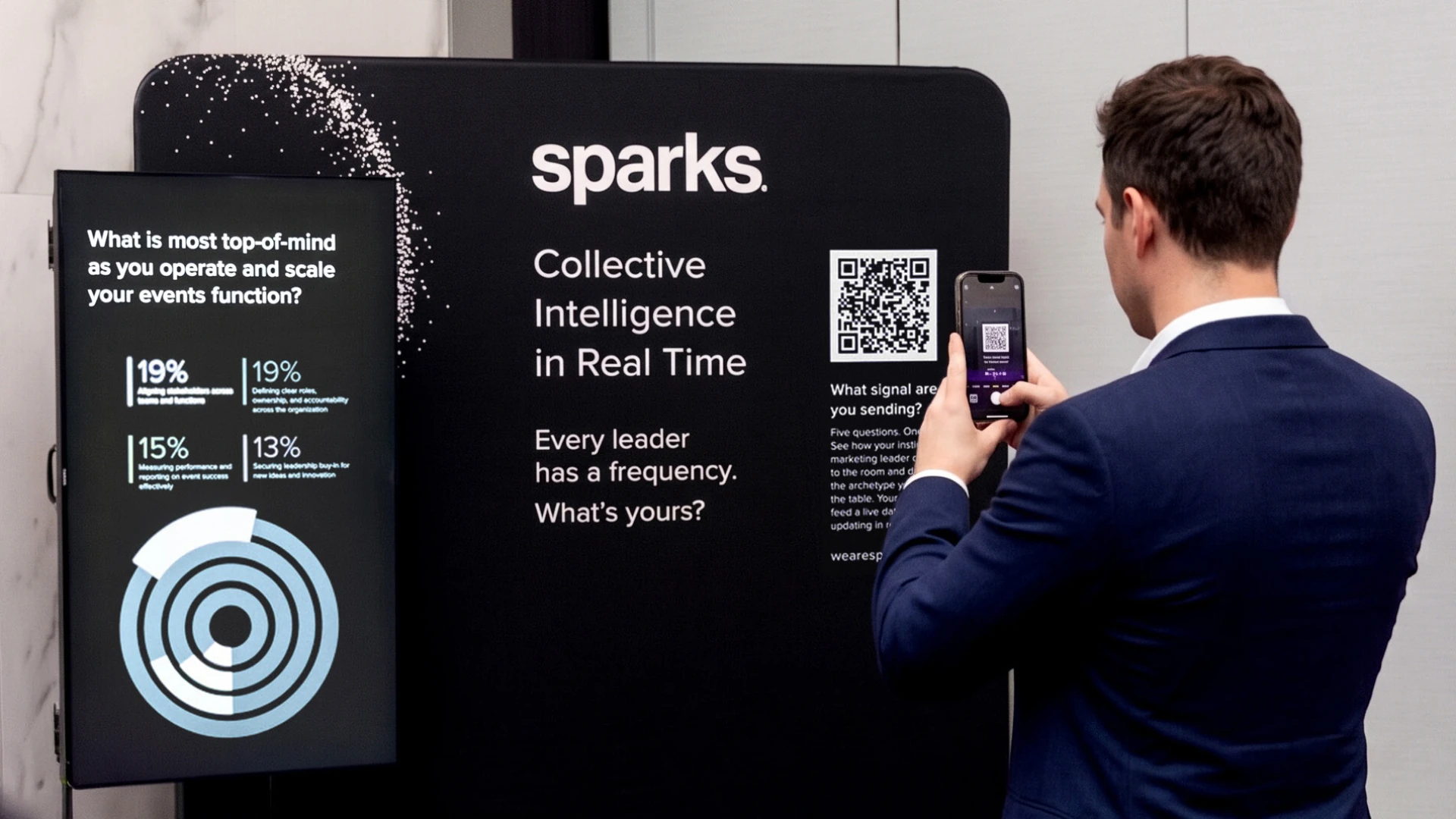
That was among the clearest findings in a survey Sparks brought to three of the industry’s largest gatherings this year: the Experiential Marketing Summit, Journal House at Cannes Lions, and AdWeek’s Marketing Vanguard Summit in Chicago. More than 150 participants answered a short series of questions about how they lead, what drives them, and the challenges they’re facing in today’s market.
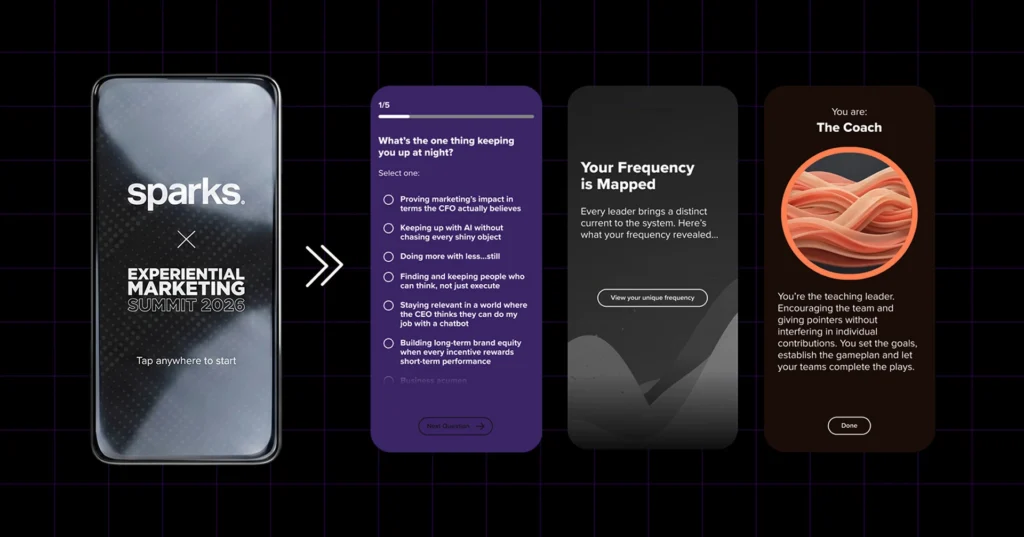
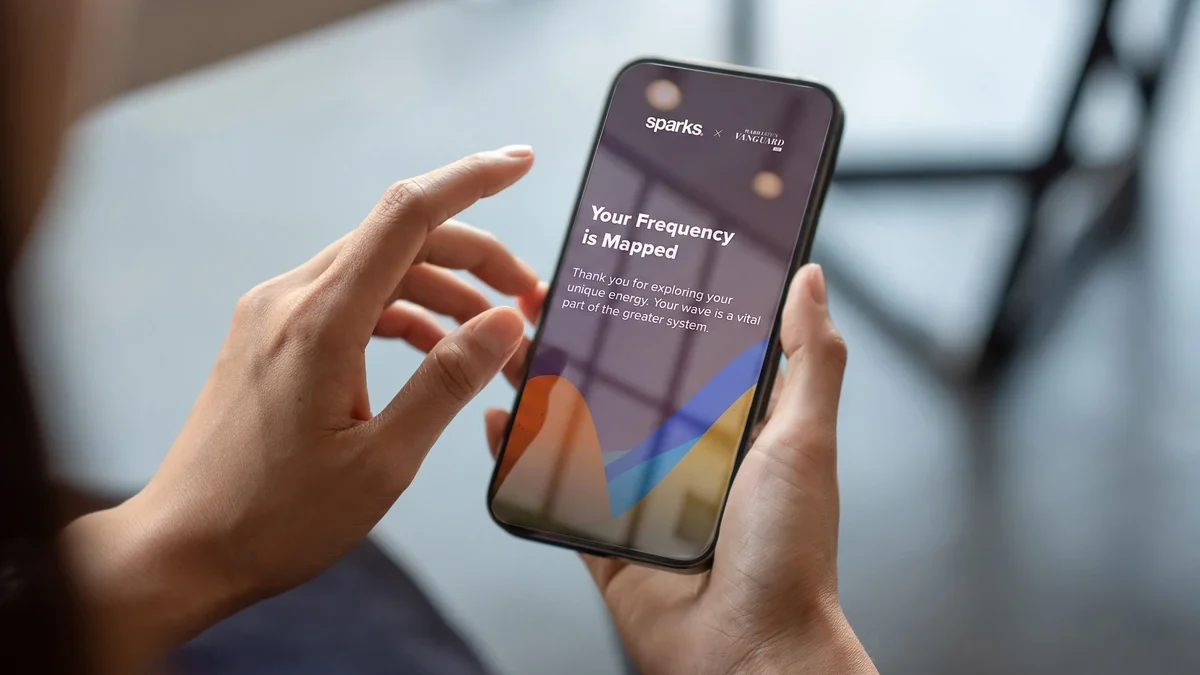
“We created five questions for the survey, with each participant’s archetype appearing the moment they finished, along with a visualization of how they responded. I was struck by the results,” said Sheyna Bruckner, SVP Marketing at Sparks. “When we asked leaders to name their single biggest challenge, they split evenly between proving ROI and personalizing the attendee journey. Those are two very different problems, and most teams are being asked to solve both with one budget.”
The questions explored the pressures, priorities, and values of the respondents, with the final result translated into one of five leadership archetypes that each described a distinct leadership style:
- The Storyteller, who articulates the vision, clarifies the “why,” and moves people from vision to execution.
- The Connector, who builds relationships across working styles and brings people together to produce collective results.
- The Coach, who develops people, sets the game plan, and gives teams room to make their contributions.
- The Challenger, who questions and pushes back with the intention of improving or refining the work.
- The Experimenter, who dives in, learns quickly, and shifts when the evidence calls for a new direction.
“We designed the questions and the visualization as one system, rather than building the survey first and illustrating it afterward,” said Jamie Barlow, SVP, Creative Technology at Sparks. “Every answer mapped to a distinct visual outcome, and we kept the questions and answers short and direct. When someone finished, they got their archetype along with a custom frequency visualization generated from their own responses. Our Creative Technology team supports clients across FinTech, technology, healthcare, and many more sectors. Live events are where our work has the most impact, because you have someone’s full attention in a way you rarely do anywhere else.”
1. 29% Say Proving ROI Is Their Biggest Challenge
The survey’s first question asked leaders about what keeps them up at night. The most common answers were about proof. Nearly a third said that they were preoccupied with proving event ROI and business impact in a way leadership values. Close to one in five chose a related answer—elevating events from execution to a true business driver within the organization.
A second question asked about the biggest challenge leaders face in evolving their event and experience strategy. Two answers tied for first, each chosen by 29% of leaders—proving ROI and tying events to business outcomes, and personalizing the attendee journey across touchpoints.
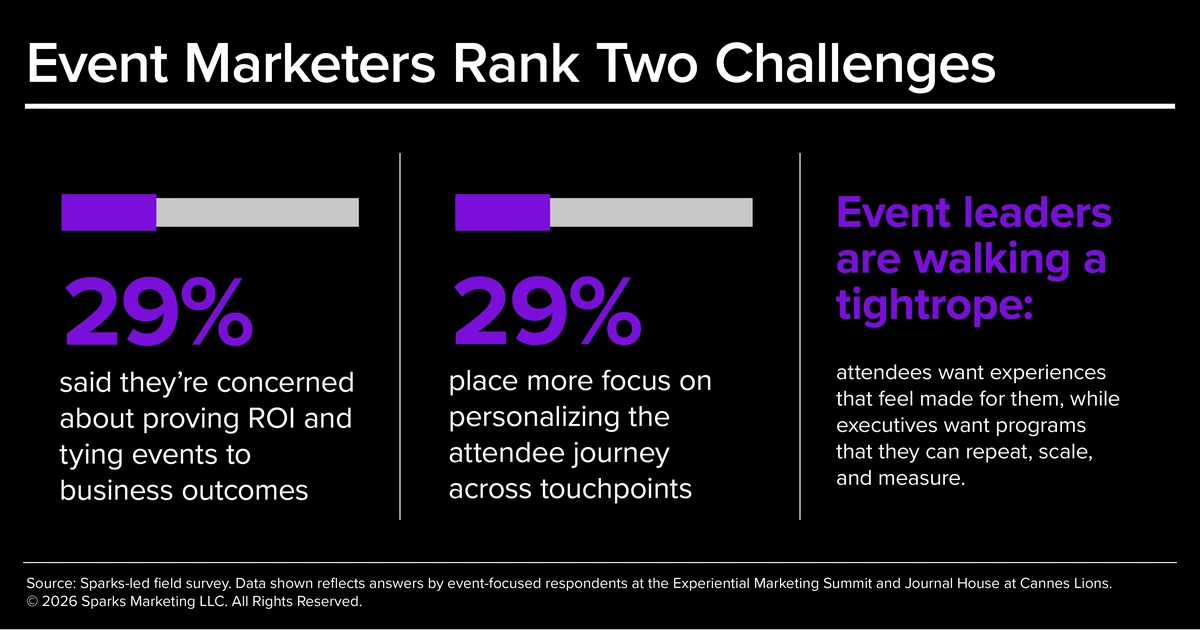
Read together, these results reveal the challenging double mandate that many leaders face. They’re being asked to make each experience feel personal to the attendee and, at the same time, to make the whole program easy for executives to evaluate. That means serving two audiences at once that often pull against one another—the person in the experience and the executive reviewing the investment.
“Proving ROI came up more than anything else as the thing keeping leaders awake and as their biggest challenge,” explains Sheyna Bruckner, SVP Marketing at Sparks. “That tells you where the pressure is right now. Event leaders aren’t only being asked to run a better event. They’re being asked to show what it was worth.”
Live events already produce results. EventTrack 2026, an annual benchmark study produced by Event Marketer in partnership with Sparks, found that 61% of consumers are more inclined to purchase after attending a live event and that 85% of B2B attendees feel more educated after an in-person experience. The Belief Gap™, a Harris Poll study commissioned by The Freeman Company, points the same direction from the marketer’s side: events ranked as the single most effective channel for building brand trust, and 73% of marketers plan to increase event spending this year. The hard part is connecting those results to the numbers the rest of the organization uses to make decisions.
The strongest 2027 programs will treat relevance and accountability as a single problem and build for both from the first conversation.
2. Aligning Stakeholders Outranked Event Technology
The survey also asked about what is most top-of-mind as leaders operate and scale their events function. Three answers took just over half of all selections:
- Aligning stakeholders across teams and functions (21%)
- Defining clear roles, ownership, and accountability across the organization (15%)
- Measuring performance and reporting on event success effectively (15%)
Each of these choices concerns internal operations and politics. In fact, aligning stakeholders drew more than twice the selections of integrating event technology with broader marketing and sales systems, even in the age of AI.
A new technology platform is easy to tout—to a boss, a board, or a client—but adding more data to a disorganized team simply introduces more potential points of disagreement. Alignment is harder to demonstrate, but has a larger payoff. Teams that agree upfront on ownership, goals, and measures spend less of the budget on rework, duplicated effort, and after-the-fact justification, which means more of it reaches the attendee.
3. Only 6% Pride Themselves on Testing New Ideas
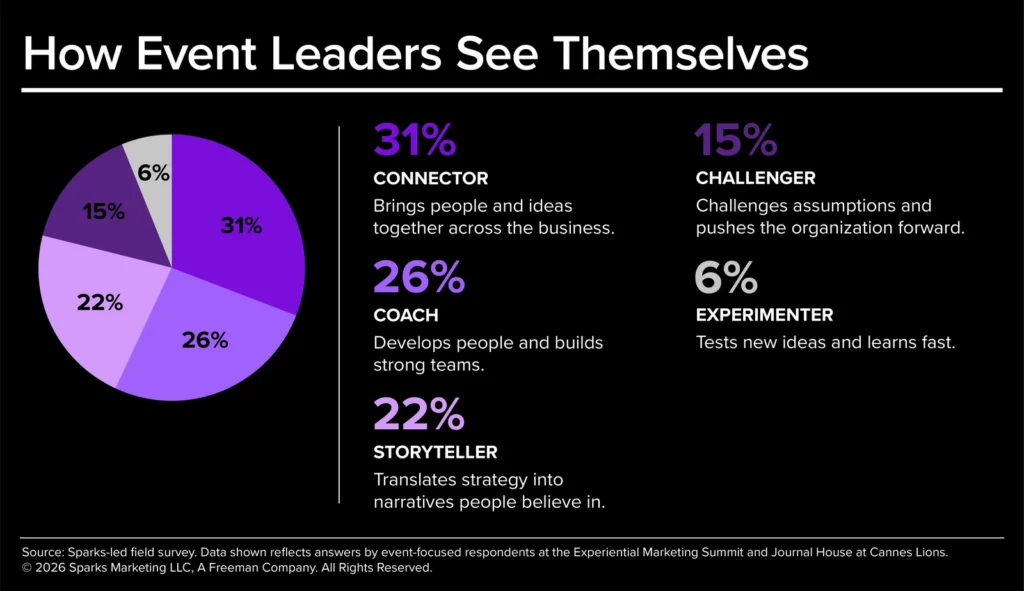
Another question asked which function of the leadership role participants take the most pride in. Among the event leaders surveyed, more than half chose an answer about people. The most common, at 31%, was “Bringing people and ideas together across the business.” Close behind, at 26%, was “Developing people and building strong teams.” Those are the instincts of the Connector and the Coach.
Notably, the least popular answer to this question, drawing only 6% of responses, was “Testing new ideas and learning fast”—the Experimenter’s defining trait. In a world where marketers need to consistently show ROI, it’s not surprising that they’re hesitant to claim experimentation as their signature strength. But the freedom to test something and see what works is one of a marketer’s most valuable instincts.
The appetite for innovation is there—in the survey, the most common response to a question about the conversations they most gravitate to at events was “innovation, new ideas, and emerging technologies.” The opportunity, for many organizations, is building the conditions that let leaders act on it through well-informed tests with clear parameters, shared success criteria, and executive buy-in. Experimentation is where the discipline has the most room to grow.
The Industry’s Hardest Problems Are Human Ones
Marketing leaders always have AI on their mind, but the data from this survey showed that the most urgent problems for event experience executives involve people—agreement, ownership, trust, and the permission to try something unproven. Luckily, the people skills leaders claim as their proudest work are precisely the skills those problems require. The marketers who can work with their teams to spend less time defending their events and more time building them will be the ones who define the industry’s next era.